


A benzene-degrading nitrate-reducing microbial consortium displays aerobic and anaerobic benzene degradation pathways
- PMID: 29540736
- PMCID: PMC5852087
- DOI: 10.1038/s41598-018-22617-x
A benzene-degrading nitrate-reducing microbial consortium displays aerobic and anaerobic benzene degradation pathways
Abstract
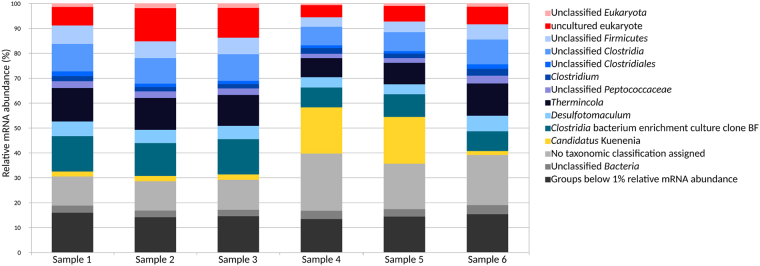
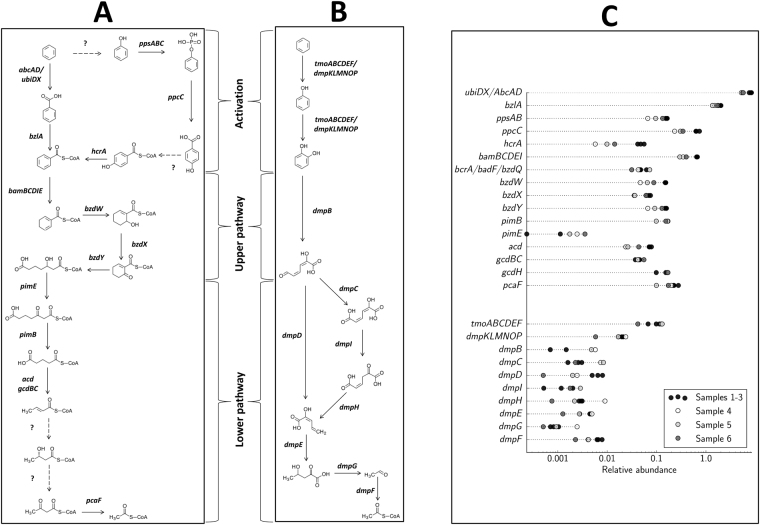
In this study, we report transcription of genes involved in aerobic and anaerobic benzene degradation pathways in a benzene-degrading denitrifying continuous culture. Transcripts associated with the family Peptococcaceae dominated all samples (21-36% relative abundance) indicating their key role in the community. We found a highly transcribed gene cluster encoding a presumed anaerobic benzene carboxylase (AbcA and AbcD) and a benzoate-coenzyme A ligase (BzlA). Predicted gene products showed >96% amino acid identity and similar gene order to the corresponding benzene degradation gene cluster described previously, providing further evidence for anaerobic benzene activation via carboxylation. For subsequent benzoyl-CoA dearomatization, bam-like genes analogous to the ones found in other strict anaerobes were transcribed, whereas gene transcripts involved in downstream benzoyl-CoA degradation were mostly analogous to the ones described in facultative anaerobes. The concurrent transcription of genes encoding enzymes involved in oxygenase-mediated aerobic benzene degradation suggested oxygen presence in the culture, possibly formed via a recently identified nitric oxide dismutase (Nod). Although we were unable to detect transcription of Nod-encoding genes, addition of nitrite and formate to the continuous culture showed indication for oxygen production. Such an oxygen production would enable aerobic microbes to thrive in oxygen-depleted and nitrate-containing subsurface environments contaminated with hydrocarbons.
Conflict of interest statement
The authors declare no competing interests.
Figures
References
-
- Langenhoff AA, Zehnder AJ, Schraa G. Behaviour of toluene, benzene and naphthalene under anaerobic conditions in sediment columns. Biodegradation. 1996;7:267–274. doi: 10.1007/BF00058186. - DOI
Publication types
MeSH terms
Substances
Grants and funding
LinkOut - more resources
Full Text Sources
Other Literature Sources
Molecular Biology Databases
Miscellaneous
