


Differential effects of dietary flavonoids on adipogenesis
- PMID: 29541908
- PMCID: PMC6424933
- DOI: 10.1007/s00394-018-1663-8
Differential effects of dietary flavonoids on adipogenesis
Abstract
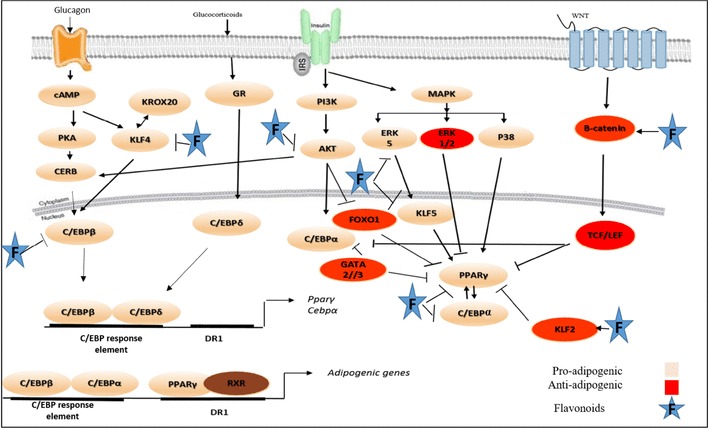
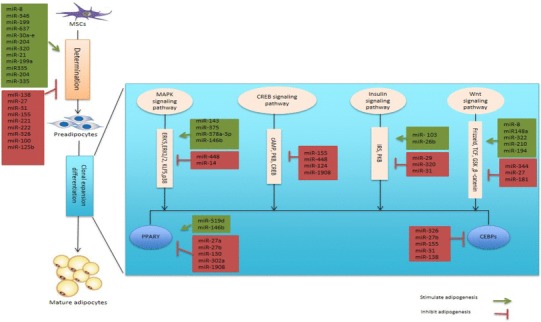
Propose: Obesity is a fast growing epidemic worldwide. During obesity, the increase in adipose tissue mass arise from two different mechanisms, namely, hyperplasia and hypertrophy. Hyperplasia which is the increase in adipocyte number is characteristic of severe obese patients. Recently, there has been much interest in targeting adipogenesis as therapeutic strategy against obesity. Flavonoids have been shown to regulate several pathways and affect a number of molecular targets during specific stages of adipocyte development.
Methods: Presently, we provide a review of key studies evaluating the effects of dietary flavonoids in different stages of adipocyte development with a particular emphasis on the investigations that explore the underlying mechanisms of action of these compounds in human or animal cell lines as well as animal models.
Results: Flavonoids have been shown to regulate several pathways and affect a number of molecular targets during specific stages of adipocyte development. Although most of the studies reveal anti-adipogenic effect of flavonoids, some flavonoids demonstrated proadipogenic effect in mesenchymal stem cells or preadipocytes.
Conclusion: The anti-adipogenic effect of flavonoids is mainly via their effect on regulation of several pathways such as induction of apoptosis, suppression of key adipogenic transcription factors, activation of AMPK and Wnt pathways, inhibition of clonal expansion, and cell-cycle arrest.
Keywords: Adipocyte; Adipogenesis; Flavonoids; Hyperplasia; Obesity.
Conflict of interest statement
The authors have declared that no competing interest exists.
Figures
References
-
- Gil-Campos M, Canete RR, Gil A. Adiponectin, the missing link in insulin resistance and obesity. Clin Nutr. 2004;23(5):963–974. - PubMed
-
- World Health Organization (2014) Obesity and overweight (Fact sheet NO. 311). http://www.who.int/mediacentre/factsheets/fs311/en/. Accessed 5 Feb 2016
-
- Flegal KM, Carroll MD, Ogden CL, Curtin LR. Prevalence and trends in obesity among us adults, 1999–2008. JAMA. 2010;303(3):235–241. - PubMed
-
- Spalding KL, Arner E, Westermark PO, Bernard S, Buchholz BA, Bergmann O, Blomqvist L, Hoffstedt J, Naslund E, Britton T, Concha H, Hassan M, Ryden M, Frisen J, Arner P. Dynamics of fat cell turnover in humans. Nature. 2008;453(7196):783–787. - PubMed
Publication types
MeSH terms
Substances
Grants and funding
LinkOut - more resources
Full Text Sources
Other Literature Sources
