


Treatment, Therapy and Management of Metabolic Epilepsy: A Systematic Review
- PMID: 29543761
- PMCID: PMC5877732
- DOI: 10.3390/ijms19030871
Treatment, Therapy and Management of Metabolic Epilepsy: A Systematic Review
Abstract
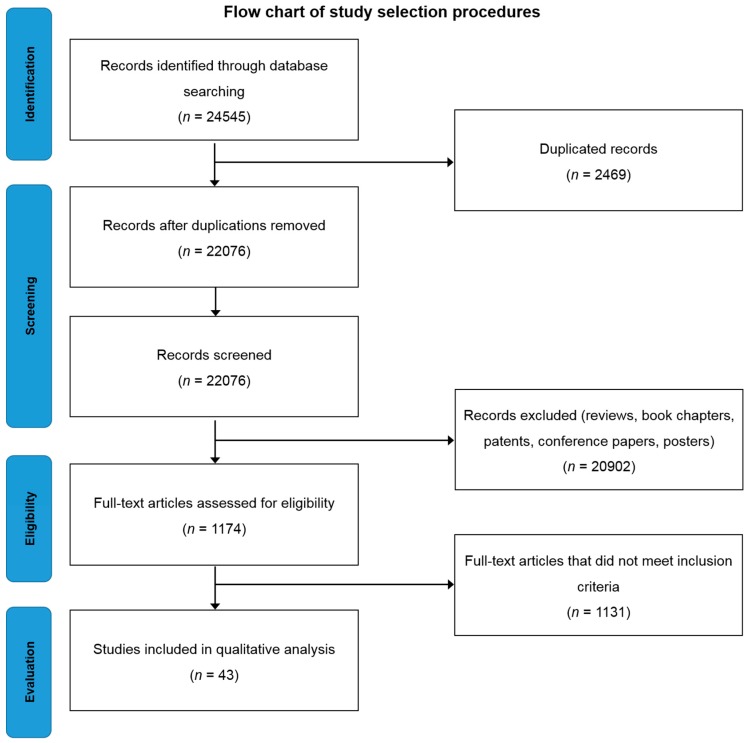
Metabolic epilepsy is a metabolic abnormality which is associated with an increased risk of epilepsy development in affected individuals. Commonly used antiepileptic drugs are typically ineffective against metabolic epilepsy as they do not address its root cause. Presently, there is no review available which summarizes all the treatment options for metabolic epilepsy. Thus, we systematically reviewed literature which reported on the treatment, therapy and management of metabolic epilepsy from four databases, namely PubMed, Springer, Scopus and ScienceDirect. After applying our inclusion and exclusion criteria as per the Preferred Reporting Items for Systematic Reviews and Meta-Analyses (PRISMA) guidelines, we reviewed a total of 43 articles. Based on the reviewed articles, we summarized the methods used for the treatment, therapy and management of metabolic epilepsy. These methods were tailored to address the root causes of the metabolic disturbances rather than targeting the epilepsy phenotype alone. Diet modification and dietary supplementation, alone or in combination with antiepileptic drugs, are used in tackling the different types of metabolic epilepsy. Identification, treatment, therapy and management of the underlying metabolic derangements can improve behavior, cognitive function and reduce seizure frequency and/or severity in patients.
Keywords: antiepileptic drugs; cognitive function; dietary therapy; metabolic disorders; metabolic epilepsy; seizures.
Conflict of interest statement
The authors declare no conflict of interest.
Figures
References
-
- Berg A.T., Berkovic S.F., Brodie M.J., Buchhalter J., Cross J.H., van Emde Boas W., Engel J., French J., Glauser T.A., Mathern G.W., et al. Revised terminology and concepts for organization of seizures and epilepsies: Report of the ilae commission on classification and terminology, 2005–2009. Epilepsia. 2010;51:676–685. doi: 10.1111/j.1528-1167.2010.02522.x. - DOI - PubMed
-
- Epilepsy, Who, Fact Sheet. [(accessed on 20 February 2017)]; Available online: http://www.who.int/mediacentre/factsheets/fs999/en/
-
- Messing R., Simon R. Seizures as a manifestation of systemic disease. Neurol. Clin. 1986;4:563–584. - PubMed
Publication types
MeSH terms
Substances
LinkOut - more resources
Full Text Sources
Other Literature Sources
Medical
