


Changes in Physical Activity Behaviour and Health Risk Factors Following a Randomised Controlled Pilot Workplace Exercise Intervention
- PMID: 29546212
- PMCID: PMC5689804
- DOI: 10.3934/publichealth.2017.2.189
Changes in Physical Activity Behaviour and Health Risk Factors Following a Randomised Controlled Pilot Workplace Exercise Intervention
Abstract
Background: Declining physical activity (PA) and associated health risk factors are well established. Workplace strategies to increase PA may be beneficial to ameliorate extensive sedentary behavior. This study assessed the effectiveness of two PA interventions in workplace settings.
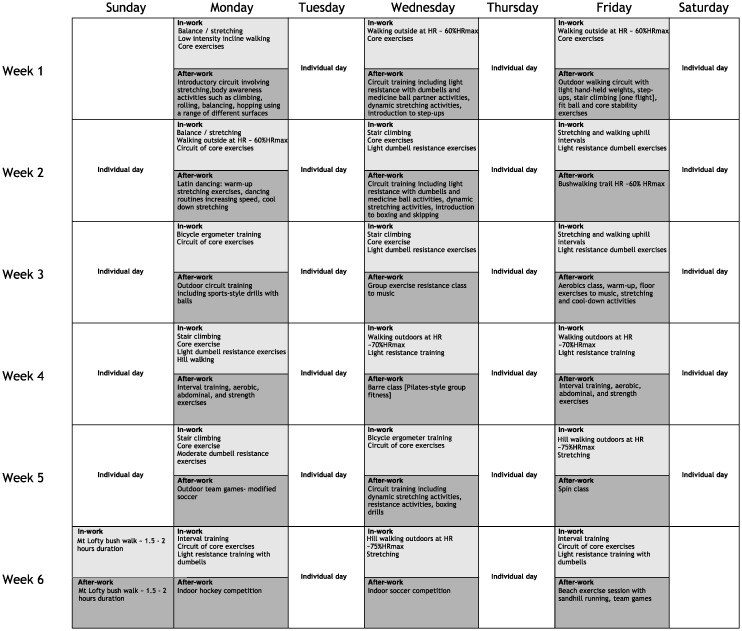
Methods: Interventions were conducted over 40 days targeting insufficiently active (<150 min/wk PA) and/or obese (BMI ≥ 30 kg/m2) adults; participants were randomly allocated to instructor-led exercise sessions either after-work (n = 25) or in-work (n = 23) with a 60 minPA/day common goal, or a wait-listed control group (n = 23). The programme commenced with low-moderate physical activities and progressed to high intensity game style activities by week six. Adherence and compliance were determined using both objective measures of daily PA time from HR monitors and self-report responses to PA questionnaires. Cardiovascular and metabolic risk factors were measured pre- and post-intervention. Changes across the study were analysed using Chi square and repeat-measures ANOVA.
Results: Adherence rates (completed pre and post-testing) were not different between groups (76.0 vs 65.2%). Compliance for the instructor-led sessions was higher for the after-work group (70.4% vs 26.4%, respectively). Increased total PA and aerobic fitness, and decreased weight in both intervention groups were found relative to controls. The after-work group undertook more vigorous PA, and had greater weight loss and fasting blood glucose improvement, relative to in-work participants and controls.
Conclusions: These workplace interventions resulted in rapid and dramatic increases in PA behaviour and important health benefits. Short, in-work PA sessions were less efficacious than longer after-work sessions.
Keywords: health outcomes; physical activity; workplace interventions.
Figures

References
-
- World Health Organization (WHO) Global Health Risks: Mortality and burden of disease attributable to selected major risks. Geneva: WHO; 2009.
-
- Brown WJ, Miller YD, Miller R. Sitting time and work patterns as indicators of overweight and obesity in Australian adults. Int J Obes Relat Metab Disord. 2003;27:1340–1346. - PubMed
-
- Miller R, Brown WJ. Steps and Sitting in a Working Population. Int J Behav Med. 2004;11:219–224. - PubMed
-
- Department of Health Australia's Physical Activity & Sedentary Guidelines for Adults (18–64 years) 2014. Available from: http://www.health.gov.au/internet/main/publishing.nsf/content/health-pub....
-
- Laddu D, Dow C, Hingle M, et al. A Review of evidence-based strategies to treat obesity in adults. Nutr Clin Prac. 2011;26:512–525. - PubMed
LinkOut - more resources
Full Text Sources
Other Literature Sources