


A deep neural network to assess spontaneous pain from mouse facial expressions
- PMID: 29546805
- PMCID: PMC5858615
- DOI: 10.1177/1744806918763658
A deep neural network to assess spontaneous pain from mouse facial expressions
Abstract
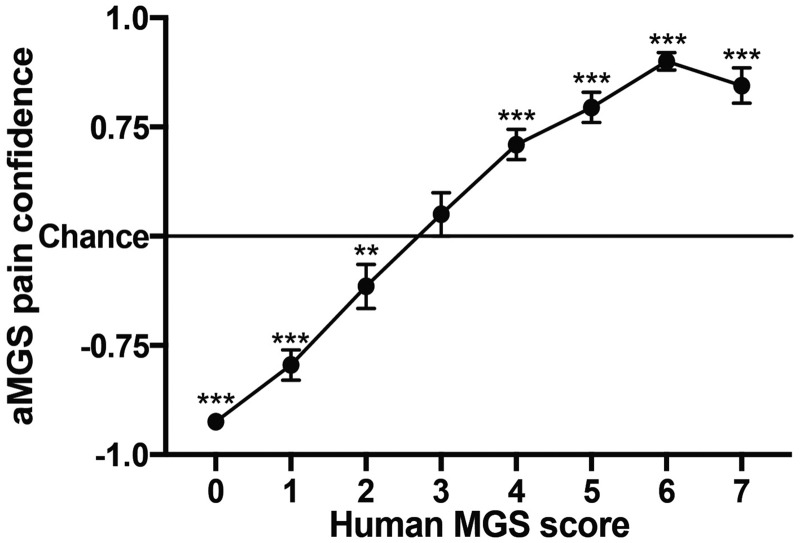
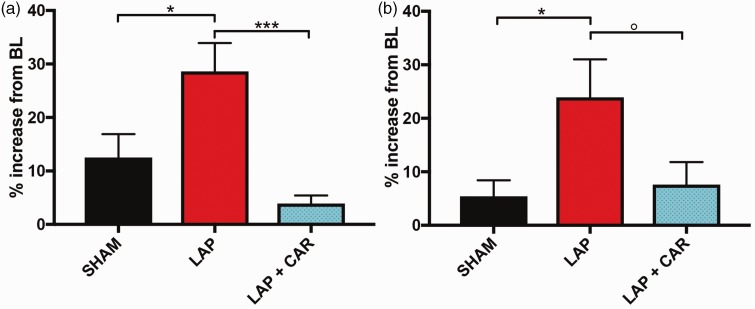
Grimace scales quantify characteristic facial expressions associated with spontaneous pain in rodents and other mammals. However, these scales have not been widely adopted largely because of the time and effort required for highly trained humans to manually score the images. Convoluted neural networks were recently developed that distinguish individual humans and objects in images. Here, we trained one of these networks, the InceptionV3 convolutional neural net, with a large set of human-scored mouse images. Output consists of a binary pain/no-pain assessment and a confidence score. Our automated Mouse Grimace Scale integrates these two outputs and is highly accurate (94%) at assessing the presence of pain in mice across different experimental assays. In addition, we used a novel set of "pain" and "no pain" images to show that automated Mouse Grimace Scale scores are highly correlated with human scores (Pearson's r = 0.75). Moreover, the automated Mouse Grimace Scale classified a greater proportion of images as "pain" following laparotomy surgery when compared to animals receiving a sham surgery or a post-surgical analgesic. Together, these findings suggest that the automated Mouse Grimace Scale can eliminate the need for tedious human scoring of images and provide an objective and rapid way to quantify spontaneous pain and pain relief in mice.
Keywords: Spontaneous pain; animal models; facial expressions; machine learning.
Figures
References
-
- Mogil JS andCrager SE.. What should we be measuring in behavioral studies of chronic pain in animals? Pain 2004; 112: 12–15. - PubMed
-
- Rice ASC, Cimino-Brown D, Eisenach JC.Kontinen VK, Lacroix-Fralish ML, Machin I, Mogil JS, and Stöhr T. Animal models and the prediction of efficacy in clinical trials of analgesic drugs: a critical appraisal and call for uniform reporting standards. Pain 2008; 139: 243–247. - PubMed
-
- Mogil JS. Animal models of pain: progress and challenges. Nat Rev Neurosci 2009; 10: 283–294. - PubMed
-
- Langford DJ, Bailey AL, Chanda ML.Clarke SE, Drummond TE, Echols S, Glick S, Ingrao J, Klassen-Ross T, Lacroix-Fralish ML, Lynn Matsumiya L, Sorge RE, Sotocinal SG, Tabaka JM, Wong D, van den Maagdenberg AMJM, Ferrari MD, Craig KD, and Mogil JS. Coding of facial expressions of pain in the laboratory mouse. Nat Methods 2010; 7: 447–449. - PubMed
Publication types
MeSH terms
Grants and funding
LinkOut - more resources
Full Text Sources
Other Literature Sources
Medical
