


Food Insecurity and Behavioral Characteristics for Academic Success in Young Adults Attending an Appalachian University
- PMID: 29547533
- PMCID: PMC5872779
- DOI: 10.3390/nu10030361
Food Insecurity and Behavioral Characteristics for Academic Success in Young Adults Attending an Appalachian University
Abstract
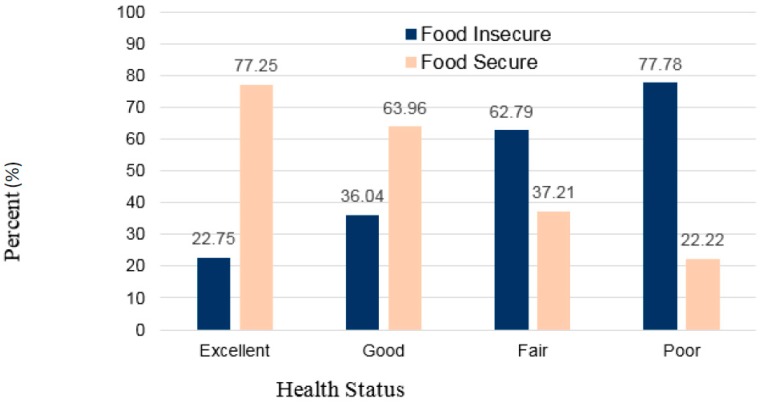
In order to investigate the impact of food insecurity on college students in a highly health disparate region we (1) assessed the prevalence of food insecurity among young adults at a large, rural university in Appalachia, and (2) investigated the relationship between food insecurity and behavioral characteristics including academic performance, coping strategies, and money expenditure. A cross-sectional design was used to capture a representative sample of young adults attending a large, central Appalachian university in Fall 2016. The United States Department of Agriculture (USDA) Adult Food Security Survey was used to measure food insecurity. Independent variables include money expenditure (MES), coping strategies (CSS), academic performance (APS), and demographic, health, economic and culinary variables. Participant responses (n = 692) showed one third (36.6%) of respondents were food-insecure. Students with higher scores for MES and CSS had significantly higher odds of being food-insecure (odds ratio (OR) = 2.07; 95% confidence interval (CI) 1.81 to 2.38 and OR = 1.20; 95% CI 1.16 to 1.23, respectively). The odds of high APS scores (OR = 0.79; 95% CI 0.73 to 0.86) were inversely related to food insecurity. Results of the logistic regression showed MES, CSS, health, and school year remained a significant predictor of food insecurity in college students. These findings suggest behavioral differences in terms of coping strategies, money expenditure, and academic progress among food-insecure students and can be used to identify and target at-risk students to promote student food security and well-being.
Keywords: behavior; college; food insecurity; student; young adult.
Conflict of interest statement
The authors declare no conflict of interest.
Figures
References
-
- Coleman-Jensen A., Rabbitt M.P., Gregory C., Singh A. Household Food Security in the United States in 2015. Economic Research Service; Washington, DC, USA: 2016.
-
- Coleman-Jensen A., Gregory C., Singh A. Household Food Security in the United States in 2013. United States Department of Agriculture; Washington, DC, USA: 2014.
MeSH terms
Grants and funding
LinkOut - more resources
Full Text Sources
Other Literature Sources
Medical
Miscellaneous
