Chronic Obstructive Pulmonary Disease: Clinical Implications for Patients With Lung Cancer
- PMID: 29547609
- PMCID: PMC6613547
- DOI: 10.1188/18.CJON.184-192
Chronic Obstructive Pulmonary Disease: Clinical Implications for Patients With Lung Cancer
Abstract
Background: Chronic obstructive pulmonary disease (COPD) is the most common smoking-related illness. COPD often is underemphasized as a comorbidity except when considering issues surrounding surgical treatment options.
Objectives: This article aims to provide nurses with an overview of the pharmacologic and nonpharmacologic treatment implications of COPD.
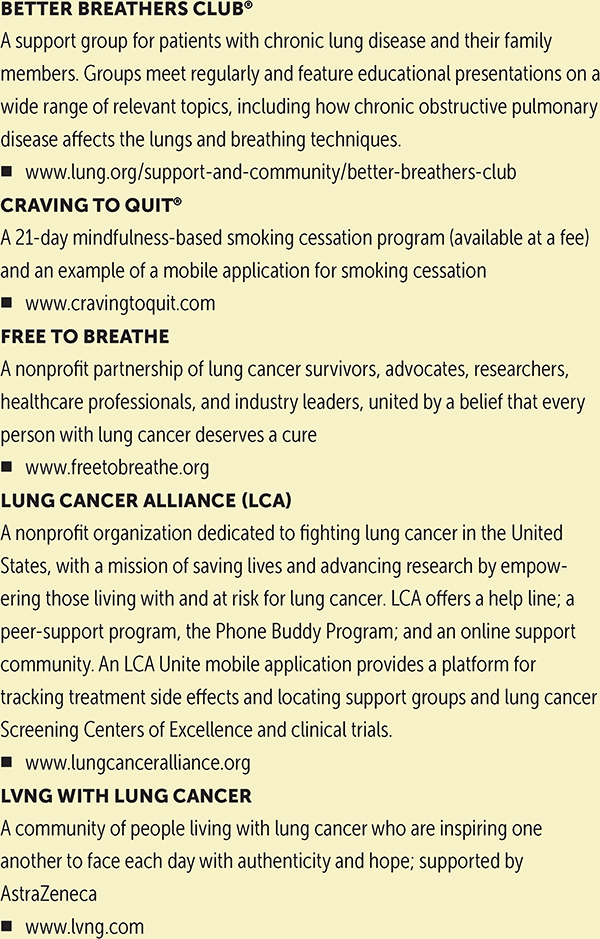
Methods: Definitions, differentials, and treatment considerations are provided, and clinical implications and resources are described.
Findings: The added burden of dyspnea, fatigue, and psychological distress related to COPD may affect the overall outcome and quality of life (QOL) of patients with lung cancer. Attention to the prevention, assessment, and treatment of lung cancer and COPD and related symptomatology will help maximize patients' QOL.
Keywords: chronic obstructive pulmonary disease; immunotherapy; lung cancer; quality of life.
Figures


References
-
- American Lung Association. (2018). Better Breathers Club. Retrieved from http://www.lung.org/support-and-community/better-breathers-club
-
- Bianchi R, Gigliotti F, Romagnoli I, Lanini B, Castellani C, Grazzini M, & Scano G (2004). Chest wall kinematics and breathlessness during pursed-lip breathing in patients with COPD. Chest, 125, 459–465. - PubMed
MeSH terms
Grants and funding
LinkOut - more resources
Full Text Sources
Other Literature Sources
Medical