


Association between Thyroid Hormone Levels and Diabetic Kidney Disease in Euthyroid Patients with Type 2 Diabetes
- PMID: 29549262
- PMCID: PMC5856822
- DOI: 10.1038/s41598-018-22904-7
Association between Thyroid Hormone Levels and Diabetic Kidney Disease in Euthyroid Patients with Type 2 Diabetes
Abstract
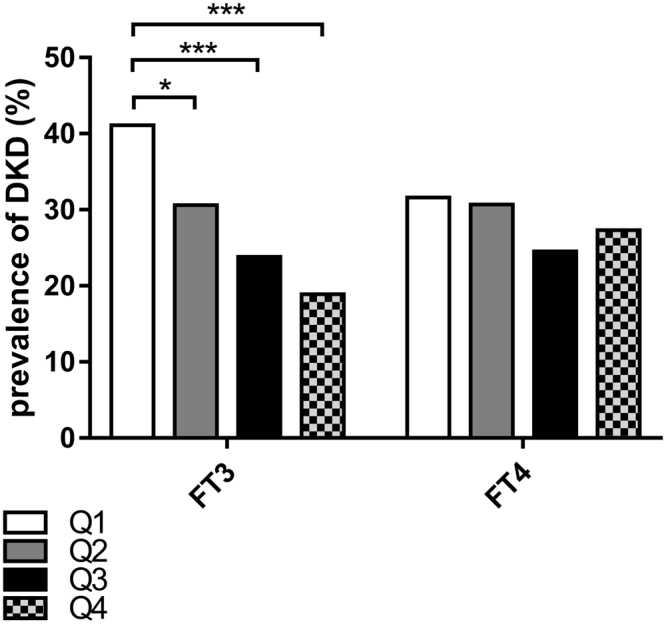
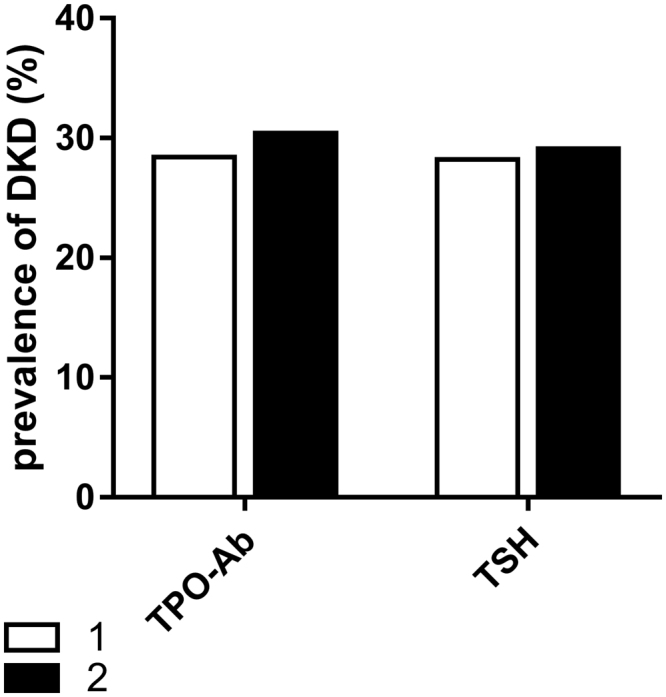
The association between normal thyroid function and diabetic kidney disease (DKD) has gained increasing attention. The present study evaluated the relationship between normal thyroid hormone levels and DKD in type 2 diabetes mellitus (T2DM) patients. A total of 862 type 2 diabetes patients were enrolled in this cross-sectional study in Xi'an, Shaanxi Province, China. The subjects were evaluated for anthropometric measurements, thyroid function and DKD. Of 862 patients, 246 (28.5%) suffered from DKD, and the prevalence of DKD did not differ between men and women. The prevalence of DKD showed a significantly decreasing trend across the quartiles based on free triiodothyronine (FT3) levels (41.1%, 30.6%, 23.8%, and 18.9%, P < 0.001). In comparison with all participants categorized in the first FT3 quartile group (FT3-Q1) (<4.380), the adjusted odds ratio of DKD in the second FT3 quartile group (FT3-Q2), the third FT3 quartile group (FT3-Q3), and the fourth FT3 quartile group (FT3-Q4) were 0.655(95%CI: 0.406-1.057), 0.493(95%CI: 0.299-0.813), 0.406(0.237-0.697) (P < 0.05). Also, similar results were observed in men. Conversely, none of the FT3 groups was associated with DKD in women. The present study showed that FT3 within normal range was negatively correlated with DKD in T2DM patients.
Conflict of interest statement
The authors declare no competing interests.
Figures
References
Publication types
MeSH terms
Substances
LinkOut - more resources
Full Text Sources
Other Literature Sources
Medical
