. 2018 Oct;9(4):363-376.
doi: 10.1007/s12687-018-0359-3. Epub 2018 Mar 17.

Methods to estimate access to care and the effect of interventions on the outcomes of congenital disorders

Collaborators, Affiliations

Methods to estimate access to care and the effect of interventions on the outcomes of congenital disorders

Hannah Blencowe et al. J Community Genet. 2018 Oct.

Abstract

In the absence of intervention, early-onset congenital disorders lead to pregnancy loss, early death, or disability. Currently, lack of epidemiological data from many settings limits the understanding of the burden of these conditions, thus impeding health planning, policy-making, and commensurate resource allocation. The Modell Global Database of Congenital Disorders (MGDb) seeks to meet this need by combining general biological principles with observational and demographic data, to generate estimates of the burden of congenital disorders. A range of interventions along the life course can modify adverse outcomes associated with congenital disorders. Hence, access to and quality of services available for the prevention and care of congenital disorders affects both their birth prevalence and the outcomes for affected individuals. Information on this is therefore important to enable burden estimates for settings with limited observational data, but is lacking from many settings. This paper, the third in this special issue on methods used in the MGDb for estimating the global burden of congenital disorders, describes key interventions that impact on outcomes of congenital disorders and methods used to estimate their coverage where empirical data are not available.

Keywords: Access to care; Congenital malformations; Estimation; Interventions; Pregnancy outcomes.


Conflict of interest statement

The authors declare that they have no conflict of interest.

Figures
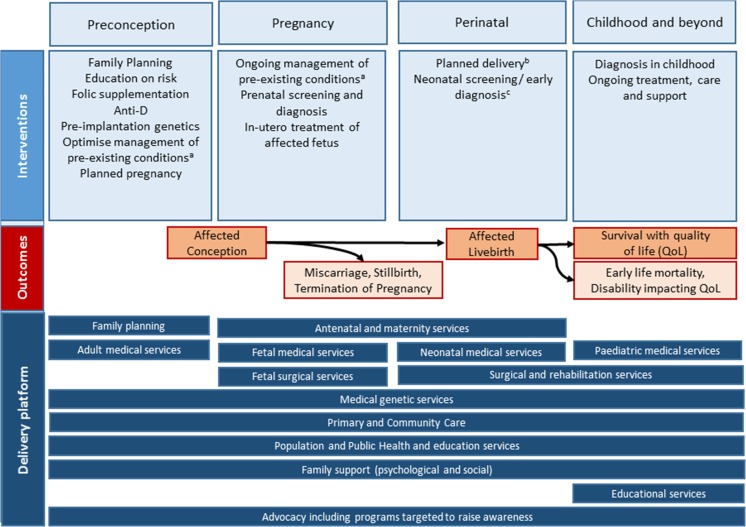
Fig. 1
Fig. 1
Interventions for congenital disorders along the continuum. Affected conceptions are depicted in this figure, but not quantified in MGDb. aIncluding maximising the control and appropriate medications in pregnancy for chronic conditions including HIV, epilepsy and diabetes. bIncluding delivery in a hospital with neonatal intensive care/surgical capabilities, planned caesarean section. cIncluding neonatal physical exam, biochemical screening, e.g. dried blood spot, hearing screening
Fig 2
Fig 2
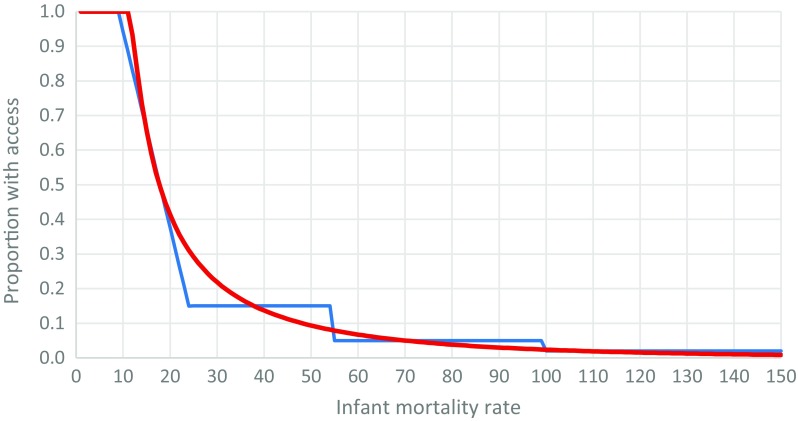
Relationship of infant mortality rate to estimated access to care. Blue line shows estimated access to care using CHERG methods (Table 2) with smoothing from NMR 5–15 (webappendix Fig. 3). Red line shows continuous curve fitted to the stepped curve used in MGDb
Fig. 3
Fig. 3
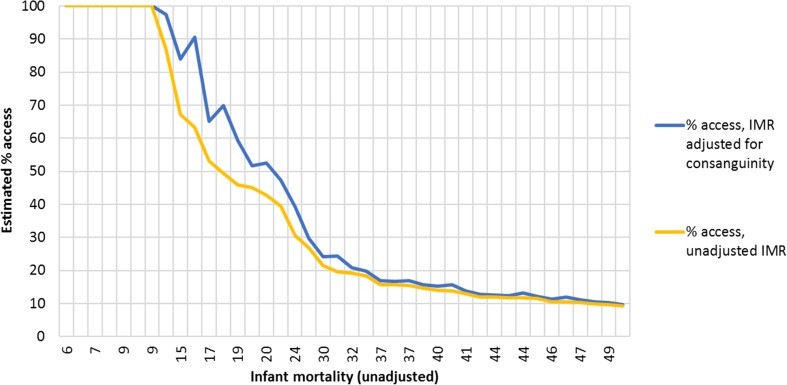
Relationship between infant mortality and estimated access to care for 40 low mortality countries. Low mortality is defined as an IMR less than 50 per 1000 live births
Fig. 4
Fig. 4
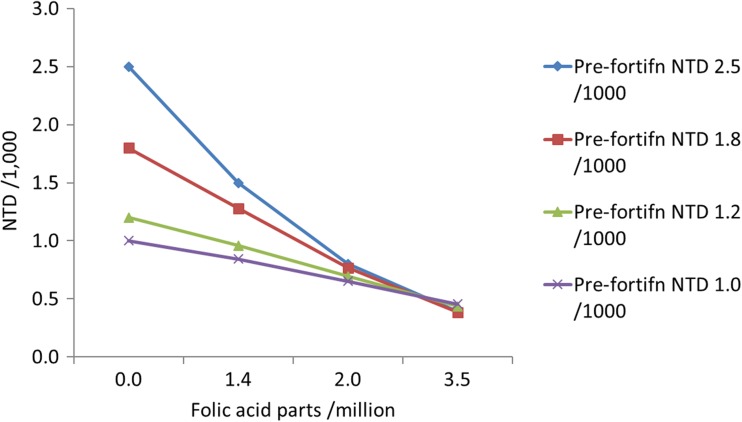
Effect of different doses of folic acid flour fortification in relation to initial birth prevalence of neural tube defects. Data source: Wald (2001). x parts/million = x μg folic acid per 100 g flour
Fig. 5
Fig. 5
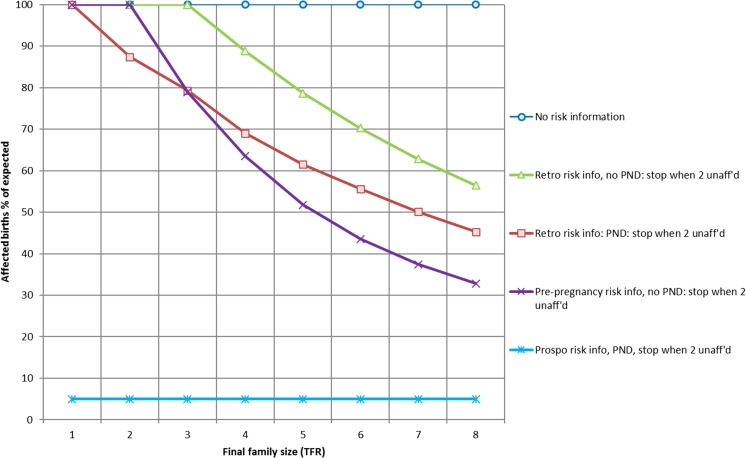
Estimated effect of genetic counselling for severe recessive disorders, in relation to family size. TFR = total fertility rate; Retro risk info = retrospective risk information; Prospo risk info = prospective risk information; PND = prenatal diagnosis; Unaff’d = unaffected

References

    1. Aguzzi S, Vullo C, Barrai I. Reproductive compensation in families segregating for Cooley’s anaemia in Ferrara. Ann Hum Genet. 1978;42:153–160. doi: 10.1111/j.1469-1809.1978.tb00645.x. - DOI - PubMed
    1. Ahmed S, Bekker H, Hewison J, Kinsey S. Thalassaemia carrier testing in Pakistani adults: behaviour, knowledge and attitudes. Commun Genet. 2002;5:120–127. doi: 10.1159/000065167. - DOI - PubMed
    1. Alasfoor D, Elsayed MK, Mohammed AJ. Spina bifida and birth outcome before and after fortification of flour with iron and folic acid in Oman. East Mediterr Health J. 2010;16:533–538. doi: 10.26719/2010.16.5.533. - DOI - PubMed
    1. Alhamdan NA, Almazrou YY, Alswaidi FM, Choudhry AJ. Premarital screening for thalassemia and sickle cell disease in Saudi Arabia. Genet Med. 2007;9:372–377. doi: 10.1097/GIM.0b013e318065a9e8. - DOI - PubMed
    1. Angastiniotis MA, Kyriakidou S, Hadjiminas M. How thalassaemia was controlled in Cyprus. World Health Forum. 1986;7:291–297.