


A Randomized Comparative Trial of the Knowledge Retention and Usage Conditions in Undergraduate Medical Students Using Podcasts and Blog Posts
- PMID: 29552428
- PMCID: PMC5854316
- DOI: 10.7759/cureus.2065
A Randomized Comparative Trial of the Knowledge Retention and Usage Conditions in Undergraduate Medical Students Using Podcasts and Blog Posts
Abstract
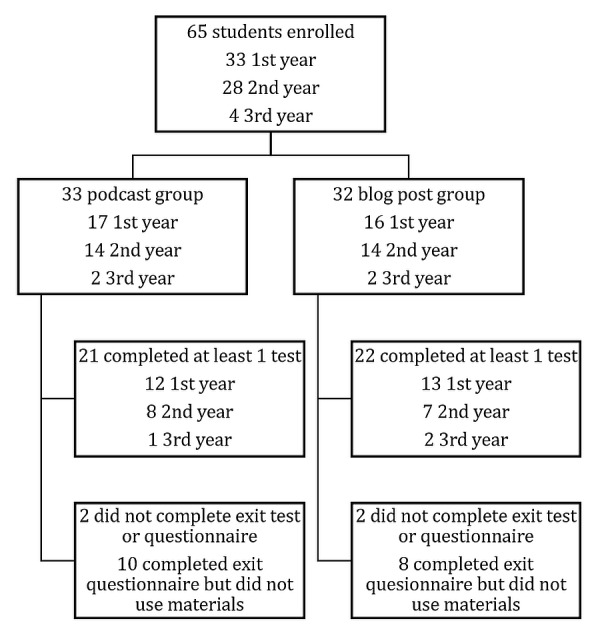
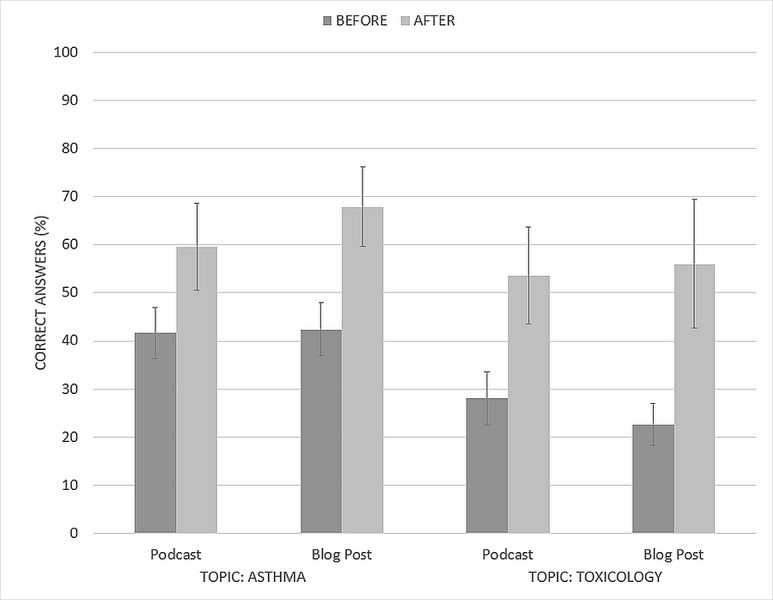
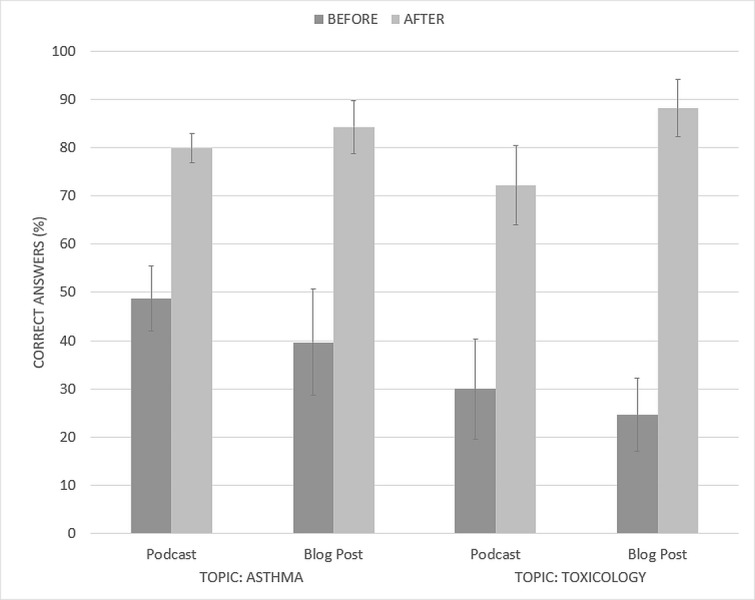
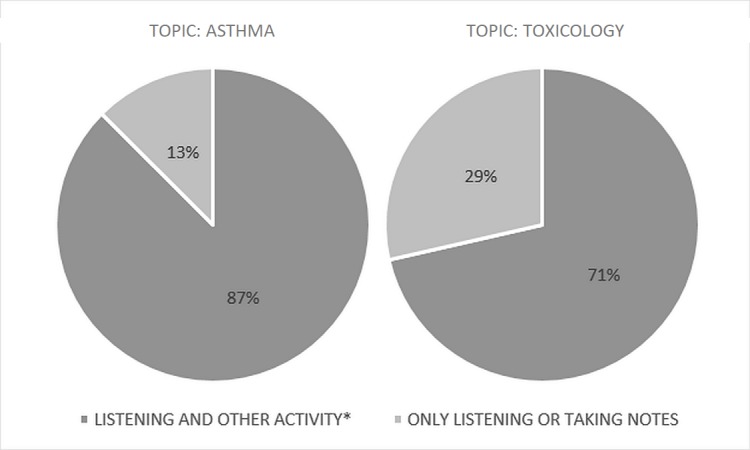
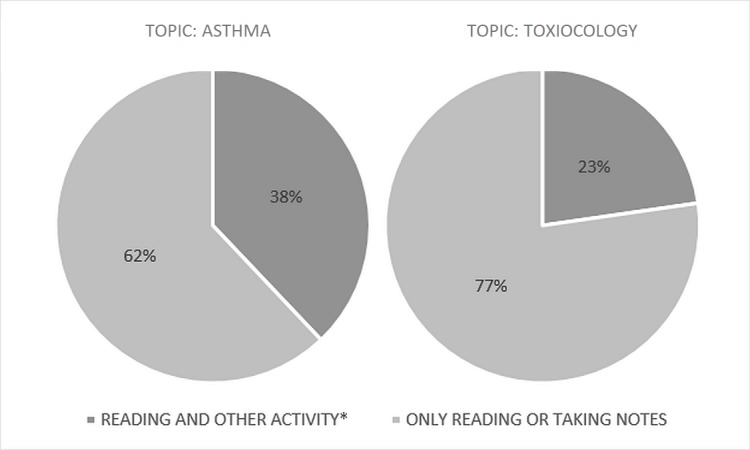
Introduction Podcasts and blog posts have gained popularity in Free Open Access Medical education (FOAM). Previous work suggests that podcasts may be useful for knowledge acquisition in undergraduate medical education. However, there remains a paucity of research comparing the two mediums. This study aims to investigate if there are differences in knowledge acquisition and usage conditions by medical students using podcasts and blog posts. Methods Medical students were randomized to either the podcast or blog post group. They completed an initial online assessment of their baseline knowledge on the subject matter. Participants then received access to learning materials and were given four weeks to complete the follow-up assessment on their own time. Independent t-test, paired samples t-test, and a mixed ANOVA (analysis of variance) were conducted to assess knowledge acquisition. An intention-to-teach analysis was used to impute missing data from students lost to follow-up. Simple descriptive statistical data was used to describe media usage conditions. Results Completion of at least one follow-up assessment was comparable (68% podcasts (n = 21/31), 73% blog posts (n = 22/30)). Both groups showed significant improvements in their test scores, with an average 22% improvement for the podcast group and 29% for the blog post group. There was no significant statistical difference in knowledge acquisition between educational modalities overall. Students in the blog post group that completed both post-intervention quizzes showed a larger improvement than the podcast group in the toxicology topic, with similar improvements in the asthma topic. The podcast group tended to engage in multiple activities while using the learning materials (e.g. at least two to three of the following: driving, eating, chores, taking notes, exercising/walking), while the blog readers tended to do fewer activities (e.g. only one of the following: note taking, eating). Conclusion This study suggests that podcasts and blog posts are useful for extracurricular knowledge acquisition by undergraduate medical students with no significant difference between the two modalities. The usage conditions for each type of media differ.
Keywords: asynchronous education; blog posts; free medical online education; medical education; online learning resources; podcasts; undergraduate medical education.
Conflict of interest statement
The authors have declared that no competing interests exist.
Figures
References
-
- Theoretical perspectives in medical education: Past experience and future possibilities. Mann KV. Med Educ. 2011;45:60–68. - PubMed
-
- Free Open Access Medical education (FOAM) for the emergency physician. Nickson CP, Cadogan MD. Emerg Med Australas. 2014;26:76–83. - PubMed
-
- What is the Net Generation? The challenge for future medical education. Sandars J, Morrison C. Med Teach. 2007;29:85–88. - PubMed
-
- Social media use in medical education: a systematic review. Cheston CC, Flickinger TE, Chisolm MS. Acad Med. 2013;88:893–901. - PubMed
LinkOut - more resources
Full Text Sources
Other Literature Sources