


Differential distribution patterns of Fonsecaea agents of chromoblastomycosis, exemplified by the first case due to F. monophora from Argentina
- PMID: 29552459
- PMCID: PMC5852295
- DOI: 10.1016/j.mmcr.2017.11.002
Differential distribution patterns of Fonsecaea agents of chromoblastomycosis, exemplified by the first case due to F. monophora from Argentina
Abstract
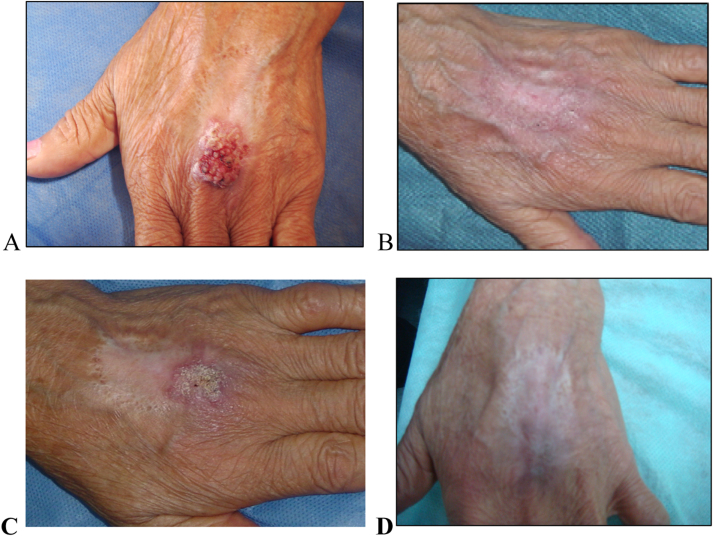
Chromoblastomycosis is a mutilating infection of the skin and subcutaneous tissues caused by melanized fungi belonging to the order Chaetothyriales. Proven cases of the main agent, Fonsecaea pedrosoi are mainly limited to (sub)tropical, humid climates of Latin and Central America and the Caribbean. Fonsecaea monophora has a global distribution along the equator. Cases outside the (sub)tropics have thus far mostly been considered to have been imported, but here we report the first endemic case by F. monophora from Argentina. Patient was a 82-year-old rural female worker from Corrientes, a province with a dry continental climate.
Keywords: Argentina; Chromoblastomycosis; Dematiaceous fungi; Fonsecaea monophora; South America.
Figures


References
-
- Najafzadeh M.J., Rezusta A., Cameo M.I., Zubiri M.L., Yus M.C., Badali H., Revillo M.J., De Hoog G.S. Successful treatment of chromoblastomycosis of 36 years duration caused by Fonsecaea monophora. Med. Mycol. 2010;48:390–393. - PubMed
-
- Pires C.A.A., Xavier M.B., Quaresma J.A.S., de Macedo G.M.M., de B.R., Sousa M., de Brito A.C. Clinical, epidemiological and mycological report on 65 patients from the Eastern Amazon region with chromoblastomycosis. An. Bras. Dermatol. 2012;87:555–560. - PubMed
-
- C. and L.S. Institute . Clinical and Laboratoty Standard Institute; Wayne, PA: 2008. Reference Method for Broth Dilution Antifungal Susceptibility Testing of Filamentous Fungi. 2nd Approved Standard. (CLSI document M38-A)
LinkOut - more resources
Full Text Sources
Other Literature Sources
