


Target-Cell-Directed Bioengineering Approaches for Gene Therapy of Hemophilia A
- PMID: 29552578
- PMCID: PMC5852392
- DOI: 10.1016/j.omtm.2018.01.004
Target-Cell-Directed Bioengineering Approaches for Gene Therapy of Hemophilia A
Abstract
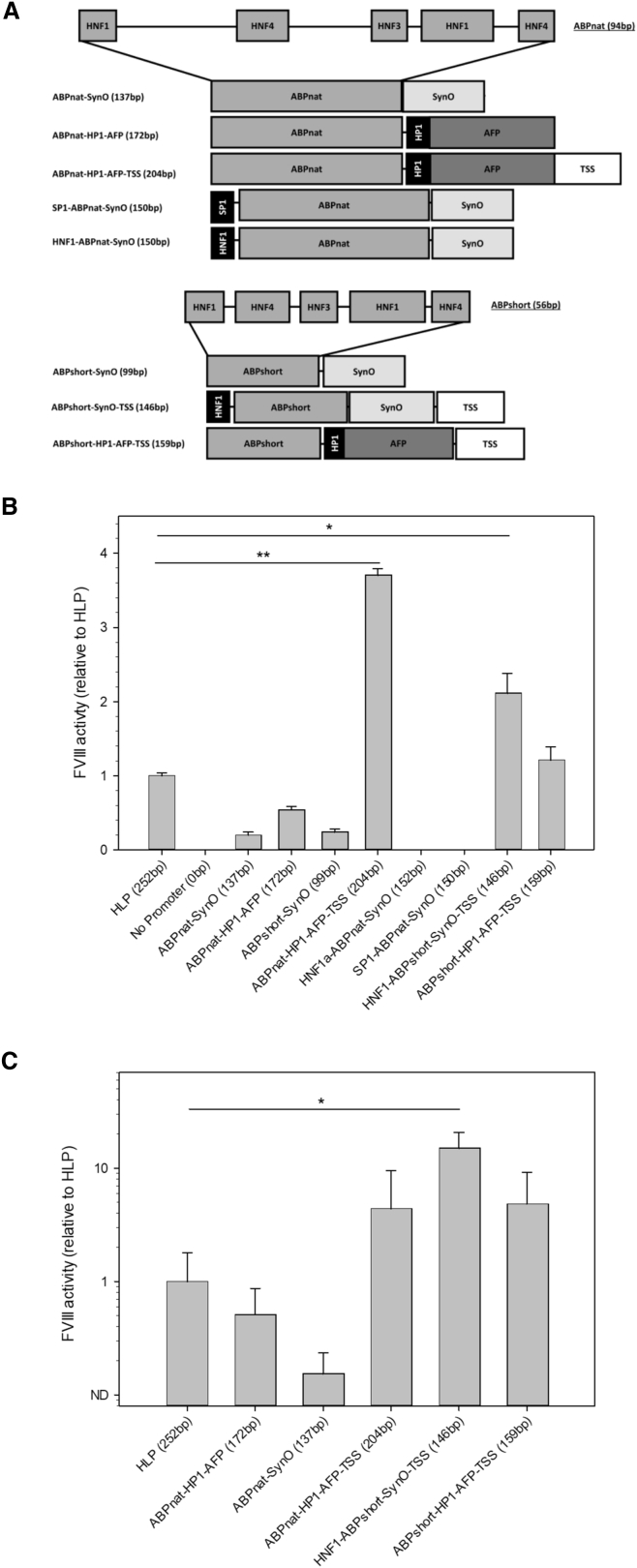
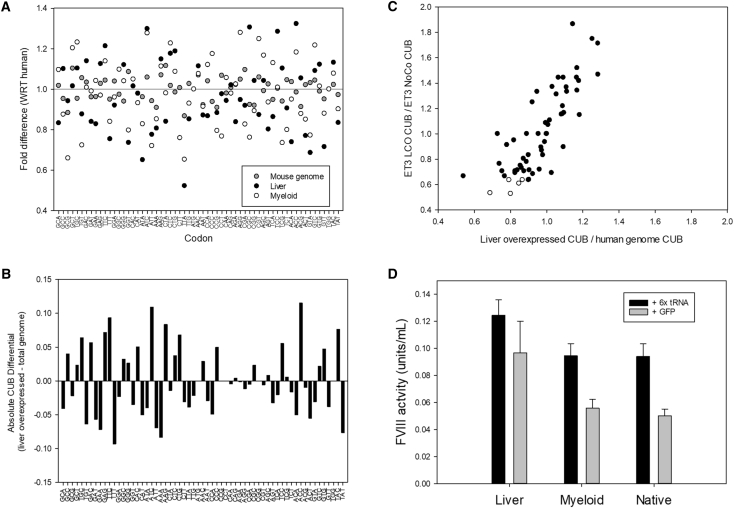
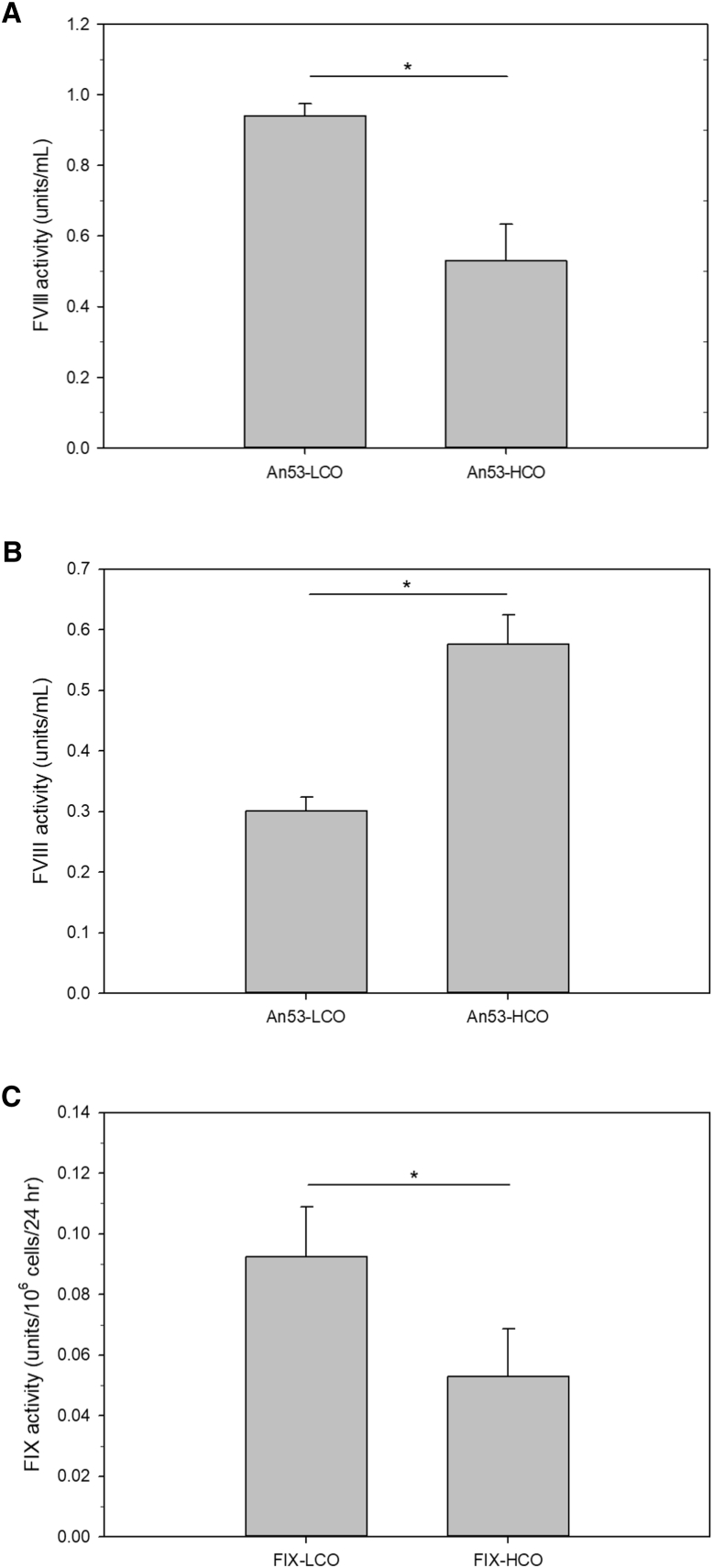
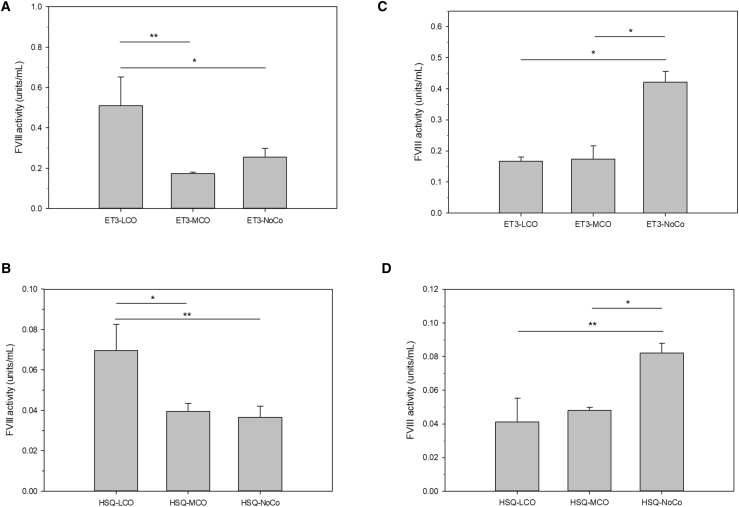
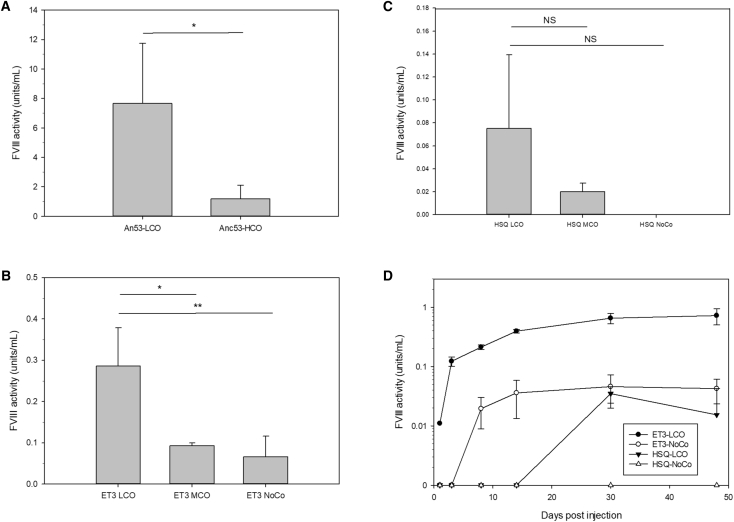
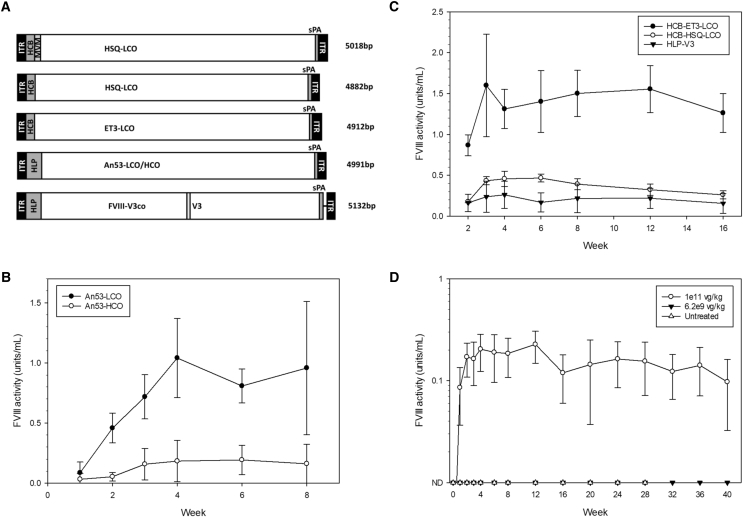
Potency is a key optimization parameter for hemophilia A gene therapy product candidates. Optimization strategies include promoter engineering to increase transcription, codon optimization of mRNA to improve translation, and amino-acid substitution to promote secretion. Herein, we describe both rational and empirical design approaches to the development of a minimally sized, highly potent AAV-fVIII vector that incorporates three unique elements: a liver-directed 146-nt transcription regulatory module, a target-cell-specific codon optimization algorithm, and a high-expression bioengineered fVIII variant. The minimal synthetic promoter allows for the smallest AAV-fVIII vector genome known at 4,832 nt, while the tissue-directed codon optimization strategy facilitates increased fVIII transgene product expression in target cell types, e.g., hepatocytes, over traditional genome-level codon optimization strategies. As a tertiary approach, we incorporated ancient and orthologous fVIII sequence elements previously shown to facilitate improved biosynthesis through post-translational mechanisms. Together, these technologies contribute to an AAV-fVIII vector that confers sustained, curative levels of fVIII at a minimal dose in hemophilia A mice. Moreover, the first two technologies should be generalizable to all liver-directed gene therapy vector designs.
Keywords: AAV; codon optimization; factor VIII; hemophilia; promoter design; vector optimization.
Figures
References
-
- Kay M.A., Manno C.S., Ragni M.V., Larson P.J., Couto L.B., McClelland A., Glader B., Chew A.J., Tai S.J., Herzog R.W. Evidence for gene transfer and expression of factor IX in haemophilia B patients treated with an AAV vector. Nat. Genet. 2000;24:257–261. - PubMed
-
- Manno C.S., Pierce G.F., Arruda V.R., Glader B., Ragni M., Rasko J.J., Ozelo M.C., Hoots K., Blatt P., Konkle B. Successful transduction of liver in hemophilia by AAV-Factor IX and limitations imposed by the host immune response. Nat. Med. 2006;12:342–347. - PubMed
-
- Nathwani A.C., Gray J.T., Ng C.Y., Zhou J., Spence Y., Waddington S.N., Tuddenham E.G., Kemball-Cook G., McIntosh J., Boon-Spijker M. Self-complementary adeno-associated virus vectors containing a novel liver-specific human factor IX expression cassette enable highly efficient transduction of murine and nonhuman primate liver. Blood. 2006;107:2653–2661. - PMC - PubMed
Grants and funding
LinkOut - more resources
Full Text Sources
Other Literature Sources
Research Materials
