


The effect of storage delay and storage temperature on orthopaedic surgical samples contaminated by Staphylococcus Epidermidis
- PMID: 29554102
- PMCID: PMC5858844
- DOI: 10.1371/journal.pone.0192048
The effect of storage delay and storage temperature on orthopaedic surgical samples contaminated by Staphylococcus Epidermidis
Abstract
Background: Prosthetic Joint Infection (PJI) is a rare but devastating complications with high morbitity and mortality. The identification of the causal microorganism remains crucial and determines therapeutic strategies and success. Microbiology cultures remain the common method to diagnose PJI. Unfortunately, 14% of intra-articular punctures remain negative after culture. The microorganisms are best detected by inoculation of microbiology samples in blood culture bottles (Bactec), or after sonication of the implant and polymerase chain reaction (PCR). The identification of the causal microorganism remains crucial and determines therapeutic success.
Objectives: This study was conducted to assess the effect of culture lead time and sample storage temperature on the detection of the pathogen.
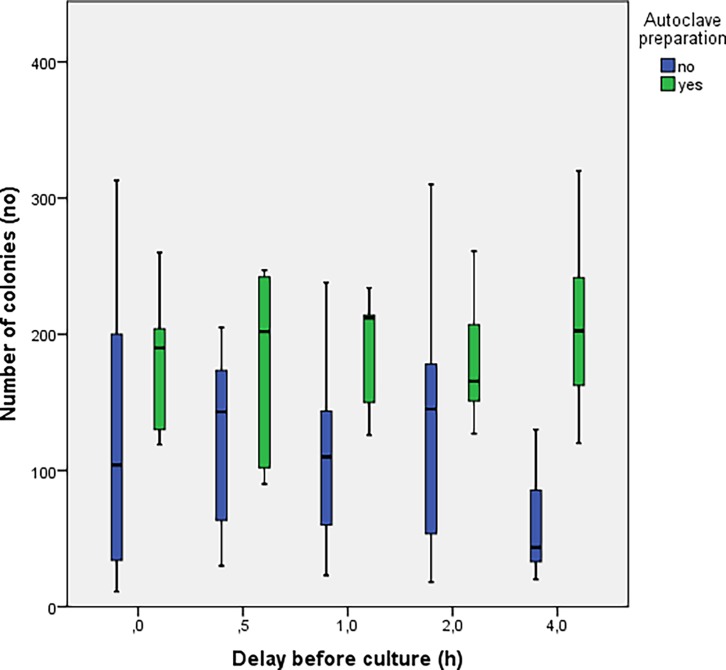
Methods: We obtained bone fragments from femoral heads during primary arthroplasty. Bone fragments were contaminated with a strain of Staphylococcus epidermidis. Four set-ups with different combinations of storage delay and storage temperature were tested.
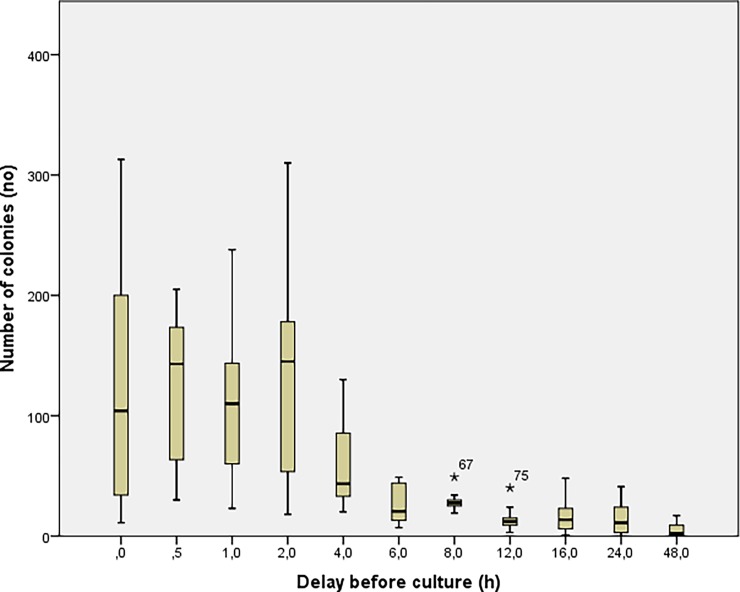
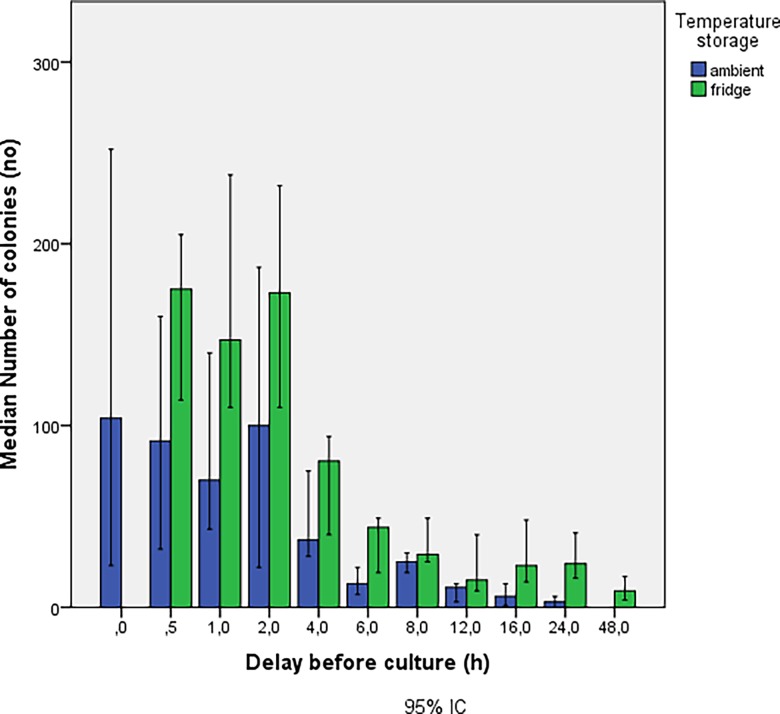
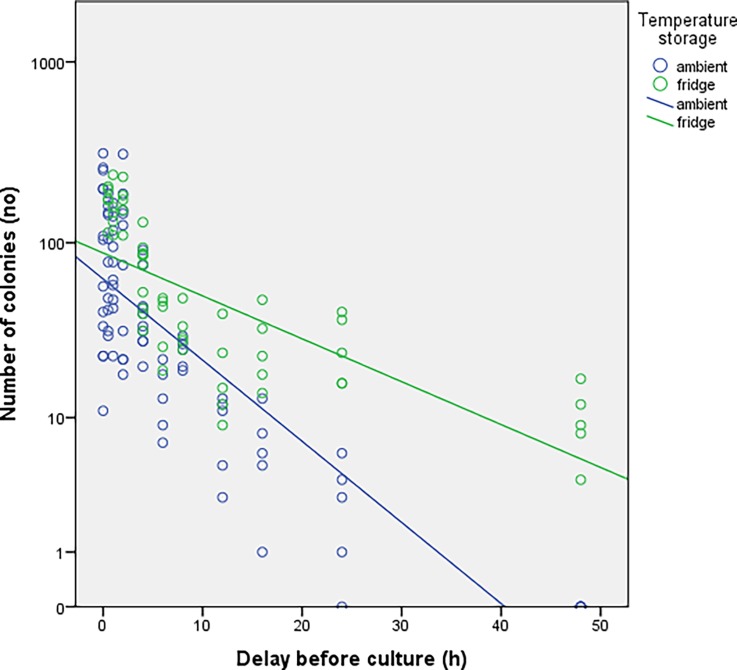
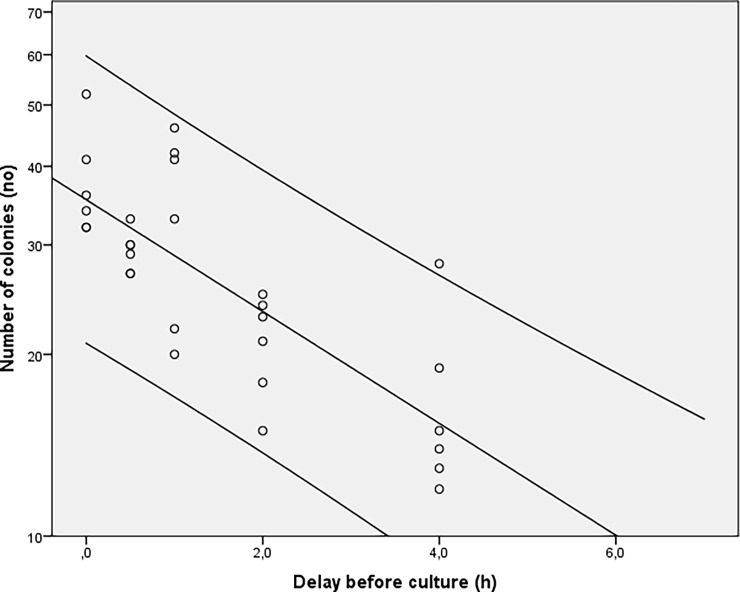
Results: Our study shows the need to cultivate as soon as possible and optimally within 2h after the completion of sampling. Temporary storage in a refrigerator at 4°C also appears to have a positive influence on bacterial viability. At present, these conclusions concern only the Staphylococcus Epidermidis. Others studies are requested to generalize this conclusion to other bacteria.
Conflict of interest statement
Figures
References
-
- Parvizi J, Della Valle CJ. AAOS Clinical Practice Guideline: diagnosis and treatment of periprosthetic joint infections of the hip and knee. J Am Acad Orthop Surg [Internet]. 2010. December [cited 2017 Apr 3];18(12):771–2. Available from: http://www.ncbi.nlm.nih.gov/pubmed/21119143 - PubMed
-
- Von B, Breusch S, Ed F, Engesaeter LB, Frommelt L, Gaston P, et al. Local Antibiotics in Arthoplasty State of the Art from an interdisciplinary points of view. [cited 2017 Apr 3]; Available from: http://www.beck-shop.de/fachbuch/inhaltsverzeichnis/9783131346414_TOC_00...
-
- Widmer AF. New Developments in Diagnosis and Treatment of Infection in Orthopedic Implants. Clin Infect Dis [Internet]. 2001. September 1 [cited 2017 Apr 3];33(s2):S94–106. Available from: http://www.ncbi.nlm.nih.gov/pubmed/11486305 - PubMed
-
- Schierholz JM, Beuth J. Implant infections: a haven for opportunistic bacteria. J Hosp Infect [Internet]. 2001. October [cited 2017 Apr 3];49(2):87–93. Available from: http://www.ncbi.nlm.nih.gov/pubmed/11567552 doi: 10.1053/jhin.2001.1052 - DOI - PubMed
-
- Zimmerli W, Trampuz A, Ochsner PE. Prosthetic-joint infections. N Engl J Med [Internet]. 2004. October 14 [cited 2017 Apr 3];351(16):1645–54. Available from: http://www.nejm.org/doi/abs/10.1056/NEJMra040181 doi: 10.1056/NEJMra040181 - DOI - DOI - PubMed
MeSH terms
LinkOut - more resources
Full Text Sources
Other Literature Sources
