


The Artificial Sweetener Splenda Promotes Gut Proteobacteria, Dysbiosis, and Myeloperoxidase Reactivity in Crohn's Disease-Like Ileitis
- PMID: 29554272
- PMCID: PMC5950546
- DOI: 10.1093/ibd/izy060
The Artificial Sweetener Splenda Promotes Gut Proteobacteria, Dysbiosis, and Myeloperoxidase Reactivity in Crohn's Disease-Like Ileitis
Abstract
Background: Epidemiological studies indicate that the use of artificial sweeteners doubles the risk for Crohn's disease (CD). Herein, we experimentally quantified the impact of 6-week supplementation with a commercial sweetener (Splenda; ingredients sucralose maltodextrin, 1:99, w/w) on both the severity of CD-like ileitis and the intestinal microbiome alterations using SAMP1/YitFc (SAMP) mice.
Methods: Metagenomic shotgun DNA sequencing was first used to characterize the microbiome of ileitis-prone SAMP mice. Then, 16S rRNA microbiome sequencing, quantitative polymerase chain reaction, fluorescent in situ hybridization (FISH), bacterial culture, stereomicroscopy, histology, and myeloperoxidase (MPO) activity analyses were then implemented to compare the microbiome and ileitis phenotype in SAMP with that of control ileitis-free AKR/J mice after Splenda supplementation.
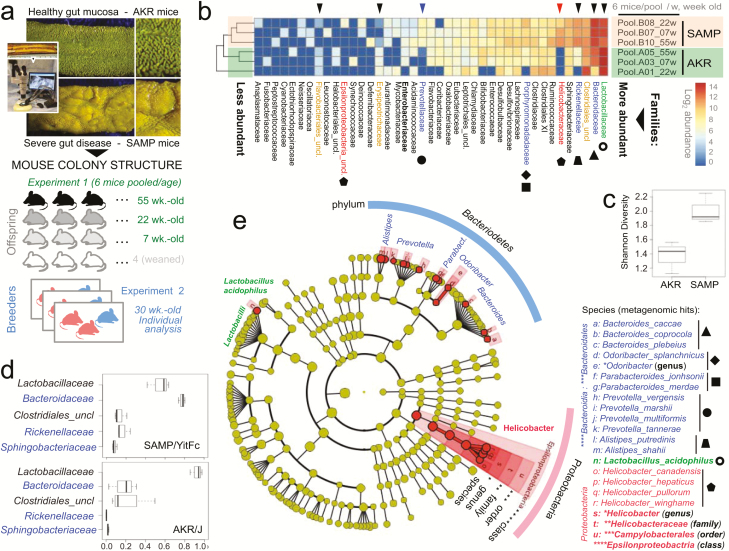
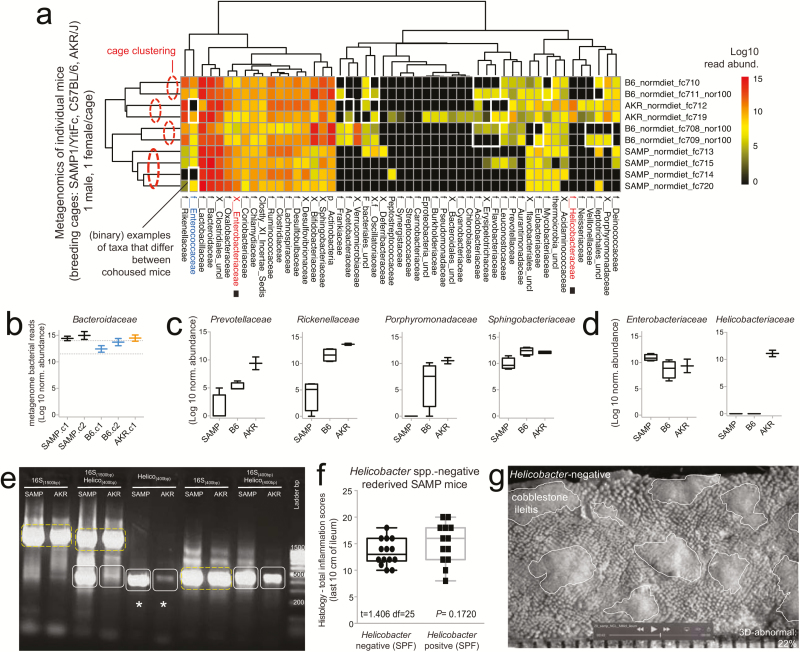
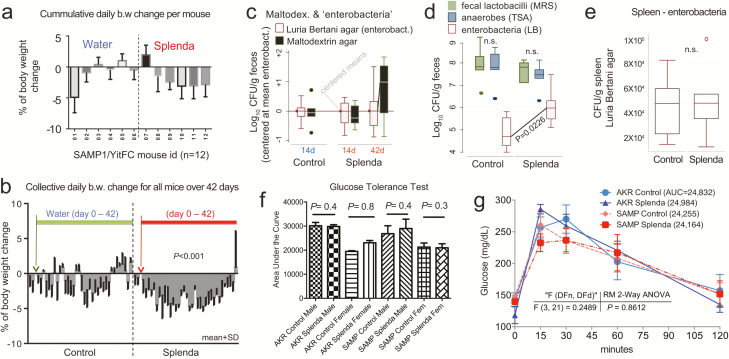
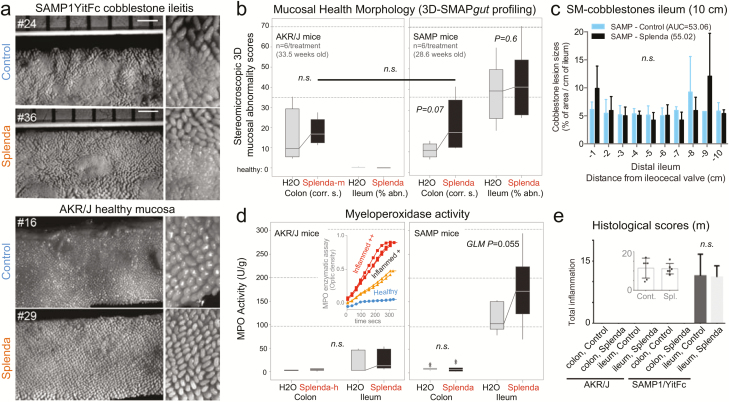
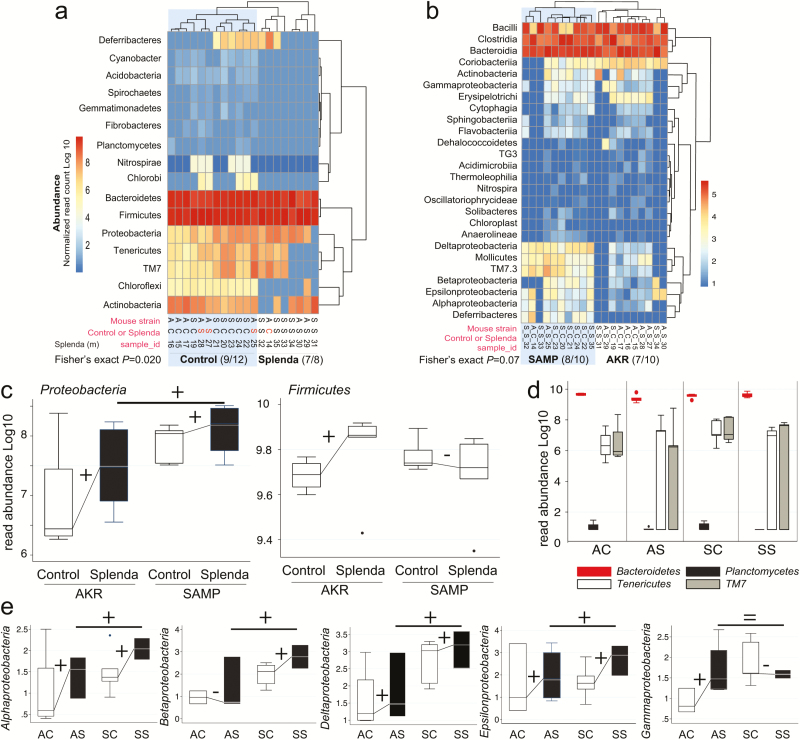
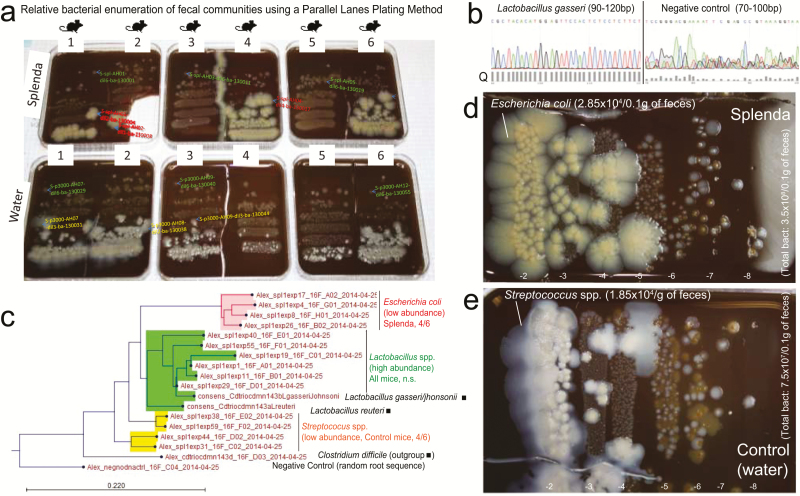
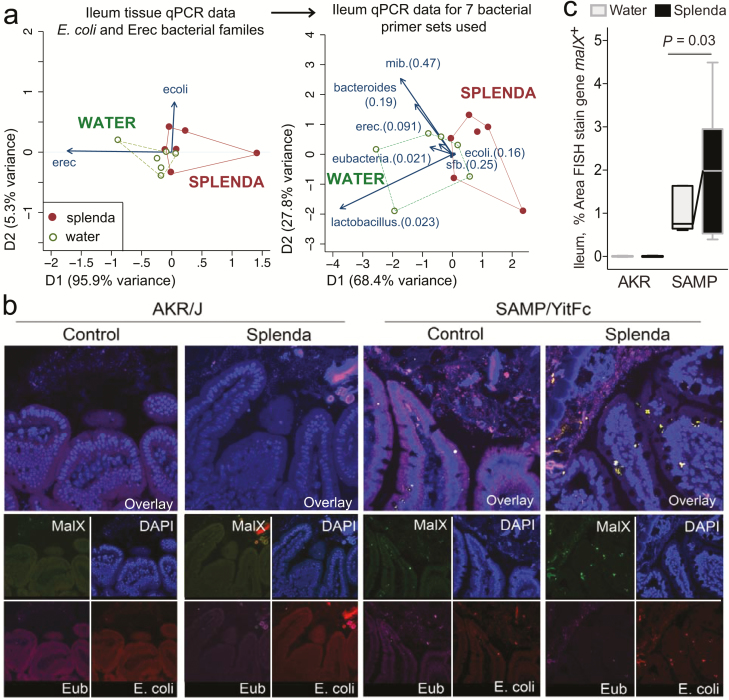
Results: Metagenomics indicated that SAMP mice have a gut microbial phenotype rich in Bacteroidetes, and experiments showed that Helicobacteraceae did not have an exacerbating effect on ileitis. Splenda did not increase the severity of (stereomicroscopic/histological) ileitis; however, biochemically, ileal MPO activity was increased in SAMP treated with Splenda compared with nonsupplemented mice (P < 0.022) and healthy AKR mice. Splenda promoted dysbiosis with expansion of Proteobacteria in all mice, and E. coli overgrowth with increased bacterial infiltration into the ileal lamina propria of SAMP mice. FISH showed increase malX gene-carrying bacterial clusters in the ilea of supplemented SAMP (but not AKR) mice.
Conclusions: Splenda promoted gut Proteobacteria, dysbiosis, and biochemical MPO reactivity in a spontaneous model of (Bacteroidetes-rich) ileal CD. Our results indicate that although Splenda may promote parallel microbiome alterations in CD-prone and healthy hosts, this did not result in elevated MPO levels in healthy mice, only CD-prone mice. The consumption of sucralose/maltodextrin-containing foods might exacerbate MPO intestinal reactivity only in individuals with a pro-inflammatory predisposition, such as CD.
Figures
Comment in
-
Artificial Diets and the Assessment of Negative Effects on the Digestive Health of Humans.Inflamm Bowel Dis. 2019 Jan 10;25(2):e8. doi: 10.1093/ibd/izy180. Inflamm Bowel Dis. 2019. PMID: 29771339 No abstract available.
-
The Effect of Splenda on Gut Microbiota of Humans Could be Much More Detrimental Than in Animals and Deserves More Extensive Research.Inflamm Bowel Dis. 2019 Jan 10;25(2):e7. doi: 10.1093/ibd/izy181. Inflamm Bowel Dis. 2019. PMID: 29771341 No abstract available.
-
Myeloperoxidases and Proteobacteria: Reliable Interspecies Biomarkers to Identify and Monitor Pro-inflammatory Diets in Humans.Inflamm Bowel Dis. 2019 Jan 10;25(2):e1-e2. doi: 10.1093/ibd/izy197. Inflamm Bowel Dis. 2019. PMID: 29846576 Free PMC article. No abstract available.
-
Sucralose Increased Susceptibility to Colitis in Rats.Inflamm Bowel Dis. 2019 Jan 10;25(2):e3-e4. doi: 10.1093/ibd/izy196. Inflamm Bowel Dis. 2019. PMID: 29846590 No abstract available.
-
May Dysbiosis Caused by Dietary Chemicals Such as Sucralose and Saccharin Be More Detrimental to the Gut and Health Than Antibiotics? How?Inflamm Bowel Dis. 2019 Feb 21;25(3):e20. doi: 10.1093/ibd/izy198. Inflamm Bowel Dis. 2019. PMID: 29850815 No abstract available.
-
Crohn's Disease-Like Ileitis and the Inhibitory Effect of Sucralose on Streptococci.Inflamm Bowel Dis. 2019 Mar 14;25(4):e34-e37. doi: 10.1093/ibd/izy251. Inflamm Bowel Dis. 2019. PMID: 30099495 Free PMC article. No abstract available.
-
Is Splenda, or Sucralose, Causally Linked to Inflammatory Bowel Disease?Inflamm Bowel Dis. 2019 Mar 14;25(4):e33. doi: 10.1093/ibd/izy250. Inflamm Bowel Dis. 2019. PMID: 30099508 No abstract available.
References
-
- Eppinga H, Peppelenbosch MP. Worsening of bowel symptoms through diet in patients with inflammatory bowel disease. Inflamm Bowel Dis. 2016;22:E6–E7. - PubMed
-
- Limdi JK, Aggarwal D, McLaughlin JT. Diet and exacerbation of inflammatory bowel disease symptoms–food for thought. Inflamm Bowel Dis. 2016;22:E11. - PubMed
-
- Limdi JK, Aggarwal D, McLaughlin JT. Dietary practices and beliefs in patients with inflammatory bowel disease. Inflamm Bowel Dis. 2016;22:164–70. - PubMed
-
- Forbes A, Escher J, Hébuterne X et al. ESPEN guideline: clinical nutrition in inflammatory bowel disease. Clin Nutr. 2017;36:321–47. - PubMed
-
- Hansen TS, Jess T, Vind I et al. Environmental factors in inflammatory bowel disease: a case-control study based on a danish inception cohort. J Crohns Colitis. 2011;5:577–84. - PubMed
Publication types
MeSH terms
Substances
Grants and funding
LinkOut - more resources
Full Text Sources
Other Literature Sources
Medical
Research Materials
Miscellaneous
