


Gender differences in the associations between age trends of social media interaction and well-being among 10-15 year olds in the UK
- PMID: 29554883
- PMCID: PMC5859512
- DOI: 10.1186/s12889-018-5220-4
Gender differences in the associations between age trends of social media interaction and well-being among 10-15 year olds in the UK
Abstract
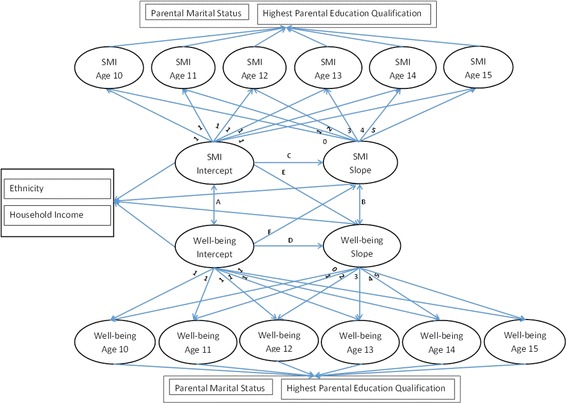
Background: Adolescents are among the highest consumers of social media while research has shown that their well-being decreases with age. The temporal relationship between social media interaction and well-being is not well established. The aim of this study was to examine whether the changes in social media interaction and two well-being measures are related across ages using parallel growth models.
Methods: Data come from five waves of the youth questionnaire, 10-15 years, of the Understanding Society, the UK Household Longitudinal Study (pooled n = 9859). Social media interaction was assessed through daily frequency of chatting on social websites. Well-being was measured by happiness with six domains of life and the Strengths and Difficulties Questionnaire.
Results: Findings suggest gender differences in the relationship between interacting on social media and well-being. There were significant correlations between interacting on social media and well-being intercepts and between social media interaction and well-being slopes among females. Additionally higher social media interaction at age 10 was associated with declines in well-being thereafter for females, but not for males. Results were similar for both measures of well-being.
Conclusions: High levels of social media interaction in early adolescence have implications for well-being in later adolescence, particularly for females. The lack of an association among males suggests other factors might be associated with their reduction in well-being with age. These findings contribute to the debate on causality and may inform future policy and interventions.
Keywords: Adolescents; Gender; Growth curve modelling; Longitudinal studies; Social media interaction; Well-being.
Conflict of interest statement
Ethics approval and consent to participate
Ethical approval was obtained from the university ethics committee and the National Research Ethics Service. Adults 16 and older provided written consent to participate. For adolescents aged 10-15, parental or responsible adult verbal consent was required and obtained for participation.
Consent for publication
Not applicable.
Competing interests
The authors declare no competing interests.
Publisher’s Note
Springer Nature remains neutral with regard to jurisdictional claims in published maps and institutional affiliations.
Figures
References
-
- Viner R. Co-occurrence of adolescent health risk behaviors and outcomes in adult life: findings from a national birth cohort. J Adolesc Health. 2005;36(2):98–99. doi: 10.1016/j.jadohealth.2004.11.012. - DOI
-
- The Sedentary Behaviour and Obesity Expert Working Group . Sedentary behaviour and obesity: review of the current scientific evidence. In. London: Department of Health. Schools and Families: Department for Children; 2010. pp. 122–125.
Publication types
MeSH terms
Grants and funding
LinkOut - more resources
Full Text Sources
Other Literature Sources
Medical
