


Frontal lesions predict response to prism adaptation treatment in spatial neglect: A randomised controlled study
- PMID: 29558241
- PMCID: PMC6148387
- DOI: 10.1080/09602011.2018.1448287
Frontal lesions predict response to prism adaptation treatment in spatial neglect: A randomised controlled study
Abstract
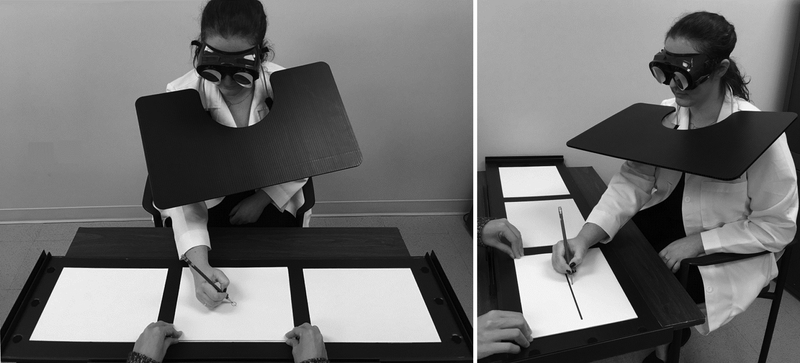
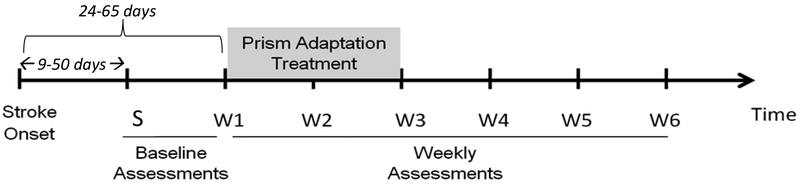
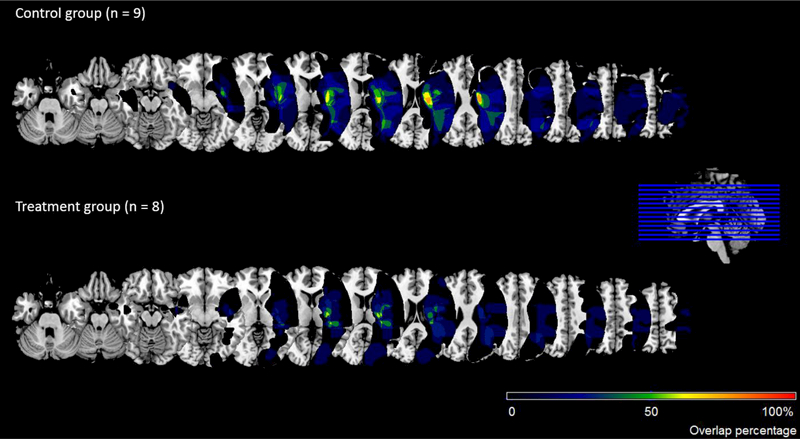
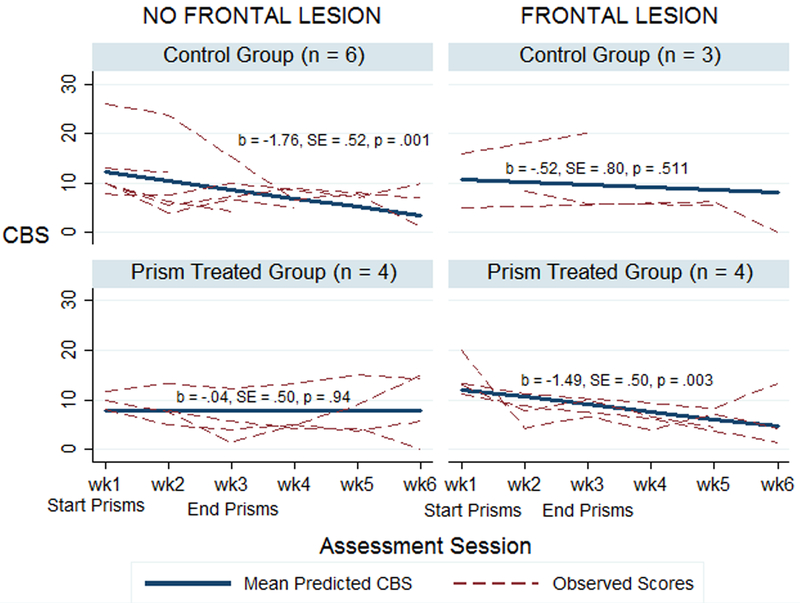
Spatial neglect commonly follows right hemisphere stroke. It is defined as impaired contralesional stimulus detection, response, or action, causing functional disability. While prism adaptation treatment is highly promising to promote functional recovery of spatial neglect, not all individuals respond. Consistent with a primary effect of prism adaptation on spatial movements, we previously demonstrated that functional improvement after prism adaptation treatment is linked to frontal lobe lesions. However, that study was a treatment-only study with no randomised control group. The current study randomised individuals with spatial neglect to receive 10 days of prism adaptation treatment or to receive only standard care (control group). Replicating our earlier results, we found that the presence of frontal lesions moderated response to prism adaptation treatment: among prism-treated patients, only those with frontal lesions demonstrated functional improvements in their neglect symptoms. Conversely, among individuals in the standard care control group, the presence of frontal lesions did not modify recovery. These results suggest that further research is needed on how frontal lesions may predict response to prism adaptation treatment. Additionally, the results help elucidate the neural network involved in spatial movement and could be used to aid decisions about treatment.
Keywords: Lesion mapping; Prism adaptation; Rehabilitation; Spatial neglect; Stroke.
Conflict of interest statement
Disclosure of Interest
Authors Goedert, and Foundas report no conflicts of interest. Drs. Chen and Barrett report the scientific funding disclosed above, and are both employees of the Kessler Foundation.
Figures
References
-
- Azouvi P, Bartolomeo P, Beis JM, Perennou D, Pradat-Diehl P, & Rousseaux M (2006). A battery of tests for the quantitative assessment of unilateral neglect. Restorative Neurology and Neuroscience, 24(4–6), 273–285. - PubMed
-
- Azouvi P, Marchal F, Samuel C, Morin L, Renard C, Louis-Drefus A, … Bergego C. (1996). Functional consequences and awareness of unilateral neglect: Study of an evaluation scale. Neuropsychological Rehabilitation, 6(2), 133–150.
-
- Barrett AM, & Burkholder S (2006). Monocular patching in subjects with right-hemisphere stroke affects perceptual-attentional bias. Journal of Rehabilitation Research and Development, 43(3), 337–346. - PubMed
Publication types
MeSH terms
Grants and funding
LinkOut - more resources
Full Text Sources
Other Literature Sources
Medical