


Prioritization of the essentials in the spending patterns of Canadian households experiencing food insecurity
- PMID: 29560852
- PMCID: PMC10260842
- DOI: 10.1017/S1368980018000472
Prioritization of the essentials in the spending patterns of Canadian households experiencing food insecurity
Abstract
Objective: Food insecurity is a potent determinant of health and indicator of material deprivation in many affluent countries. Food insecurity is associated with compromises in food and housing expenditures, but how it relates to other expenditures is unknown. The present study described households' resource allocation over a 12-month period by food insecurity status.
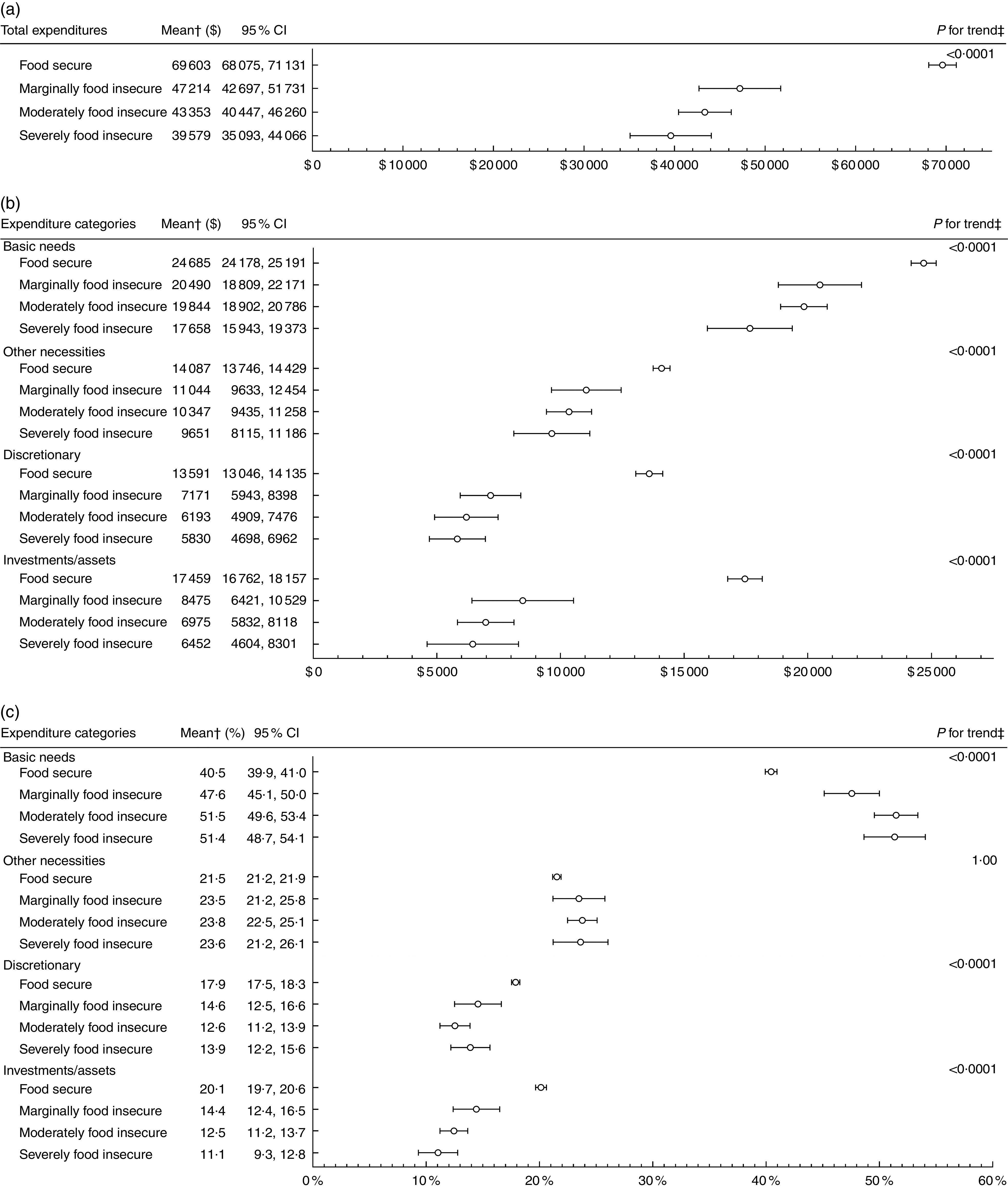
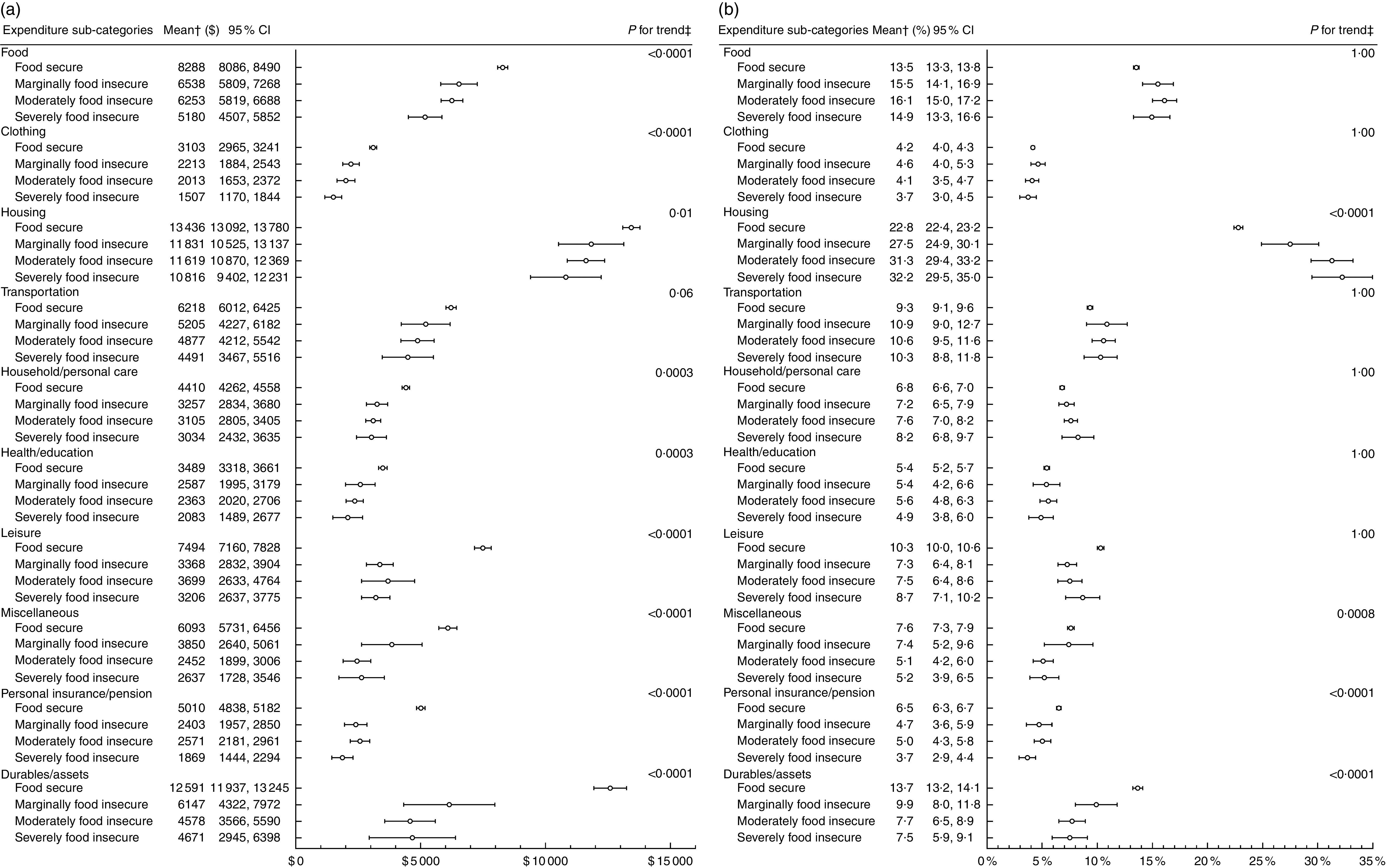
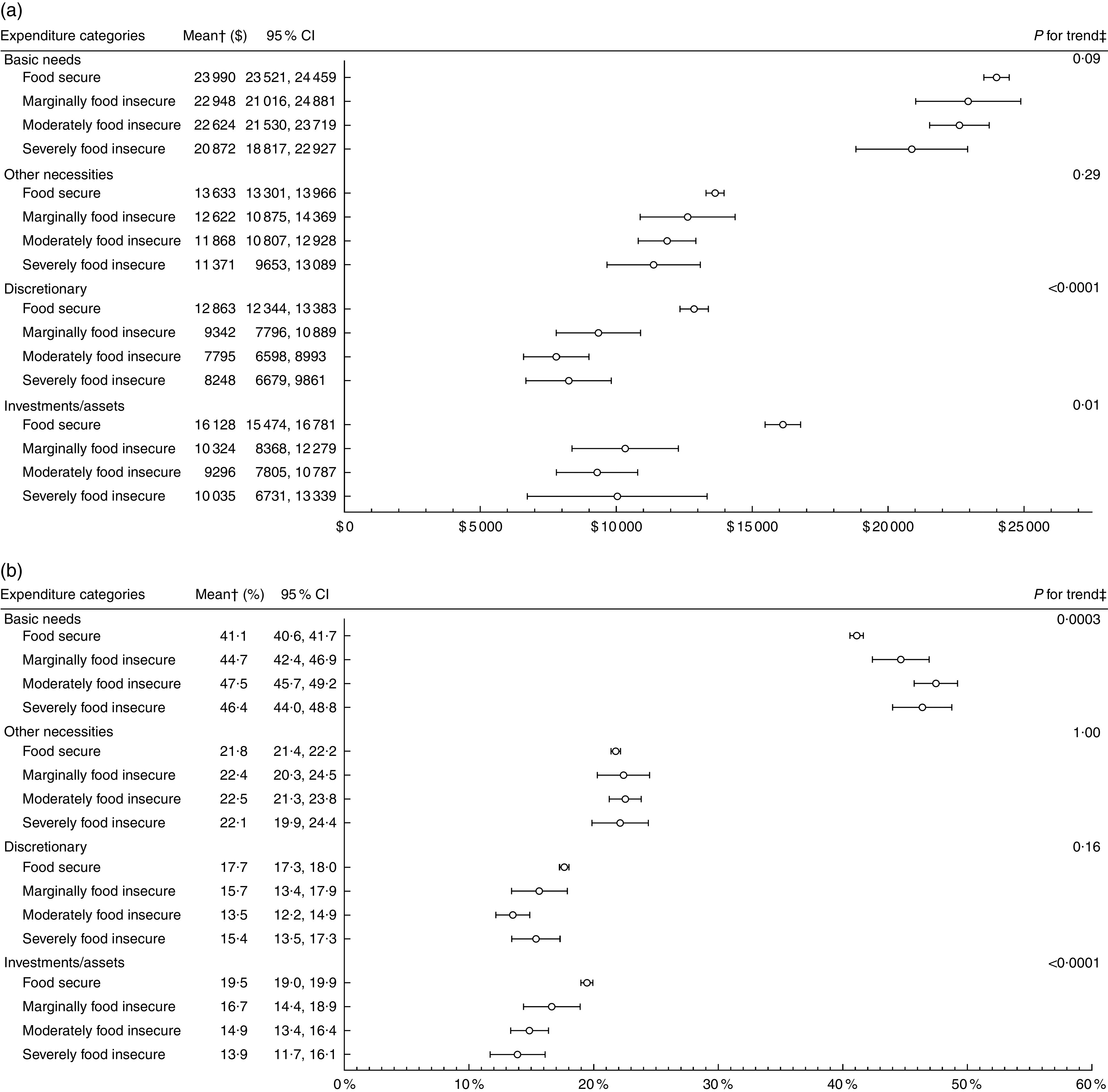
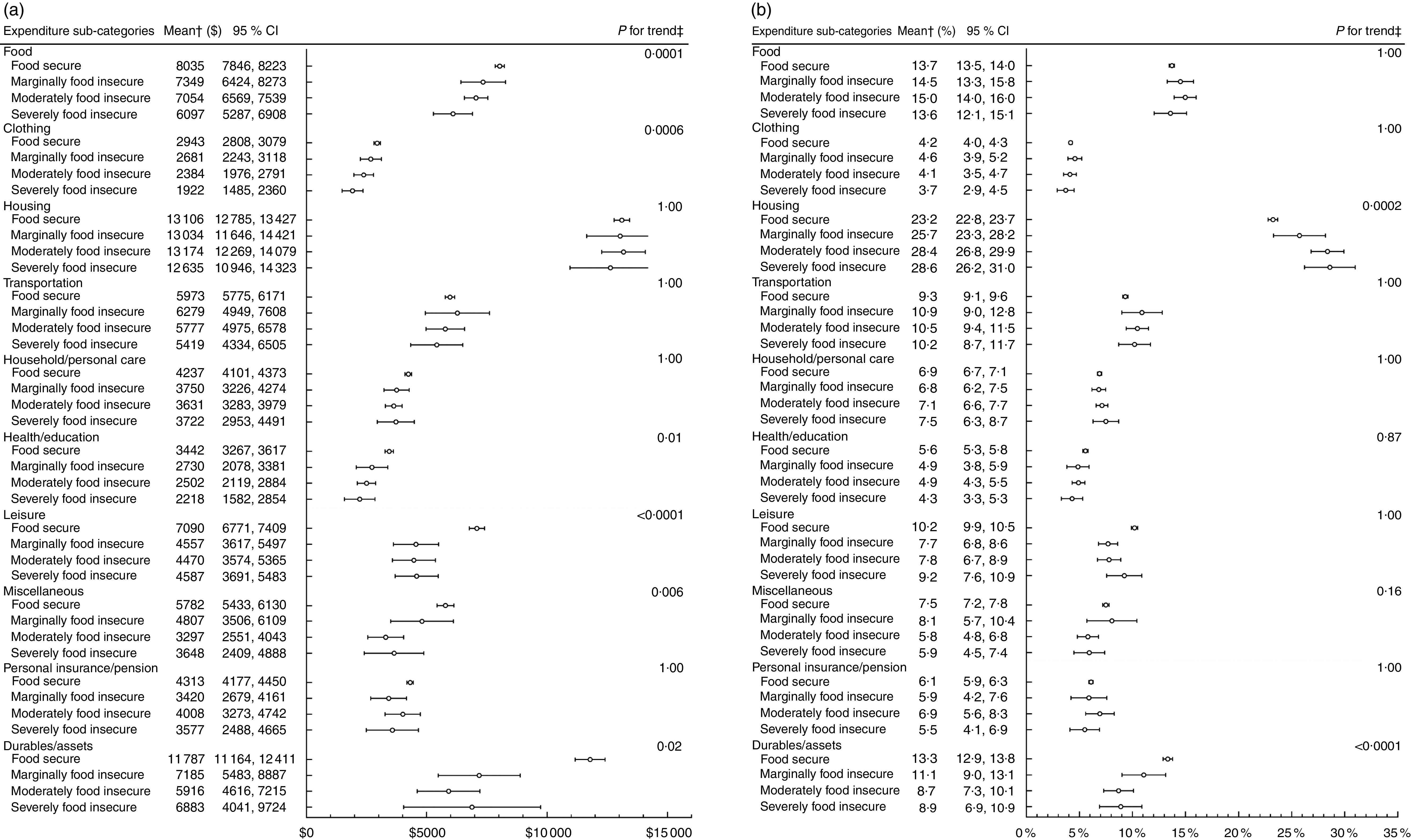
Design: Expenditure data from the 2010 Survey of Household Spending were aggregated into four categories (basic needs, other necessities, discretionary, investments/assets) and ten sub-categories (food, clothing, housing, transportation, household/personal care, health/education, leisure, miscellaneous, personal insurance/pension, durables/assets). A four-level food insecurity status was created using the adult-specific items of the Household Food Security Survey Module. Mean dollars spent and budget share by food insecurity status were estimated with generalized linear models adjusted first for household size and composition, and subsequently for after-tax income quartiles.
Setting: Canada.
Subjects: Population-based sample of households from the ten provinces (n 9050).
Results: Food-secure households had higher mean total expenditures than marginally, moderately and severely food-insecure households (P-trend <0·0001). As severity of food insecurity increased, households spent less on all categories and sub-categories, except transportation, but they allocated a larger budget share to basic needs and smaller shares to discretionary spending and investments/assets. The downward trends for dollars spent on basic needs and other necessities became non-significant after accounting for income, but the upward trend in the budget shares for basic needs persisted.
Conclusions: The spending patterns of food-insecure households suggest that they prioritized essential needs above all else.
Keywords: Basic needs; Canada; Expenditures; Household food insecurity; Spending patterns.
Figures
References
-
- Tarasuk V, Mitchell A & Dachner N (2016) Household Food Insecurity in Canada, 2014. Toronto, ON: Research to identify policy options to reduce food insecurity; (PROOF).
-
- Ashton JR, Middleton J & Lang T (2014) Open letter to Prime Minister David Cameron on food poverty in the UK. Lancet 383, 1631. - PubMed
-
- Loopstra R, Reeves A & Stuckler D (2015) Rising food insecurity in Europe. Lancet 385, 2041. - PubMed
-
- Gundersen C & Ziliak JP (2015) Food insecurity and health outcomes. Health Aff (Millwood) 34, 1830–1839. - PubMed
Publication types
MeSH terms
Grants and funding
LinkOut - more resources
Full Text Sources
Other Literature Sources
