Review
. 2018 Mar 20;48(3):417-433.
doi: 10.1016/j.immuni.2018.03.007.

Combination Cancer Therapy with Immune Checkpoint Blockade: Mechanisms and Strategies

Affiliations
Review

Combination Cancer Therapy with Immune Checkpoint Blockade: Mechanisms and Strategies

Shetal A Patel et al. Immunity. .

Abstract

The success of immune checkpoint blockade in patients with a wide variety of malignancies has changed the treatment paradigm in oncology. However, combination therapies with immune checkpoint blockade will be needed to overcome resistance and broaden the clinical utility of immunotherapy. Here we discuss a framework for rationally designing combination therapy strategies based on enhancing major discriminatory functions of the immune system that are corrupted by cancer-namely, antigenicity, adjuvanticity, and homeostatic feedback inhibition. We review recent advances on how conventional genotoxic cancer therapies, molecularly targeted therapies, epigenetic agents, and immune checkpoint inhibitors can restore these discriminatory functions. Potential barriers that can impede response despite combination therapy are also discussed.


Figures

Figure 1:
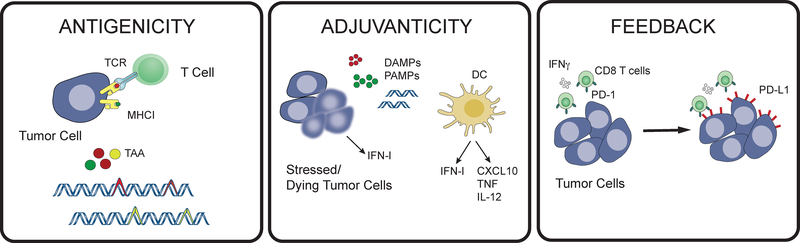
Figure 1:. Three discriminatory functions of the immune system, antigenicity, adjuvanticity, and feedback regulation, are critical for promoting anti-tumor immunity.
T cells recognize tumor associated antigens (TAA), which can be generated by mutations in tumor cells, when presented in the context of class I MHC. The presence of non-self antigens must be accompanied by danger signaling to activate the innate immune system, promote dendritic cell (DC) maturation, and T cell activation. Normal homeostatic feedback mechanisms then curb the immune response to limit immunopathology after clearance of pathogens.
Figure 2:
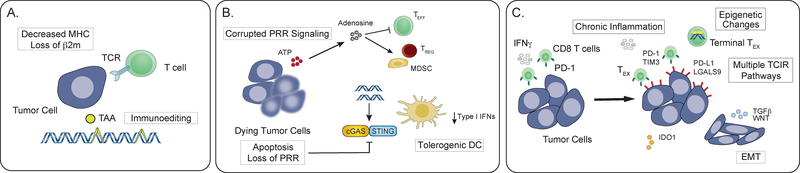
Figure 2:. Cancers corrupt the discriminatory functions of the immune response to evade elimination.
A. Decreased expression of class I MHC or genetic loss of β2-microglobulin prevent cell surface presentation of TAAs. Immunoediting leads to selection of tumor cells with decreased antigenicity, often by genetic loss or decreased expression of antigens. B. Tumors may inhibit cell intrinsic activation of pattern recognition receptor (PRR) signaling by genetic loss or silencing of pathways such as cGAS/STING. PRR signaling in the tumor microenvironment can also be corrupted to promote suppressive inflammatory signaling through activation of regulatory T cells, myeloid derived suppressor cells and macrophages, rather than dendritic cells. C. Feedback mechanisms that curb normal immune responses can be co-opted by tumor cells. Chronic inflammation (e.g., IFN signaling) mediated upregulation of immunosuppressive factors such as PD-L1 and IDO1 can impair T cell function. Persistent antigen and engagement of multiple T cell inhibitory receptors (TCIRs) can lead to epigenetic changes in effector T cells (Teff) that are only partially reversed by PD-1 blockade. TGFβ can have direct immunosuppressive effects as well as influence tumor cell fate.
Figure 3:
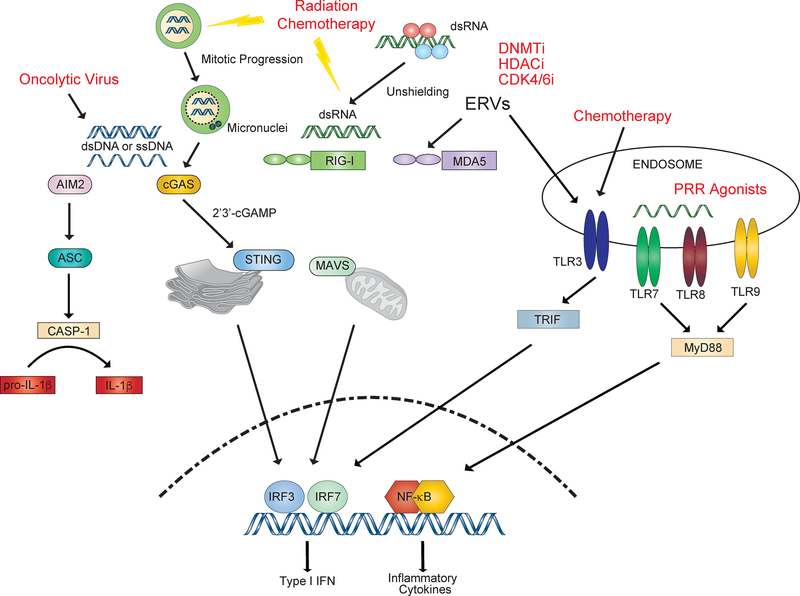
Figure 3:. Activation of pattern recognition receptors by conventional and targeted therapies can promote innate immune signaling.
Radiation and genotoxic agents can lead to activation of the cGAS/STING pathway intrinsically in tumor cells as well as in dendritic cells. Altered cell cycle machinery in tumor cells allows progression through mitosis despite DNA damage, leading to the accumulation of cGAS positive nuclei. Epigenetic therapy with DNA methyltransferase inhibitors (DNMTi) and histone deacetylase inhibitors (HDACi) can derepress endogenous retroviruses (ERVs) in a mechanism termed virus mimicry. Targeted therapies such as CDK4/6 inhibitors have also been shown to promote interferon signaling through this mechanism. Changes in RNA binding proteins can lead to unshielding of dsRNA, allowing RIG-I activation. Chemotherapy, such as adriamycin, can activate TLR3 signaling to promote anti-tumor immune responses. Oncolytic viruses have multi-faceted effects on innate immune signaling through activation of PRR and promotion of immunogenic cell death (ICD). Direct STING and TLR agonists are also being developed.
Figure 4:
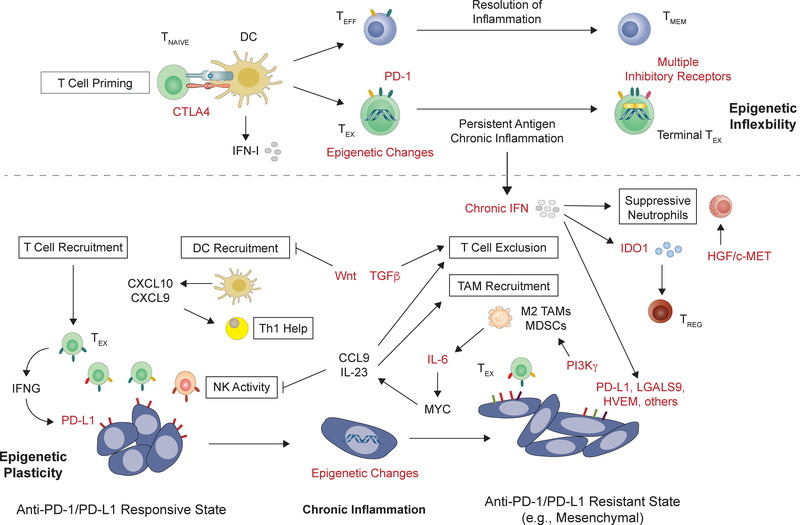
Figure 4:. Targets to interfere with feedback inhibition mechanisms from immune cells and the tumor microenvironment.
Naïve T cells (TNAIVE) undergo different cell fates depending on the nature of the antigen and the course of inflammation (above dashed line). After T cell priming, persistent antigen and chronic inflammation, which typifies cancer, results in T cell exhaustion as a mechanism to limit immune-mediated pathology. In contrast to effector T cells (TEFF) that differentiate into memory T cells (TMEM), these exhausted T cells (TEX) have poor effector function that may be epigenetically “locked-in”. Targeting multiple co-expressed T cell inhibitory receptors can improve TEX function. In contrast to TEX, the tumor microenvironment (TME) generally demonstrates plasticity (below dashed line). Instructed by aberrant environmental cues and feedback signals associated with chronic inflammation and non-healing wounds, cancers can acquire various immune-TME phenotypes (boxed in black). DC and T cell recruitment favor response to PD1–1/PD-L1 blockade. However, tumors that transition into mesenchymal states by inflammatory cytokines or oncogenic signals exhibit an immune-TME that excludes T cells and supports suppressive TAMs and MDSCs. Chronic cytokine signals such as IFN can exacerbate immune suppression through various mechanisms, which can contrast with their typical stimulatory roles during productive immune responses that resolve. When multiple immune suppressive mechanisms dominate, resistance or relapse to anti-PD-1/PD-L1 typically occurs. Potential targets for combination ICB therapy is indicated in red and include the epigenetic state of tumor and immune cells, intracellular and extracellular signaling pathways, suppressive cytokines, and non-redundant T cell inhibitory receptor pathways. See Table 2 for examples of agents against these targets.

References

    1. Ahrends T, Spanjaard A, Pilzecker B, Bąbała N, Bovens A, Xiao Y, Jacobs H, Borst J, 2017. CD4+T Cell Help Confers a Cytotoxic T Cell Effector Program Including Coinhibitory Receptor Downregulation and Increased Tissue Invasiveness. Immunity 47, 848–861.e5. doi:10.1016/j.immuni.2017.10.009 - DOI - PubMed
    1. Andreeva L, Hiller B, Kostrewa D, Lässig C, de Oliveira Mann CC, Jan Drexler D, Maiser A, Gaidt M, Leonhardt H, Hornung V, Hopfner K-P, 2017. cGAS senses long and HMGB/TFAM-bound U-turn DNA by forming protein–DNA ladders. Nature 549, 394–398. doi:10.1038/nature23890 - DOI - PubMed
    1. Antonia SJ, Villegas A, Daniel D, Vicente D, Murakami S, Hui R, Yokoi T, Chiappori A, Lee KH, de Wit M, Cho BC, Bourhaba M, Quantin X, Tokito T, Mekhail T, Planchard D, Kim Y-C, Karapetis CS, Hiret S, Ostoros G, Kubota K, Gray JE, Paz-Ares L, de Castro Carpeño J, Wadsworth C, Melillo G, Jiang H, Huang Y, Dennis PA, Özgüroğlu M, PACIFIC Investigators, 2017. Durvalumab after Chemoradiotherapy in Stage III Non-Small-Cell Lung Cancer. N Engl J Med 377, 1919–1929. doi:10.1056/NEJMoa1709937 - DOI - PubMed
    1. Arce Vargas F, Furness AJS, Solomon I, Joshi K, Mekkaoui L, Lesko MH, Miranda Rota E, Dahan R, Georgiou A, Sledzinska A, Ben Aissa A, Franz D, Werner Sunderland M, Wong YNS, Henry JY, O’Brien T, Nicol D, Challacombe B, Beers SA, Gore M, Larkin J, Swanton C, Chester KA, Pule M, Ravetch JV, Marafioti T, Peggs KS, Quezada SA, Wotherspoon A, Francis N, Smith M, Strauss D, Hayes A, Soultati A, Stares M, Spain L, Lynch J, Fotiadis N, Fernando A, Hazell S, Chandra A, Pickering L, Rudman S, Chowdhury S, Jamal-Hanjani M, Veeriah S, Shafi S, Czyzewska-Khan J, Johnson D, Laycock J, Bosshard-Carter L, Goh G, Rosenthal R, Gorman P, Murugaesu N, Hynds RE, Wilson G, Birkbak NJ, Watkins TBK, McGranahan N, Horswell S, Mitter R, Escudero M, Stewart A, Van Loo P, Rowan A, Xu H, Turajlic S, Hiley C, Abbosh C, Goldman J, Stone RK, Denner T, Matthews N, Elgar G, Ward S, Biggs J, Costa M, Begum S, Phillimore B, Chambers T, Nye E, Graca S, Bakir Al, M., Hartley JA, Lowe HL, Herrero J, Lawrence D, Hayward M, Panagiotopoulos N, Kolvekar S, Falzon M, Borg E, Simeon C, Hector G, Smith A, Aranda M, Novelli M, Oukrif D, Janes SM, Thakrar R, Forster M, Ahmad T, Lee SM, Papadatos-Pastos D, Carnell D, Mendes R, George J, Navani N, Ahmed A, Taylor M, Choudhary J, Summers Y, Califano R, Taylor P, Shah R, Krysiak P, Rammohan K, Fontaine E, Booton R, Evison M, Crosbie P, Moss S, Idries F, Joseph L, Bishop P, Chaturved A, Quinn AM, Doran H, Leek A, Harrison P, Moore K, Waddington R, Novasio J, Blackhall F, Rogan J, Smith E, Dive C, Tugwood J, Brady G, Rothwell DG, Chemi F, Pierce J, Gulati S, Naidu B, Langman G, Trotter S, Bellamy M, Bancroft H, Kerr A, Kadiri S, Webb J, Middleton G, Djearaman M, Fennell D, Shaw JA, Le Quesne J, Moore D, Nakas A, Rathinam S, Monteiro W, Marshall H, Nelson L, Bennett J, Riley J, Primrose L, Martinson L, Anand G, Khan S, Amadi A, Nicolson M, Kerr K, Palmer S, Remmen H, Miller J, Buchan K, Chetty M, Gomersall L, Lester J, Edwards A, Morgan F, Adams H, Davies H, Kornaszewska M, Attanoos R, Lock S, Verjee A, MacKenzie M, Wilcox M, Bell H, Iles N, Hackshaw A, Ngai Y, Smith S, Gower N, Ottensmeier C, Chee S, Johnson B, Alzetani A, Shaw E, Lim E, De Sousa P, Barbosa MT, Bowman A, Jorda S, Rice A, Raubenheimer H, Proli C, Cufari ME, Ronquillo JC, Kwayie A, Bhayani H, Hamilton M, Bakar Y, Mensah N, Ambrose L, Devaraj A, Buderi S, Finch J, Azcarate L, Chavan H, Green S, Mashinga H, Nicholson AG, Lau K, Sheaff M, Schmid P, Conibear J, Ezhil V, Ismail B, Irvin-sellers M, Prakash V, Russell P, Light T, Horey T, Danson S, Bury J, Edwards J, Hill J, Matthews S, Kitsanta Y, Suvarna K, Fisher P, Keerio AD, Shackcloth M, Gosney J, Postmus P, Feeney S, Asante-Siaw J, 2017. Fc-Optimized Anti-CD25 Depletes Tumor-Infiltrating Regulatory T Cells and Synergizes with PD-1 Blockade to Eradicate Established Tumors. Immunity 46, 577–586. doi:10.1016/j.immuni.2017.03.013 - DOI - PMC - PubMed
    1. Banchereau J, Briere F, Caux C, Davoust J, Lebecque S, Liu YJ, Pulendran B, Palucka K, 2000. Immunobiology of dendritic cells. Annu Rev Immunol 18, 767–811. doi:10.1146/annurev.immunol.18.1.767 - DOI - PubMed

Publication types

MeSH terms

Substances