


Frameworks for embedding a research culture in allied health practice: a rapid review
- PMID: 29562939
- PMCID: PMC5863457
- DOI: 10.1186/s12961-018-0304-2
Frameworks for embedding a research culture in allied health practice: a rapid review
Abstract
Background: Although allied health clinicians play a key role in the provision of healthcare, embedding a culture of research within public and private health systems remains a challenge. In this rapid review we critically evaluate frameworks for embedding research into routine allied health practice, as the basis for high quality, safe, efficient and consumer-focused care.
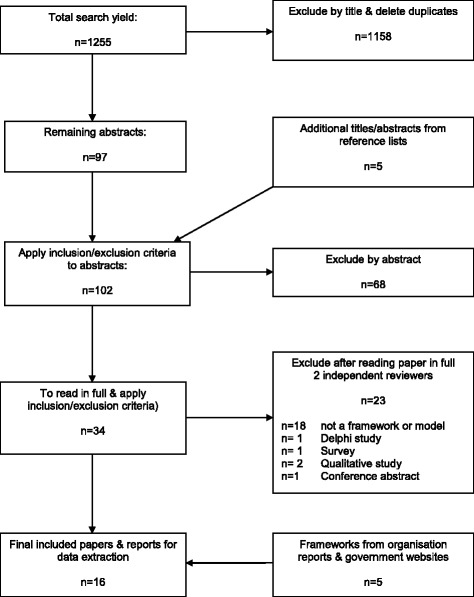
Methods: A rapid review (PROSPERO: CRD42017075699) was conducted to evaluate frameworks designed to create and embed research in the health sector. Included were full-text, English-language, peer-reviewed publications or Government reports of frameworks that could inform the implementation of an allied health research framework. Eight electronic databases and four government websites were searched, using search terms such as models, frameworks and research capacity-building. Two independent researchers conducted all review stages and used content and thematic analysis to interpret the results.
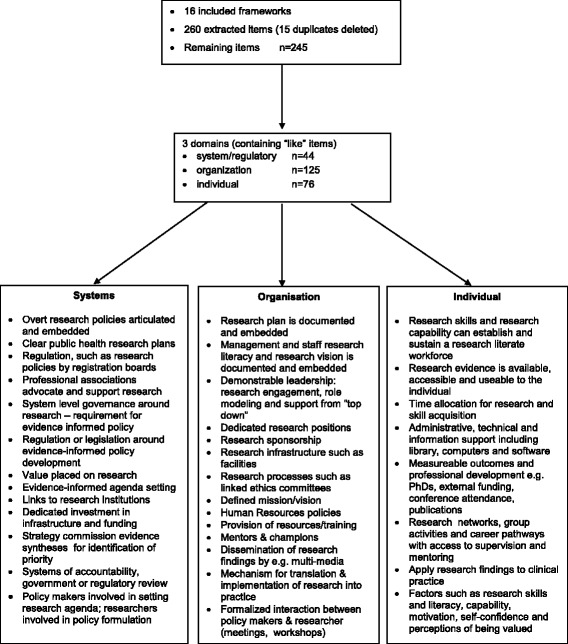
Results: Sixteen framework papers were finally included. Content analysis identified 44 system and regulatory level items that informed the research frameworks, 125 healthcare organisation items and 76 items relating to individual clinicians. Thematic analysis identified four major themes. Firstly, sustainable change requires allied health research policies, regulation, governance and organisational structures that support and value evidence-based practice. Secondly, research capability, receptivity, advocacy and literacy of healthcare leaders and managers are key to successful research implementation. Third, organisational factors that facilitate a research culture include dedicated staff research positions, time allocated to research, mentoring, professional education and research infrastructure. When healthcare agencies had strong partnerships with universities and co-located research leaders, research implementation was strengthened. Finally, individual attributes of clinicians, such as their research skills and capabilities, motivation, and participation in research teams, are essential to embedding research into practice.
Conclusion: Theoretical frameworks were identified that informed processes to embed a culture of allied health research into healthcare services. Research-led and evidence-informed allied health practice enables optimisation of workforce capability and high-quality care.
Keywords: allied health; implementation science; leadership; policy; research capacity; systematic review knowledge translation.
Conflict of interest statement
Ethics approval and consent to participate
Not applicable.
Consent for publication
Not applicable.
Competing interests
The authors declare that they have no competing interests.
Publisher’s Note
Springer Nature remains neutral with regard to jurisdictional claims in published maps and institutional affiliations.
Figures
References
-
- The Australian Government Department of Health. http://www.health.gov.au/internet/publications/publishing.nsf/Content/wo.... Accessed 15 Dec 2017.
Publication types
MeSH terms
LinkOut - more resources
Full Text Sources
Other Literature Sources
