


Vitamin B3 Nicotinamide: A Promising Candidate for Treating Preeclampsia and Improving Fetal Growth
- PMID: 29563389
- PMCID: PMC7021450
- DOI: 10.1620/tjem.244.243
Vitamin B3 Nicotinamide: A Promising Candidate for Treating Preeclampsia and Improving Fetal Growth
Abstract
Up to 8% of pregnant women suffer from preeclampsia (PE), a deadly disease characterized by high blood pressure (BP), blood vessel damage, called endotheliosis (vascular endothelial swelling with narrowing of capillary lumen), and high levels of protein in the urine. PE is often associated with premature delivery, which is a risk factor of cardiovascular and metabolic diseases among the offspring. Accordingly, establishing drug treatments of PE is in immediate needs. Currently, many of anti-hypertensive drugs cause malformation of the fetuses and are contraindicated for pregnant women. Anti-hypertensive drugs that are allowed to be used for treating pregnant women could lower BP of the mothers and reduce the risk of maternal death due to cardiovascular diseases such as cerebral hemorrhage. However, these anti-hypertensives do not improve endotheliosis and proteinuria. In fact, they reduce blood supply to the placentae and fetuses, which could lead to fetal growth restriction (FGR) and fetal and neonatal death. Until now, the only treatment for preeclamptic women has been delivery of the baby and placenta. Using three mechanistically different mouse models of PE, we have found that vitamin B3 nicotinamide (Nam) is the first safe drug that alleviates PE, and that Nam also alleviates or prevents miscarriage, prolongs pregnancy period, and improves the growth of the fetuses in mice with PE. Importantly, Nam has been used for pregnant and nursing women who have difficulty in taking sufficient meal. Nam could help treat or prevent PE and FGR associated with PE, if the treatment works in humans.
Keywords: endotheliosis; fetal growth restriction; nicotinamide; preeclampsia; premature delivery.
Conflict of interest statement
Conflict of Interest
The authors declare no conflict of interest.
Figures


References
-
- Arendshorst WJ & Thai TL (2009) Regulation of the renal microcirculation by ryanodine receptors and calcium-induced calcium release. Curr. Opin. Nephrol. Hypertens, 18, 40–49. - PubMed
-
- Dulak J, Loboda A, Zagorska A & Jozkowicz A (2004) Complex role of heme oxygenase-1 in angiogenesis. Antioxid. Redox Signal., 6, 858–866. - PubMed
-
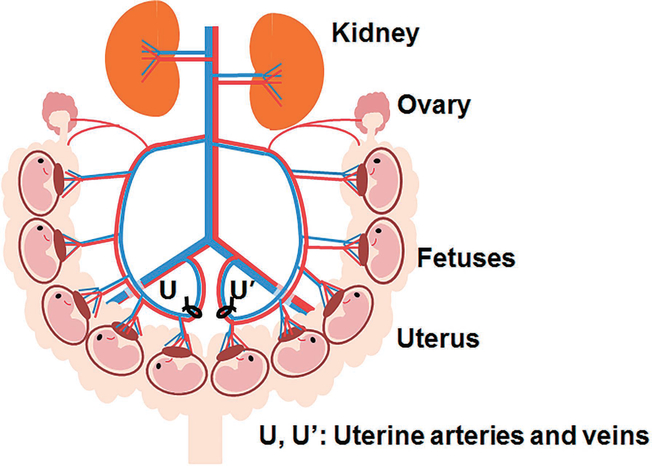
- Fushima T, Sekimoto A, Oe Y, Sato E, Ito S, Sato H & Takahashi N (2017) Nicotinamide ameliorates a preeclampsia-like condition in mice with reduced uterine perfusion pressure. Am. J. Physiol. Renal Physiol, 312, F366–F372. - PubMed
-
- Kingman M, Ruggiero R & Torres F (2009) Ambrisentan, an endothelin receptor type A-selective endothelin receptor antagonist, for the treatment of pulmonary arterial hypertension. Expert Opin. Pharmacother, 10, 1847–1858. - PubMed
Publication types
MeSH terms
Substances
Grants and funding
LinkOut - more resources
Full Text Sources
Other Literature Sources
Medical
Miscellaneous
