


The combined effect of probiotic cultures and incubation final pH on the quality of buffalo milk yogurt during cold storage
- PMID: 29564117
- PMCID: PMC5849917
- DOI: 10.1002/fsn3.580
The combined effect of probiotic cultures and incubation final pH on the quality of buffalo milk yogurt during cold storage
Abstract
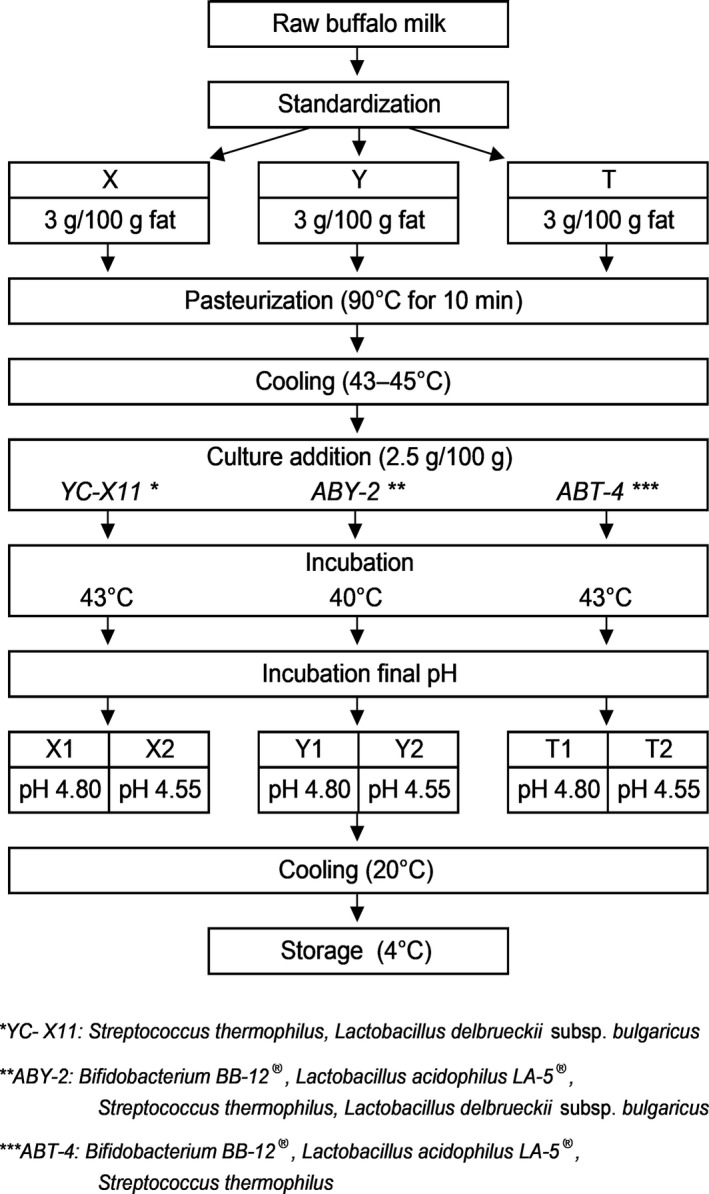
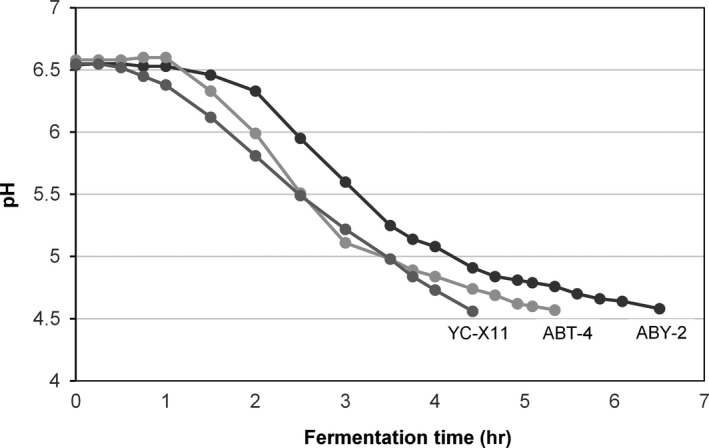
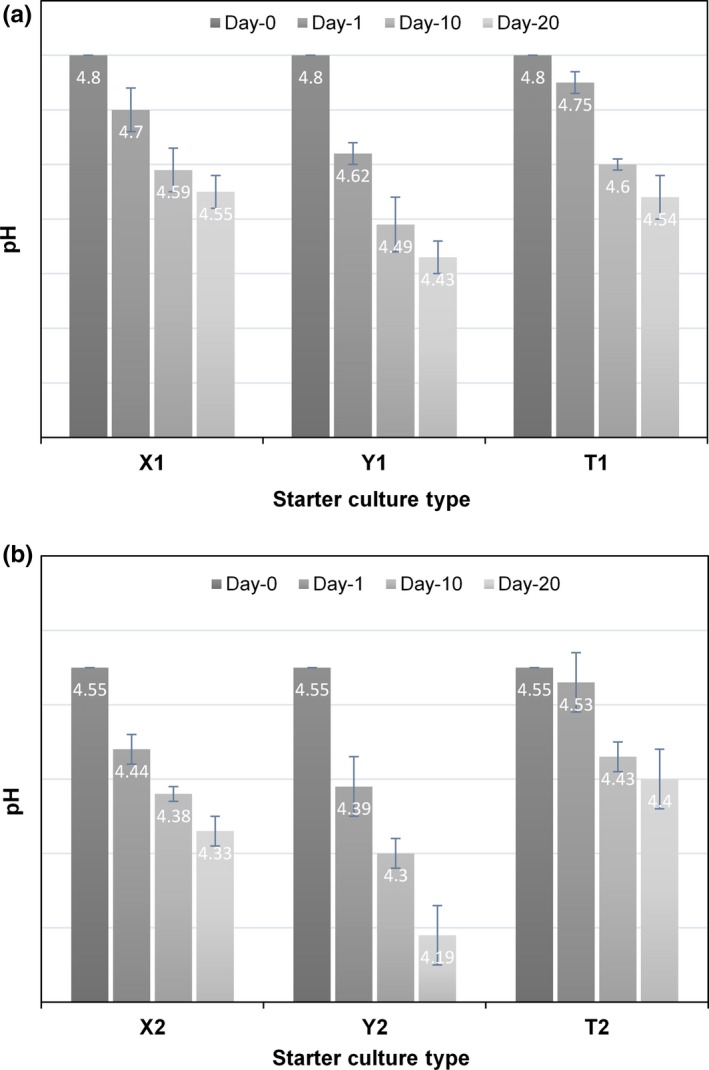
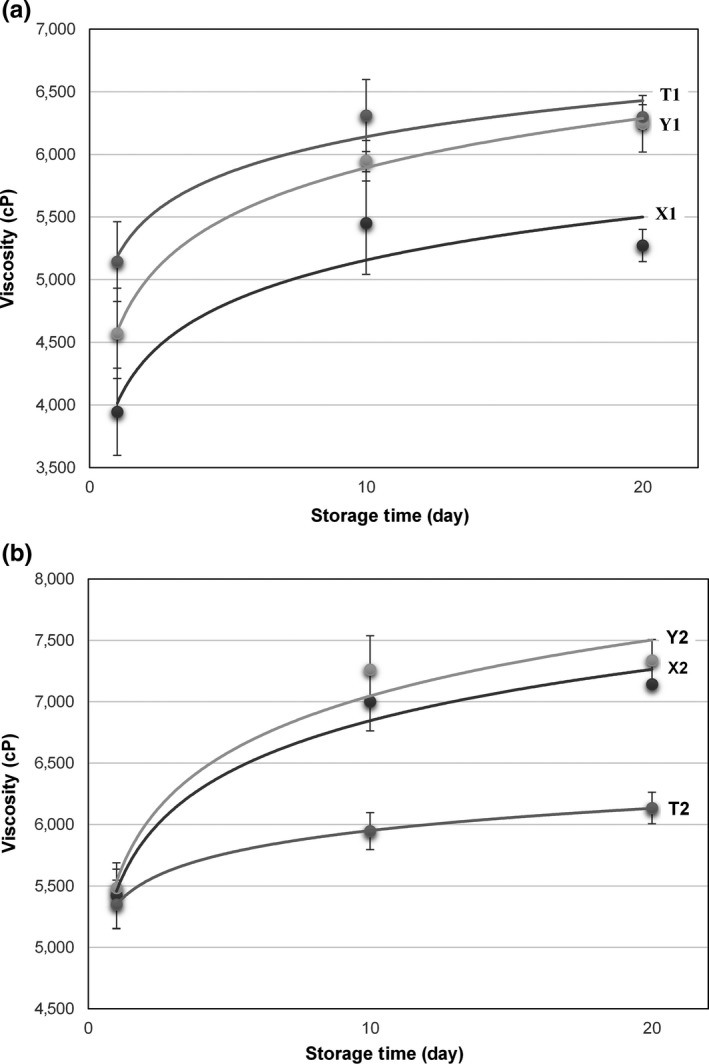
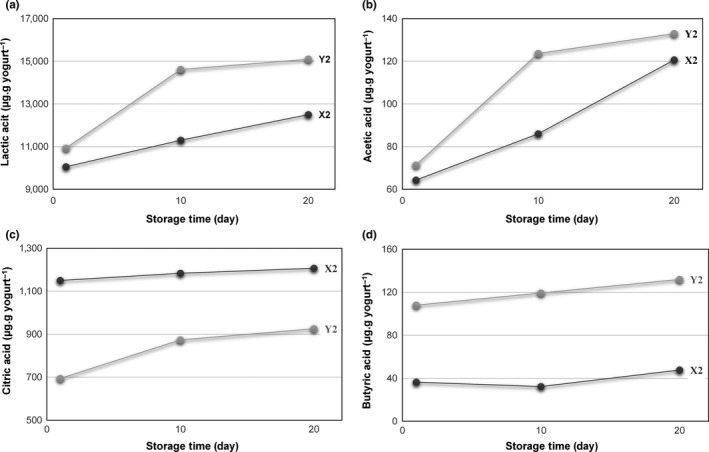
The combined effects of starter culture type (SCT) and incubation final pH (IFpH) on the physicochemical and organoleptic properties of buffalo milk yogurt containing 3 g·100 g-1 milk fat were investigated throughout 20 days of storage at 4°C. The postacidification kinetics fitted to zero-order reaction for all buffalo milk yogurt samples. The reaction rate constants of the buffalo milk yogurt samples containing YC-X11, ABY-2, and ABT-4 cultures were 0.010, 0.007, and 0.004 g·100 g-1·day-1, respectively. Regardless of the IFpH, the absence of Lactobacillus delbrueckii subsp. bulgaricus in the starter culture increased the syneresis. L*, a*, and b* values were not affected by the IFpH and the SCT. ABY-2 culture increased the amount of organic acids during cold storage in comparison with the YC-X11, while its effect on the proportions of saturated and unsaturated fatty acids was not significant. The results of sensory evaluation revealed that a more acceptable buffalo milk yogurt can be manufactured by using probiotic ABY-2 culture.
Keywords: buffalo milk yogurt; cold storage; incubation pH; starter culture.
Figures
References
-
- Adhikari, K. , Grün, I. , Mustapha, A. , & Fernando, L. (2002). Changes in the profile of organic acids in plain set and stirred yogurts during manufacture and refrigerated storage. Journal of Food Quality, 25(5), 435–451. https://doi.org/10.1111/j.1745-4557.2002.tb01038.x - DOI
-
- Akgun, A. , Yazici, F. , & Gulec, H. A. (2016). Effect of reduced fat content on the physicochemical and microbiological properties of buffalo milk yoghurt. LWT‐Food Science and Technology, 74, 521–527. https://doi.org/10.1016/j.lwt.2016.08.015 - DOI
-
- AOAC . (2000). Official methods of analysis (17th edn). Washington, DC: Association of Official Chemists.
-
- Badel, S. , Bernardi, T. , & Michaud, P. (2011). New perspectives for Lactobacilli exopolysaccharides. Biotechnology Advances, 29(1), 54–66. https://doi.org/10.1016/j.biotechadv.2010.08.011 - DOI - PubMed
-
- Beshkova, D. , Simova, E. , Frengova, G. , & Simov, Z. (1998). Production of flavour compounds by yogurt starter cultures. Journal of Industrial Microbiology and Biotechnology, 20(3–4), 180–186. https://doi.org/10.1038/sj.jim.2900504 - DOI
LinkOut - more resources
Full Text Sources
Other Literature Sources
