


From "Gut Feeling" to Objectivity: Machine Preservation of the Liver as a Tool to Assess Organ Viability
- PMID: 29564205
- PMCID: PMC5843692
- DOI: 10.1007/s40472-018-0178-9
From "Gut Feeling" to Objectivity: Machine Preservation of the Liver as a Tool to Assess Organ Viability
Abstract
Purpose of review: The purpose of this review was to summarise how machine perfusion could contribute to viability assessment of donor livers.
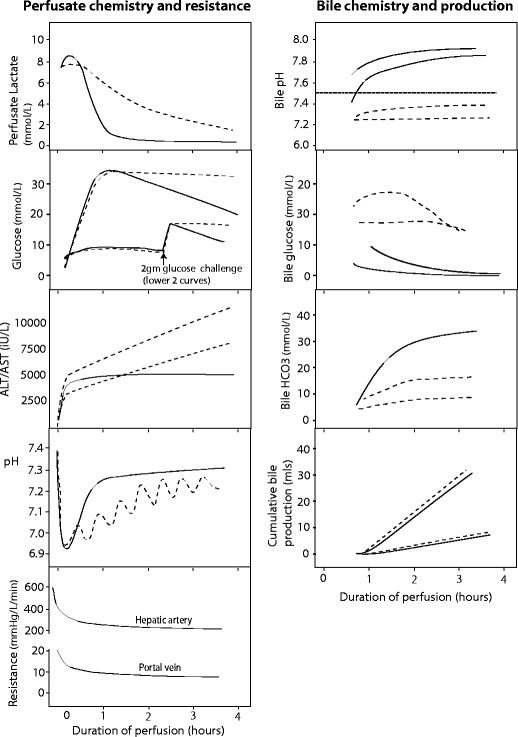
Recent findings: In both hypothermic and normothermic machine perfusion, perfusate transaminase measurement has allowed pretransplant assessment of hepatocellular damage. Hypothermic perfusion permits transplantation of marginal grafts but as yet has not permitted formal viability assessment. Livers undergoing normothermic perfusion have been investigated using parameters similar to those used to evaluate the liver in vivo. Lactate clearance, glucose evolution and pH regulation during normothermic perfusion seem promising measures of viability. In addition, bile chemistry might inform on cholangiocyte viability and the likelihood of post-transplant cholangiopathy.
Summary: While the use of machine perfusion technology has the potential to reduce and even remove uncertainty regarding liver graft viability, analysis of large datasets, such as those derived from large multicenter trials of machine perfusion, are needed to provide sufficient information to enable viability parameters to be defined and validated .
Keywords: Liver transplantation; Machine perfusion; Normothermic perfusion; Organ preservation; Viability assessment.
Conflict of interest statement
Compliance with Ethical StandardsIna Jochmans reports non-financial support from Astellas Pharma (for travel, accommodation and registration for conferences) and received speaker fees paid to institution from Sanofi Genzyme, outside the submitted work.This article does not contain any studies with human or animal subjects performed by any of the authors.
Figures
References
-
- Braat AE, Blok JJ, Putter H, Adam R, Burroughs AK, Rahmel AO, Porte RJ, Rogiers X, Ringers J, for the European Liver and Intestine Transplant Association (ELITA) and Eurotransplant Liver Intestine Advisory Committee (ELIAC) The Eurotransplant donor risk index in liver transplantation: ET-DRI. Am J Transplant. 2012;12(10):2789–2796. doi: 10.1111/j.1600-6143.2012.04195.x. - DOI - PubMed
-
- Coffey JC, Wanis KN, Monbaliu D, Gilbo N, Selzner M, Vachharajani N, Levstik MA, Marquez M, Doyle MBM, Pirenne J, Grant D, Heimbach JK, Chapman W, Vogt K, Hernandez-Alejandro R. The influence of functional warm ischemia time on DCD liver transplant Recipients' outcomes. Clin Transpl. 2017;31(10):03. doi: 10.1111/ctr.13068. - DOI - PubMed
Publication types
LinkOut - more resources
Full Text Sources
Other Literature Sources
Research Materials