


Food product health warnings promote dietary self-control through reductions in neural signals indexing food cue reactivity
- PMID: 29564209
- PMCID: PMC5859581
- DOI: 10.1016/j.nicl.2018.03.004
Food product health warnings promote dietary self-control through reductions in neural signals indexing food cue reactivity
Abstract
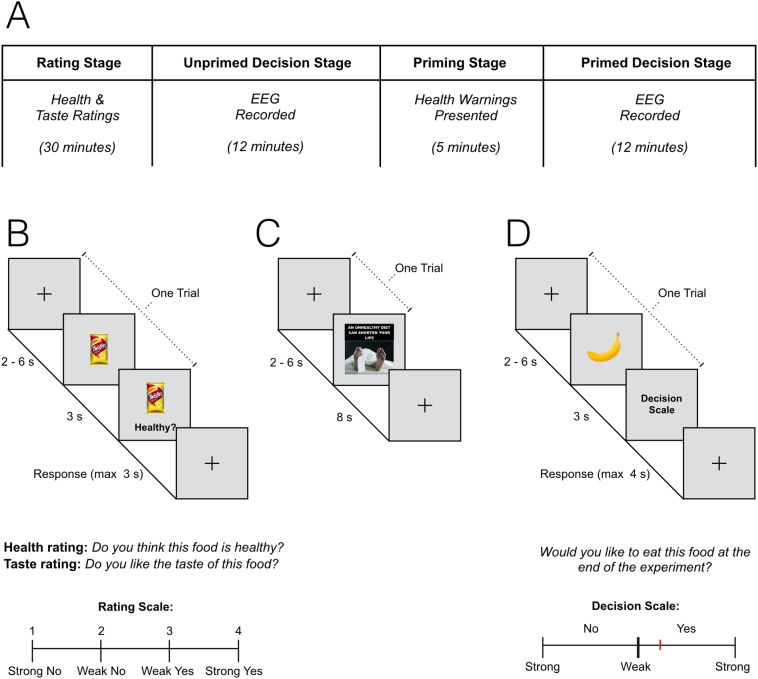
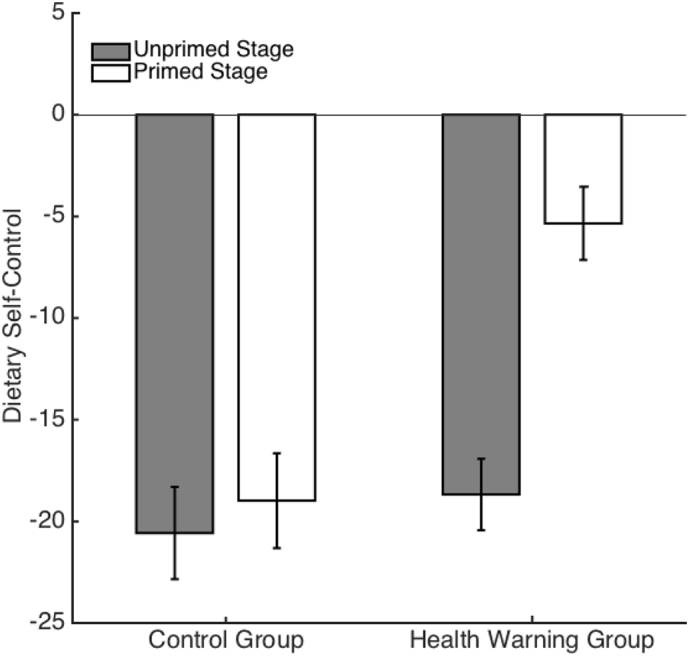
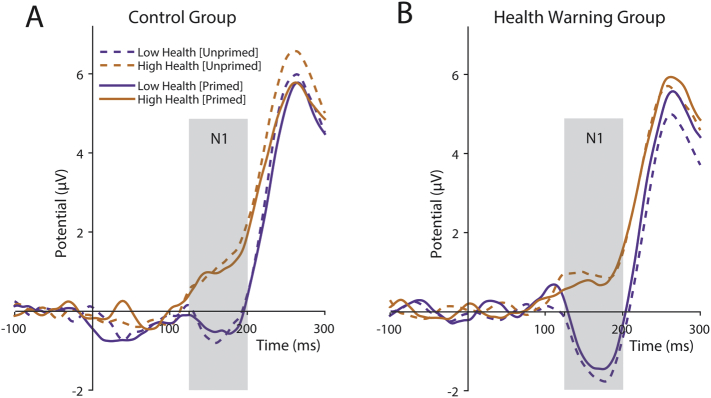
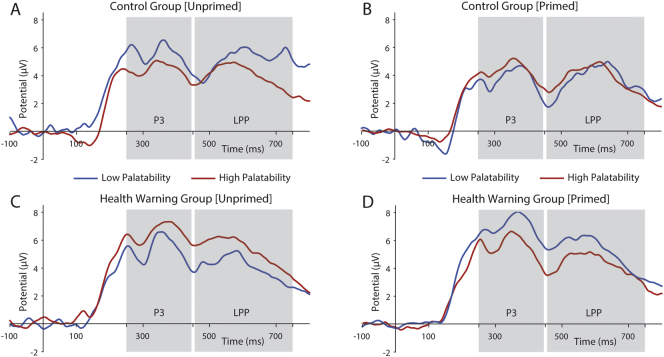
Modern societies are replete with palatable food cues. A growing body of evidence suggests that food cue exposure activates conditioned appetitive physiological and psychological responses that may override current metabolic needs and existing eating goals, such as the desire to maintain a healthy diet. This conditioned response results in unhealthy dietary choices and is a contributing factor in the current obesity epidemic. Prime based obesity prevention measures such as health warnings at point-of-sale or on product packaging may have the potential to counteract the influence of the obesogenic environment at the crucial moment when people make food purchasing or consumption decisions. Existing research into the efficacy of these intervention strategies has predominantly employed self-report and population level measures, and little evidence exists to support the contention that these measures counteract food cue reactivity at the time of decision making. Using a dietary self-control priming paradigm, we demonstrated that brief exposure to food product health warnings enhanced dietary self-control. Further, we analysed electroencephalographic correlates of selective attention and food cue evoked craving (N1, P3, LPP) to show that health warning exposure reduced the automatic appetitive response towards palatable food cues. These findings contribute to existing evidence that exogenous information can successfully prime latent goals, and substantiate the notion that food product health warnings may provide a new avenue through which to curb excessive energy intake and reduce rising obesity rates.
Keywords: Dietary decision making; EEG; Electroencephalogram; Health warnings; LPP; N1; P3; Self-control.
Figures
References
-
- Bartholow B.D., Henry E.A., Lust S.A. Effects of alcohol sensitivity on P3 event-related potential reactivity to alcohol cues. Psychol. Addict. Behav. 2007;21(4):555–563. - PubMed
-
- Bates D., Kliegl R., Vasishth S., Baayen H. 2015. Parsimonious Mixed Models. (arXiv:1506.04967)
-
- Bates D., Mächler M., Bolker B., Walker S. Fitting linear mixed-effects models using lme4. J. Stat. Softw. 2015;67(1)
-
- Bilman E., van Kleef E., van Trijp H. External cues challenging the internal appetite control system—overview and practical implications. Crit. Rev. Food Sci. Nutr. 2017;57(13):2825–2834. - PubMed
Publication types
MeSH terms
LinkOut - more resources
Full Text Sources
Other Literature Sources
