


Human LINE-1 retrotransposition requires a metastable coiled coil and a positively charged N-terminus in L1ORF1p
- PMID: 29565245
- PMCID: PMC5940361
- DOI: 10.7554/eLife.34960
Human LINE-1 retrotransposition requires a metastable coiled coil and a positively charged N-terminus in L1ORF1p
Abstract
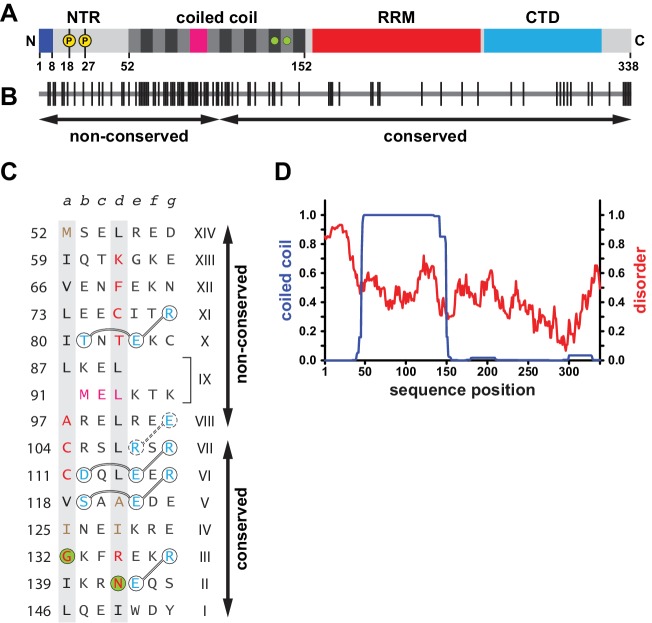
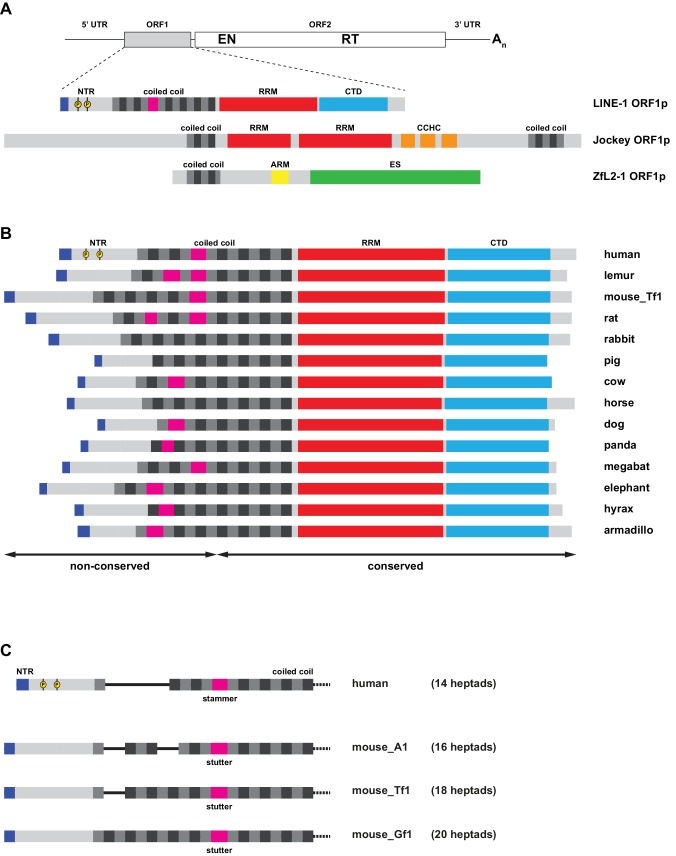
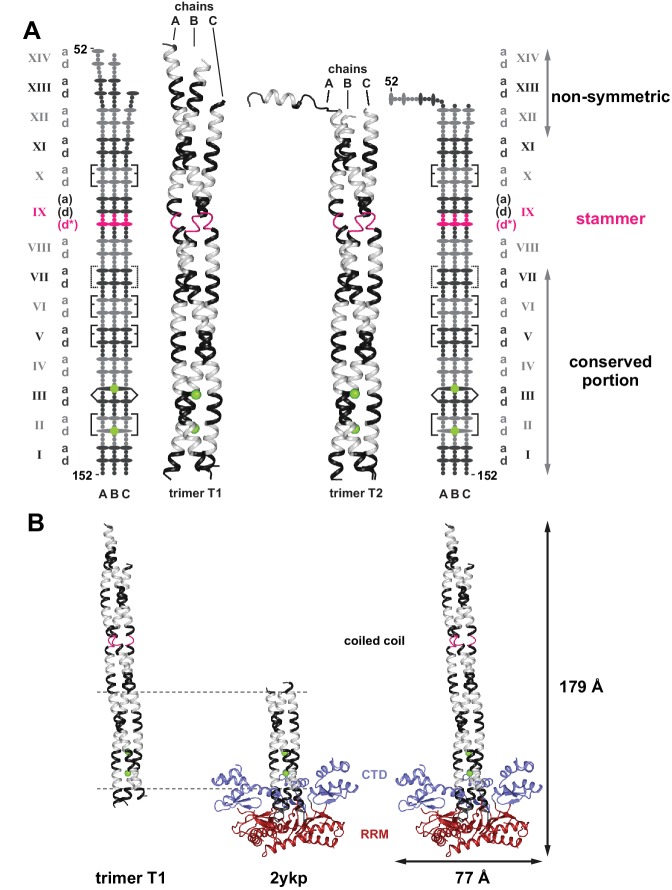
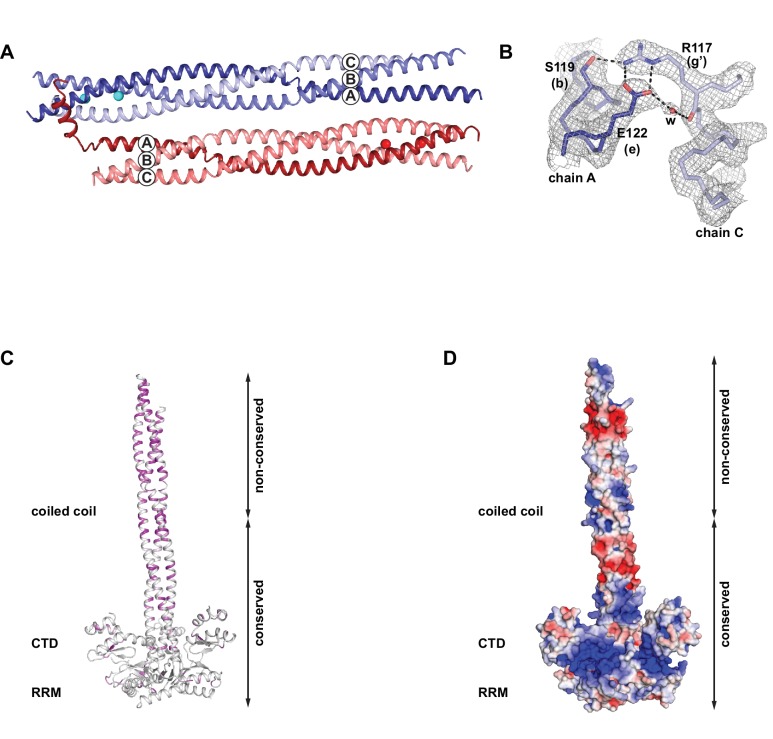
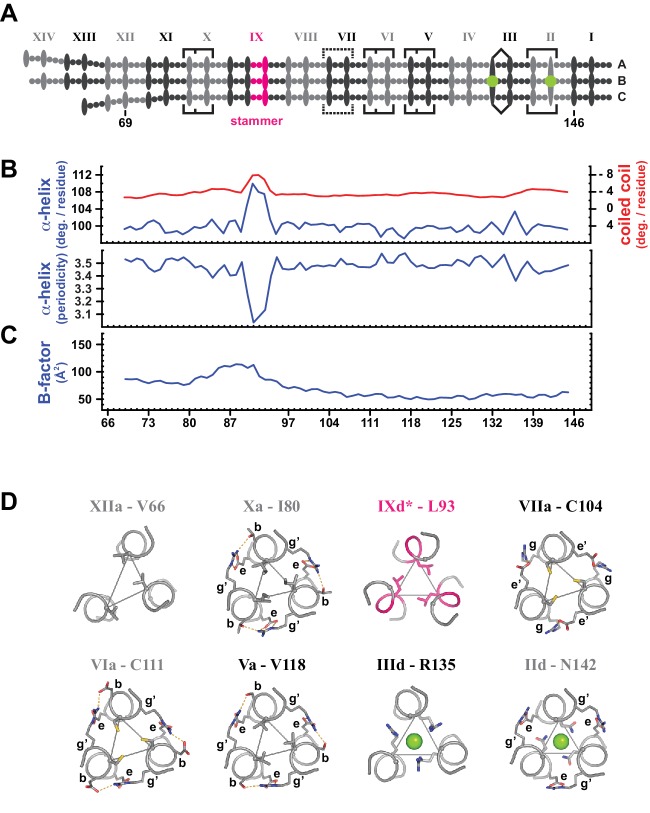
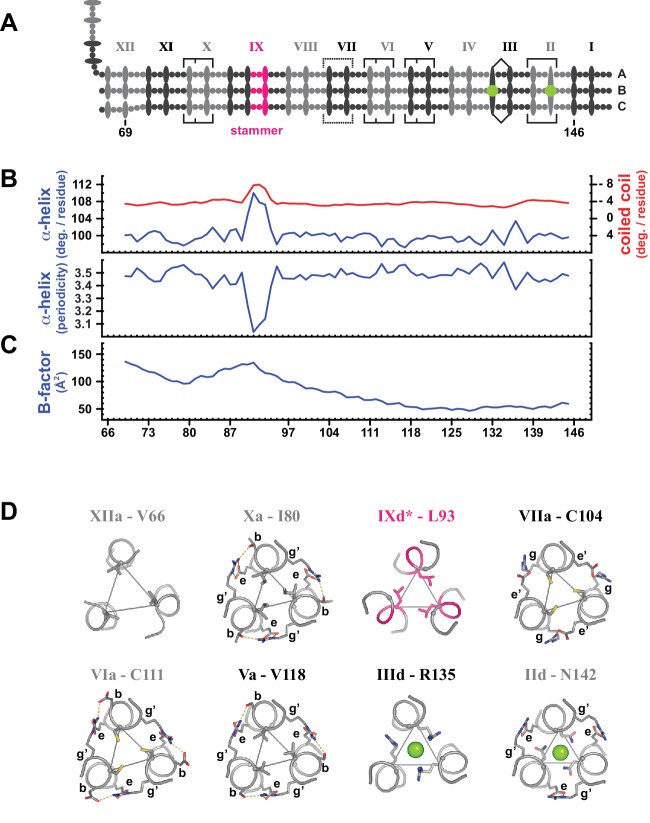
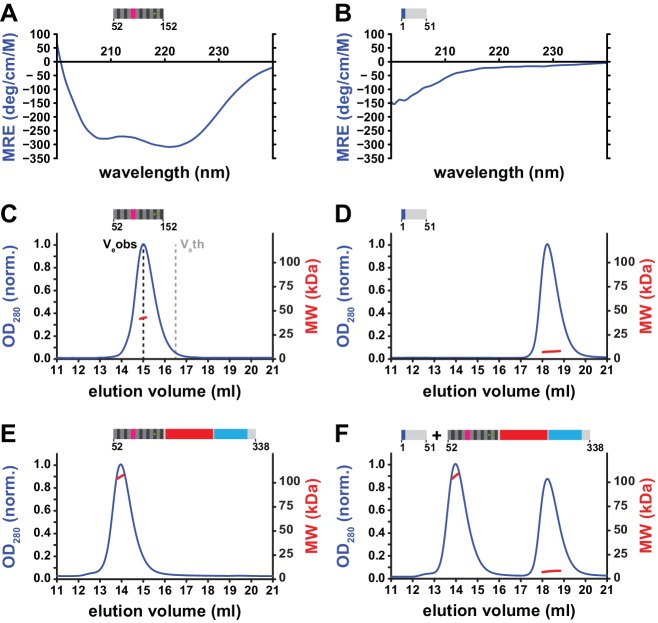
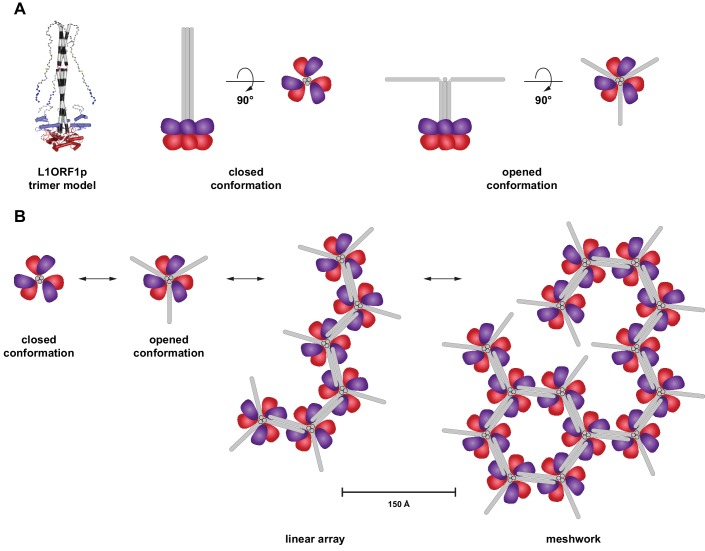
LINE-1 (L1) is an autonomous retrotransposon, which acted throughout mammalian evolution and keeps contributing to human genotypic diversity, genetic disease and cancer. L1 encodes two essential proteins: L1ORF1p, a unique RNA-binding protein, and L1ORF2p, an endonuclease and reverse transcriptase. L1ORF1p contains an essential, but rapidly evolving N-terminal portion, homo-trimerizes via a coiled coil and packages L1RNA into large assemblies. Here, we determined crystal structures of the entire coiled coil domain of human L1ORF1p. We show that retrotransposition requires a non-ideal and metastable coiled coil structure, and a strongly basic L1ORF1p amino terminus. Human L1ORF1p therefore emerges as a highly calibrated molecular machine, sensitive to mutation but functional in different hosts. Our analysis rationalizes the locally rapid L1ORF1p sequence evolution and reveals striking mechanistic parallels to coiled coil-containing membrane fusion proteins. It also suggests how trimeric L1ORF1p could form larger meshworks and indicates critical novel steps in L1 retrotransposition.
Keywords: LINE; chromosomes; coiled coil; conformational dynamics; gene expression; human; mobile DNA; molecular biophysics; structural biology.
© 2018, Khazina et al.
Conflict of interest statement
EK No competing interests declared, OW Reviewing editor, eLife
Figures
References
Publication types
MeSH terms
Substances
LinkOut - more resources
Full Text Sources
Other Literature Sources
