


Effect of chemical interaction between oleic acid and L-Arginine on oral perception, as a function of polymorphisms of CD36 and OBPIIa and genetic ability to taste 6-n-propylthiouracil
- PMID: 29566052
- PMCID: PMC5864069
- DOI: 10.1371/journal.pone.0194953
Effect of chemical interaction between oleic acid and L-Arginine on oral perception, as a function of polymorphisms of CD36 and OBPIIa and genetic ability to taste 6-n-propylthiouracil
Abstract
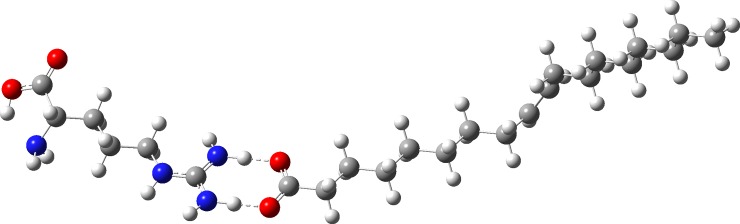
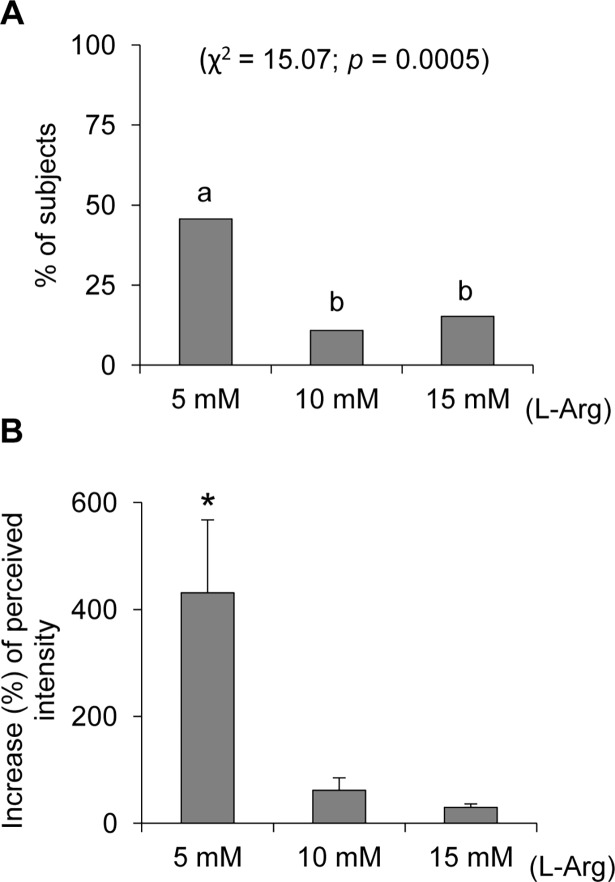
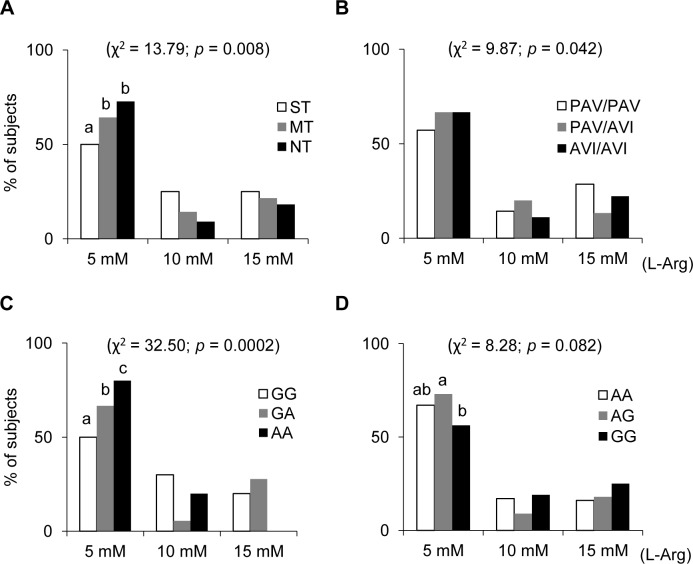
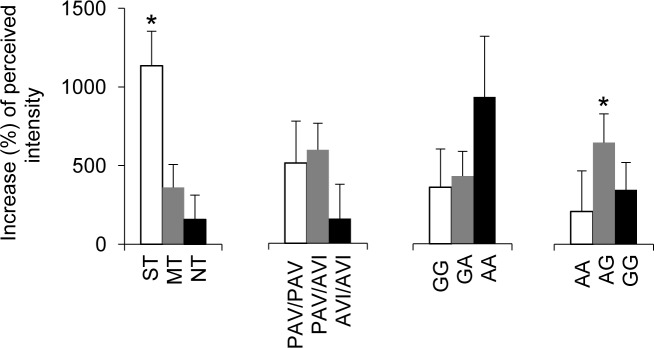
Oral sensitivity to fats varies in individuals influencing nutritional status and health. Variations in oleic acid perception are associated with CD36 and odorant binding protein (OBPIIa) polymorphisms, and 6-n-propylthiouracil (PROP) sensitivity, which is mediated by TAS2R38 receptor. L-Arginine (L-Arg) supplementation was shown to modify the perception of the five taste qualities. Here we analyzed the effect of three concentrations (5, 10, 15 mmol/L) of L-Arg on oral perception of oleic acid in forty-six subjects classified for PROP taster status and genotyped for TAS2R38, CD36 and OBPIIa polymorphisms. L-Arg supplementation was effective in increasing the perceived intensity of oleic acid in most subjects. The lowest concentration was the most effective, especially in PROP non-tasters or medium tasters, and in subjects with at least an allele A in CD36 and OBPIIa loci. Density Functional Theory (DFT) calculations were exploited to characterize the chemical interaction between L-Arg and oleic acid, showing that a stable 1:1 oleate·ArgH+ adduct can be formed, stabilized by a pair of hydrogen bonds. Results indicate that L-Arg, acting as a 'carrier' of fatty acids in saliva, can selectively modify taste response, and suggest that it may to be used in personalized dietetic strategies to optimize eating behaviors and health.
Conflict of interest statement
Figures
References
-
- Smit LA, Mozaffarian D, Willett W Review of fat and fatty acid requirements and criteria for developing dietary guidelines. Ann Nutr Metab. 2009; 55: 44–55. doi: 10.1159/000228995 - DOI - PubMed
-
- Chalé-Rush A, Burgess JR, Mattes RD Multiple routes of chemosensitivity to free fatty acids in humans. Am J Physiol Gastrointest Liver Physiol. 2007; 292: G1206–1212. doi: 10.1152/ajpgi.00471.2006 - DOI - PubMed
-
- Stewart JE, Feinle-Bisset C, Golding M, Delahunty C, Clifton PM, et al. Oral sensitivity to fatty acids, food consumption and BMI in human subjects. Br J Nutr. 2010; 104: 145–152. doi: 10.1017/S0007114510000267 - DOI - PubMed
-
- Mattes RD Oral detection of short-, medium-, and long-chain free fatty acids in humans. Chem Senses. 2009; 34: 145–150. doi: 10.1093/chemse/bjn072 - DOI - PMC - PubMed
-
- Mattes RD Fat Taste in Humans: Is It a Primary? In: Montmayeur JP, le Coutre J, editors. Fat Detection: Taste, Texture, and Post Ingestive Effects. Boca Raton (FL) 2010.
Publication types
MeSH terms
Substances
LinkOut - more resources
Full Text Sources
Other Literature Sources
Medical
