


Cold argon-oxygen plasma species oxidize and disintegrate capsid protein of feline calicivirus
- PMID: 29566061
- PMCID: PMC5864060
- DOI: 10.1371/journal.pone.0194618
Cold argon-oxygen plasma species oxidize and disintegrate capsid protein of feline calicivirus
Abstract
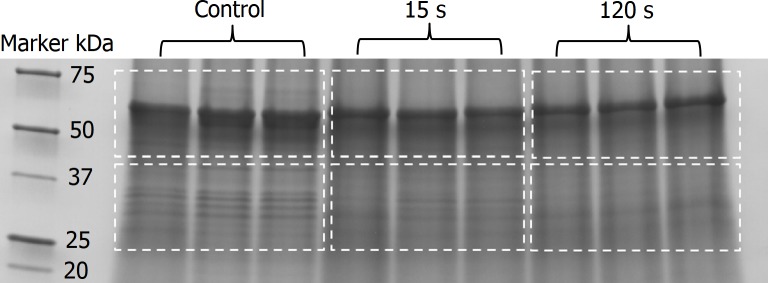
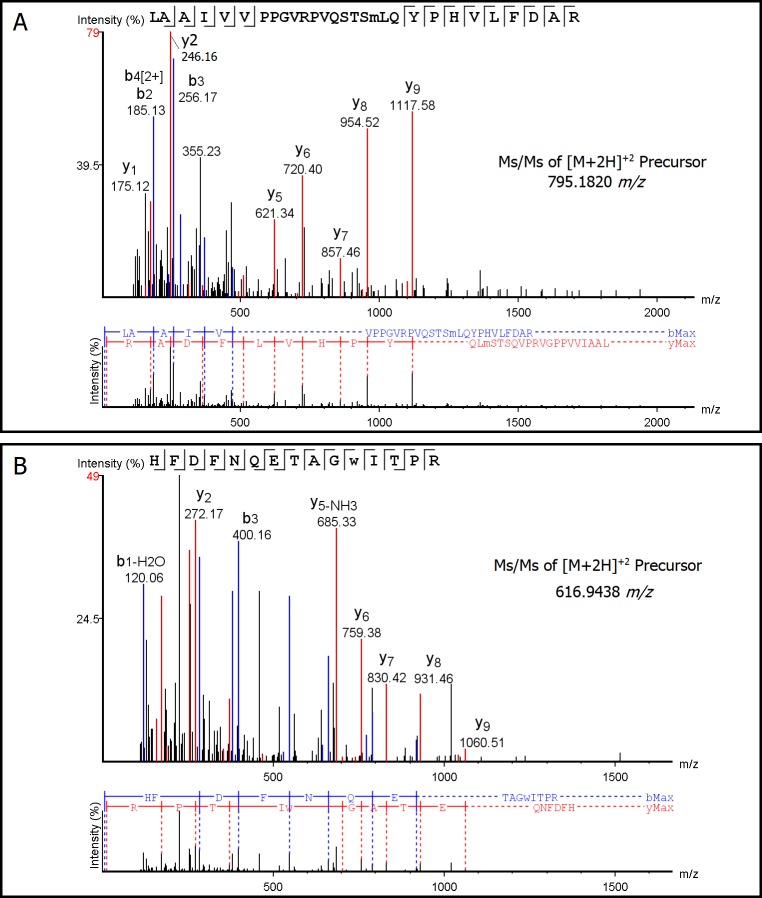
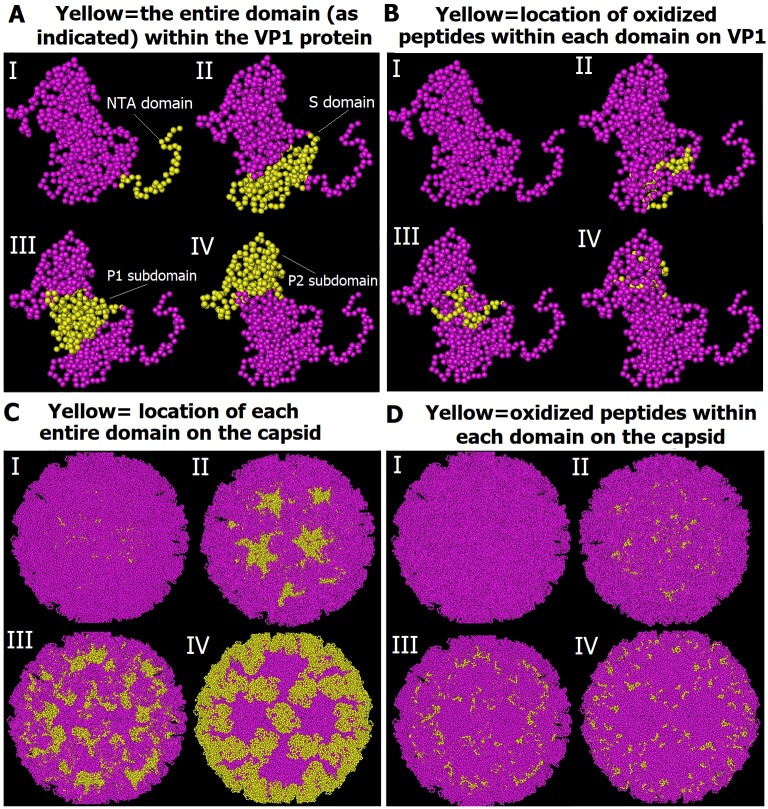
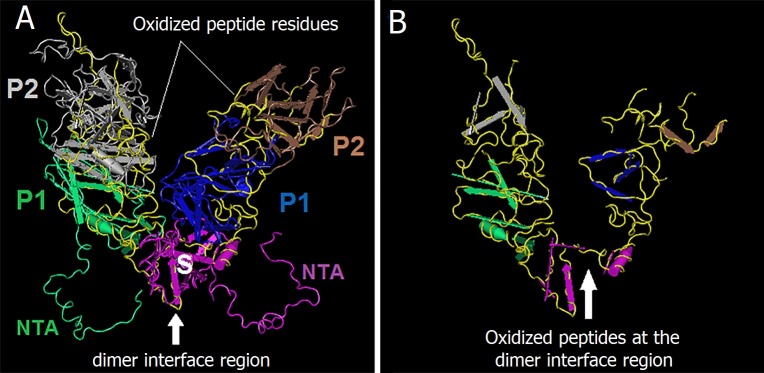
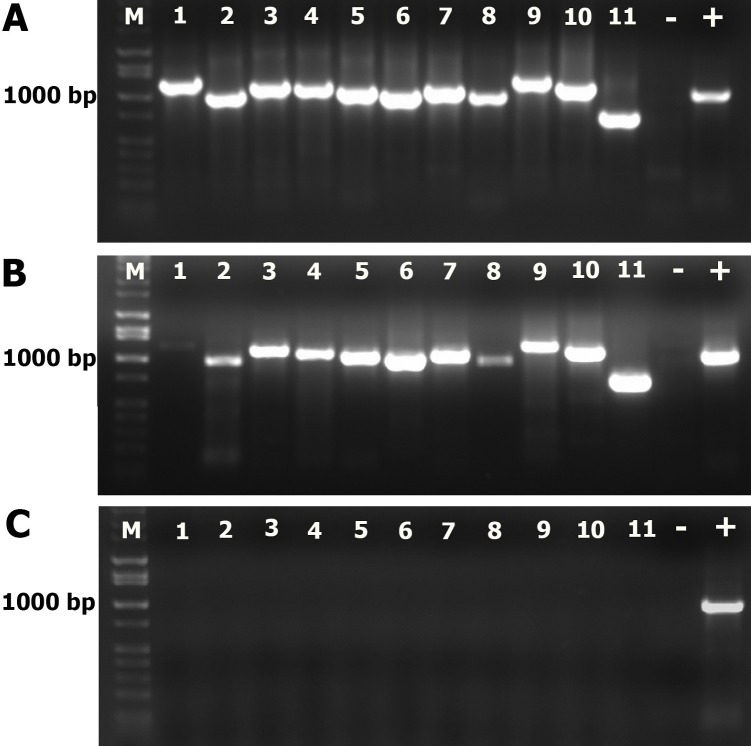
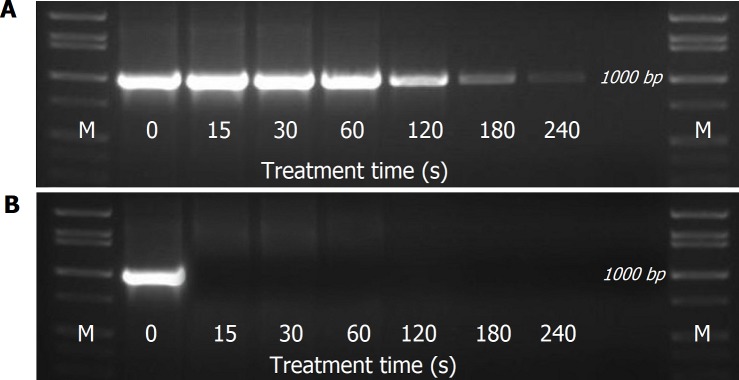
Possible mechanisms that lead to inactivation of feline calicivirus (FCV) by cold atmospheric-pressure plasma (CAP) generated in 99% argon-1% O2 admixture were studied. We evaluated the impact of CAP exposure on the FCV viral capsid protein and RNA employing several cultural, molecular, proteomic and morphologic characteristics techniques. In the case of long exposure (2 min) to CAP, the reactive species of CAP strongly oxidized the major domains of the viral capsid protein (VP1) leading to disintegration of a majority of viral capsids. In the case of short exposure (15 s), some of the virus particles retained their capsid structure undamaged but failed to infect the host cells in vitro. In the latter virus particles, CAP exposure led to the oxidation of specific amino acids located in functional peptide residues in the P2 subdomain of the protrusion (P) domain, the dimeric interface region of VP1 dimers, and the movable hinge region linking the S and P domains. These regions of the capsid are known to play an essential role in the attachment and entry of the virus to the host cell. These observations suggest that the oxidative effect of CAP species inactivates the virus by hindering virus attachment and entry into the host cell. Furthermore, we found that the oxidative impact of plasma species led to oxidation and damage of viral RNA once it becomes unpacked due to capsid destruction. The latter effect most likely plays a secondary role in virus inactivation since the intact FCV genome is infectious even after damage to the capsid.
Conflict of interest statement
Figures
References
-
- Misra NN, Tiwari BK, Raghavarao KS, Cullen PJ. Nonthermal plasma inactivation of food-borne pathogens. Food Engineering Reviews. 2011. December 1;3(3–4):159–70.
-
- Alkawareek MY, Algwari QT, Gorman SP, Graham WG, O'connell D, Gilmore BF. Application of atmospheric pressure nonthermal plasma for the in vitro eradication of bacterial biofilms. Pathogens and Disease. 2012. July 1;65(2):381–4. - PubMed
-
- Van Gils CA, Hofmann S, Boekema BK, Brandenburg R, Bruggeman PJ. Mechanisms of bacterial inactivation in the liquid phase induced by a remote RF cold atmospheric pressure plasma jet. Journal of Physics D: Applied Physics. 2013. April 8;46(17):175203.
-
- Baier M, Görgen M, Ehlbeck J, Knorr D, Herppich WB, Schlüter O. Non-thermal atmospheric pressure plasma: screening for gentle process conditions and antibacterial efficiency on perishable fresh produce. Innovative Food Science & Emerging Technologies. 2014. April 30;22:147–57.
-
- Hertwig C, Reineke K, Ehlbeck J, Knorr D, Schlüter O. Decontamination of whole black pepper using different cold atmospheric pressure plasma applications. Food Control. 2015. September 30;55:221–9.
Publication types
MeSH terms
Substances
LinkOut - more resources
Full Text Sources
Other Literature Sources
Molecular Biology Databases
Miscellaneous
