


Outcome assessment for Brachial Plexus birth injury. Results from the iPluto world-wide consensus survey
- PMID: 29566312
- PMCID: PMC6175006
- DOI: 10.1002/jor.23901
Outcome assessment for Brachial Plexus birth injury. Results from the iPluto world-wide consensus survey
Abstract
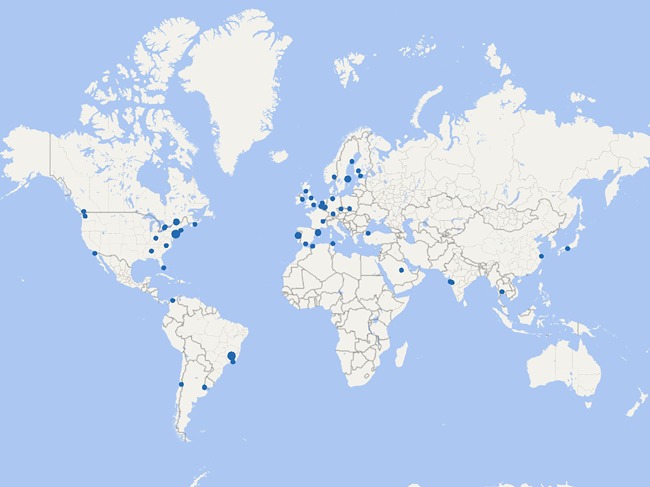
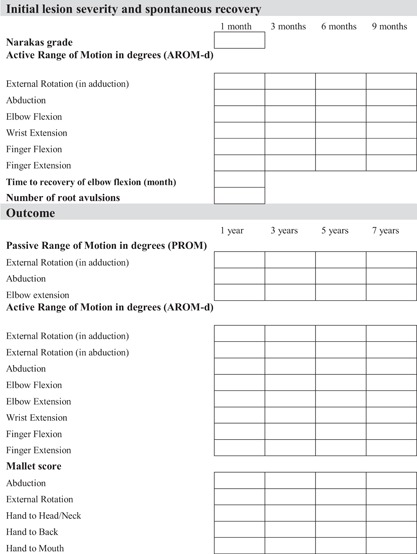
There is no consensus regarding strategies to optimally treat children with a brachial plexus birth injury (BPBI). Comparison of outcome data presented by different centers is impossible due to the use of (1) many different outcome measures to evaluate results; (2) different follow-up periods after interventions; and (3) different patient ages at the time of assessment. The goal of iPluto (international PLexus oUtcome sTudy grOup) was to define a standardized dataset which should be minimally collected to evaluate upper limb function in children with BPBI. This dataset must enable comparison of the treatment results of different centers if prospectively used. Three rounds of internet surveys were used to reach consensus on the dataset. A Delphi-derived technique was applied using a nine point Likert scale. Consensus was defined as having attained a rating of 7/8/9 by > = 75% of the participants. A total of 59 participants from five continents participated in the Second and Third Rounds of the survey. Consensus was reached regarding four elements: (1) evaluation should take place at the age of 1/3/5/7 years; range of motion in degrees should be measured for (2) passive joint movement; (3) active range of motion; and (4) the Mallet score should be determined. Consensus on how to asses and report outcome for BPBI was only reached on motor items from the "Body Function and Structure" domain. Consensus regarding additional ICF domains to obtain a more elaborate set of outcome items, should be addressed in future research. © 2018 The Authors. Journal of Orthopaedic Research® Published by Wiley Periodicals, Inc. on behalf of the Orthopaedic Research Society. J Orthop Res 36:2533-2541, 2018.
Keywords: peripheral nerve; spinal cord injury; spine.
© 2018 The Authors. Journal of Orthopaedic Research® Published by Wiley Periodicals, Inc. on behalf of the Orthopaedic Research Society.
Figures
References
-
- Pondaag W, Malessy MJ. 2014. Letters to the Editor: neonatal brachial plexus palsy. J Neurosurg Pediatr 14:555–557. - PubMed
-
- Chang KW, Justice D, Chung KC, et al. 2013. A systematic review of evaluation methods for neonatal brachial plexus palsy: a review. J Neurosurg Pediatr 12:395–405. - PubMed
-
- Sarac C, Duijnisveld BJ, van der Weide A, et al. 2015. Outcome measures used in clinical studies on neonatal brachial plexus palsy: a systematic literature review using the International Classification of Functioning, Disability and Health. J Pediatr Rehabil Med 8:167–185. quiz 185‐166. - PubMed
-
- Pondaag W, Malessy MJ, van Dijk JG, et al. 2004. Natural history of obstetric brachial plexus palsy: a systematic review. Dev Med Child Neurol 46:138–144. - PubMed
MeSH terms
LinkOut - more resources
Full Text Sources
Other Literature Sources
Medical
