


Brain injury rehabilitation after road trauma in new South Wales, Australia - insights from a data linkage study
- PMID: 29566689
- PMCID: PMC5865364
- DOI: 10.1186/s12913-018-3019-8
Brain injury rehabilitation after road trauma in new South Wales, Australia - insights from a data linkage study
Abstract
Background: Population-based patterns of care studies are important for trauma care but conducting them is expensive and resource-intensive. Linkage of routinely collected administrative health data may provide an efficient alternative. The aims of this study are to describe the rehabilitation pathway for trauma survivors and to analyse the brain injury rehabilitation outcomes in the two care settings (specialist brain injury and non-specialist general rehabilitation units).
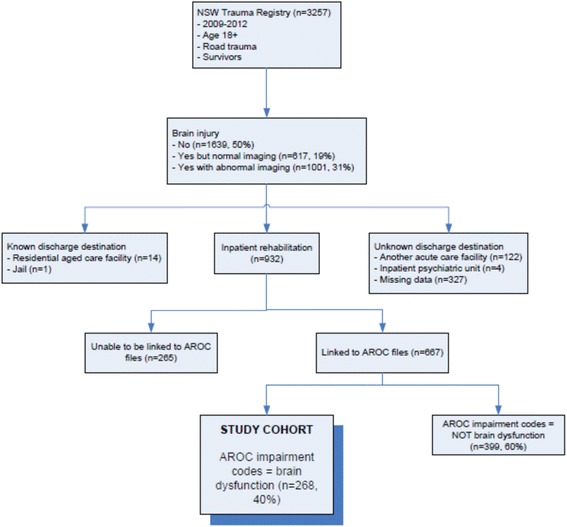
Methods: This is an observational study using routinely collected registry data (New South Wales Trauma Registry linked with the Australasian Rehabilitation Outcomes Centre Inpatient Dataset). The study cohort includes 268 road trauma patients who were admitted to trauma services between 2009 and 2012 and received inpatient rehabilitation because of a brain injury.
Results: Of those who need inpatient rehabilitation, 62% (n = 166) were admitted to specialist units with the remainder (n = 102) admitted to non-specialist units. Those admitted to a specialist units were younger (p < 0.001), had a lower cognitive FIM score (p = 0.003) on admission than those admitted to non-specialist units. Specialist units achieved better overall FIM score improvements from admission to discharge (43 vs 30 points, p > 0.001) but at a cost of longer length of stay (median 47 vs 24 days, p < 0.001). There were very few discharges to residential aged care facilities from rehabilitation (2% in non-specialist units and none from specialist units). There was a long time lag between trauma and admission to inpatient rehabilitation with only a quarter of the patients admitted to a specialist unit by end of week four. Few older patients (19%) with brain injury were admitted to specialist units.
Conclusions: It is feasible to use routinely collected registry data to monitor inpatient rehabilitation outcomes of trauma care. There were differences in characteristics and outcomes of patients with traumatic brain injury admitted to specialist units compared with non-specialist units.
Keywords: Data linkage; Rehabilitation; Road trauma; Traumatic brain injury.
Conflict of interest statement
Ethics approval and consent to participate
Ethics approval was obtained from NSW Population & Health Services Research Ethics Committee (HREC/13/CIPHS/55). De-identified data was obtained for this study from the custodians of NSW Institute of Trauma and Injury Management (NSW Health) and AROC. They obtained their data through a process of opt-out consent.
Consent for publication
No applicable.
Competing interests
The authors declare that they have no competing interests.
Publisher’s Note
Springer Nature remains neutral with regard to jurisdictional claims in published maps and institutional affiliations.
Figures
References
Publication types
MeSH terms
LinkOut - more resources
Full Text Sources
Other Literature Sources
