


Dual binding in cohesin-dockerin complexes: the energy landscape and the role of short, terminal segments of the dockerin module
- PMID: 29568013
- PMCID: PMC5864761
- DOI: 10.1038/s41598-018-23380-9
Dual binding in cohesin-dockerin complexes: the energy landscape and the role of short, terminal segments of the dockerin module
Abstract
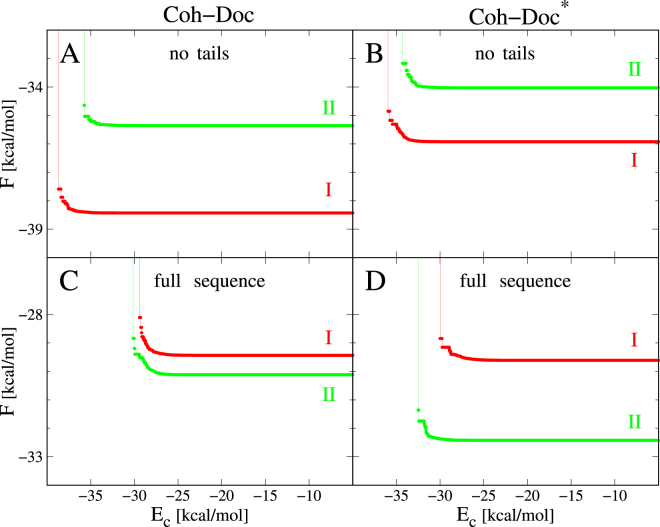
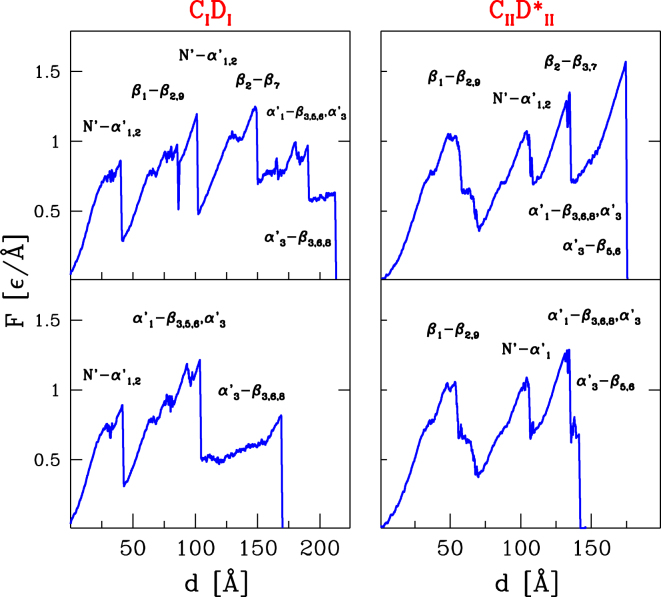
The assembly of the polysaccharide degradating cellulosome machinery is mediated by tight binding between cohesin and dockerin domains. We have used an empirical model known as FoldX as well as molecular mechanics methods to determine the free energy of binding between a cohesin and a dockerin from Clostridium thermocellum in two possible modes that differ by an approximately 180° rotation. Our studies suggest that the full-length wild-type complex exhibits dual binding at room temperature, i.e., the two modes of binding have comparable probabilities at equilibrium. The ability to bind in the two modes persists at elevated temperatures. However, single-point mutations or truncations of terminal segments in the dockerin result in shifting the equilibrium towards one of the binding modes. Our molecular dynamics simulations of mechanical stretching of the full-length wild-type cohesin-dockerin complex indicate that each mode of binding leads to two kinds of stretching pathways, which may be mistakenly taken as evidence of dual binding.
Conflict of interest statement
The authors declare no competing interests.
Figures



References
-
- Beguin P, Lemaire M. The cellulosome: an exocellular, multiprotein complex specialized in cellulose degradation. Crit. Rev. Biochem. Mol. Biol. 1996;31:201236. - PubMed
Publication types
MeSH terms
Substances
LinkOut - more resources
Full Text Sources
Other Literature Sources
