Trifluridine/tipiracil overcomes the resistance of human gastric 5-fluorouracil-refractory cells with high thymidylate synthase expression
- PMID: 29568368
- PMCID: PMC5862589
- DOI: 10.18632/oncotarget.24412
Trifluridine/tipiracil overcomes the resistance of human gastric 5-fluorouracil-refractory cells with high thymidylate synthase expression
Abstract
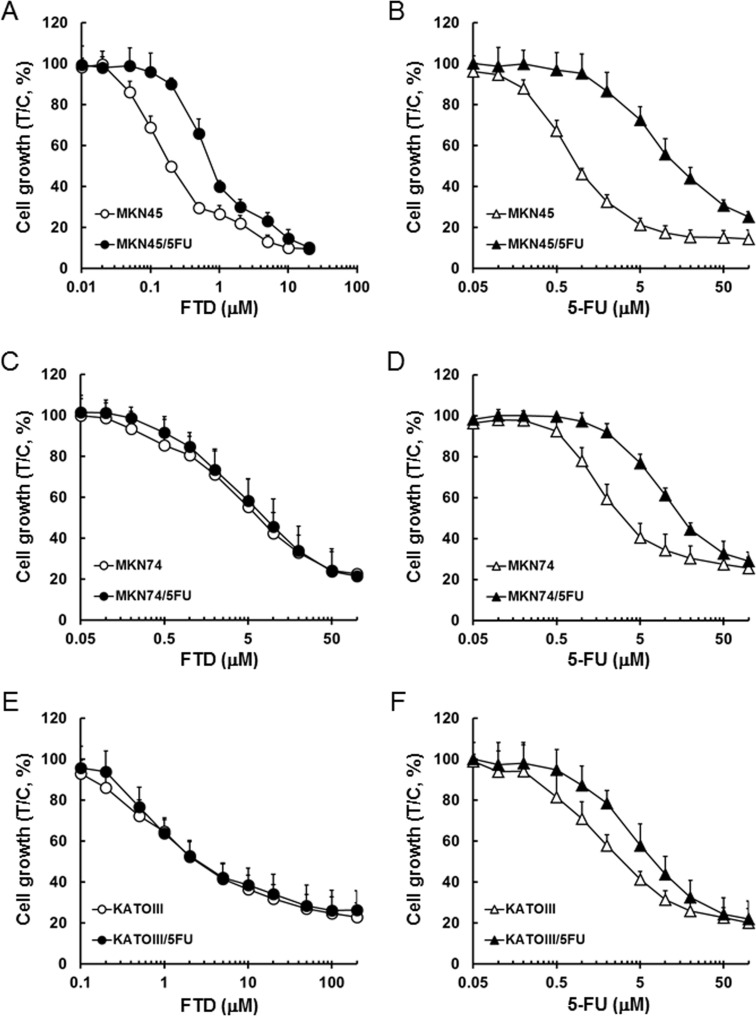
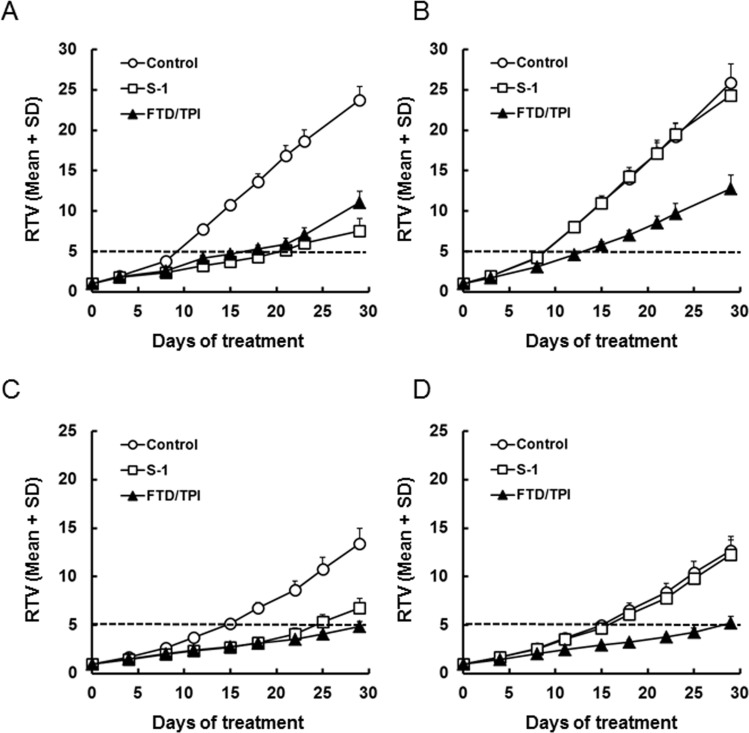
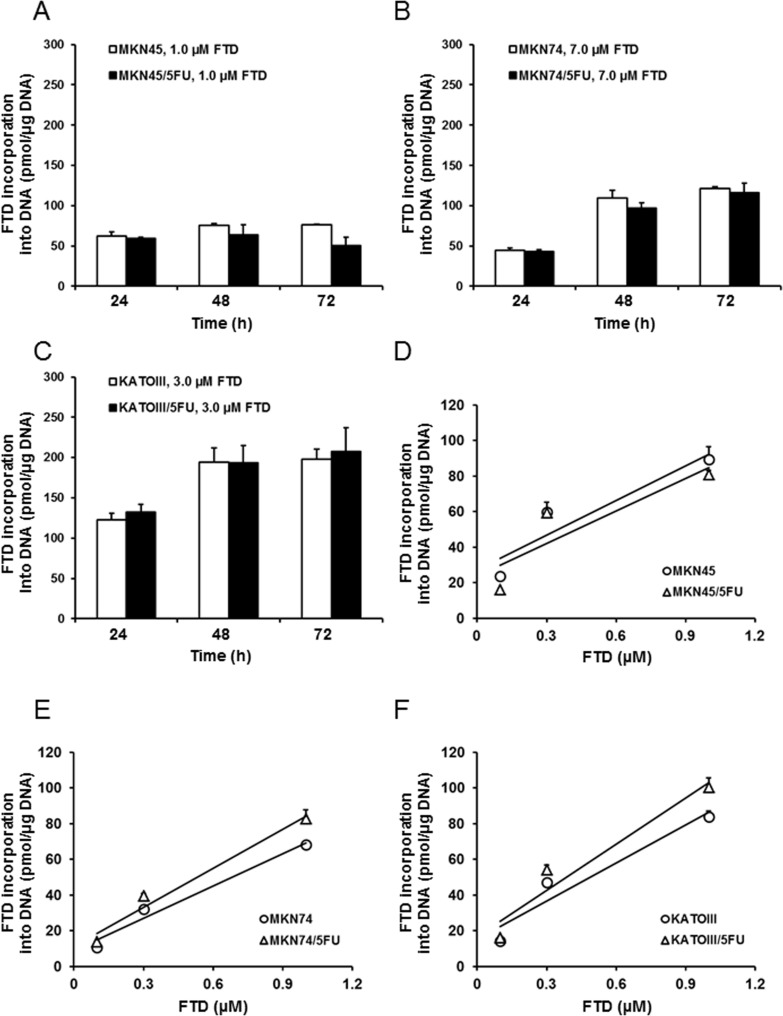
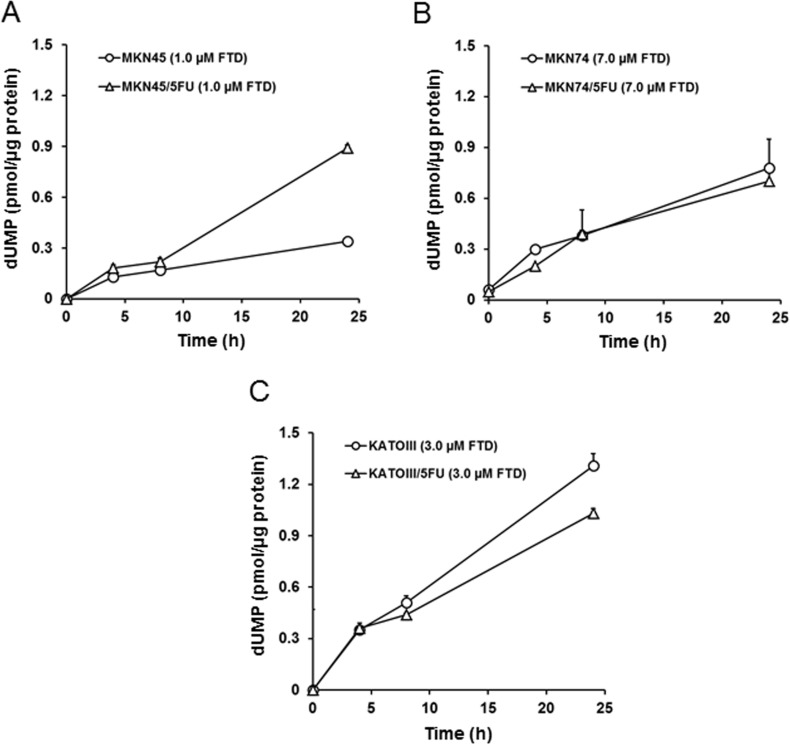
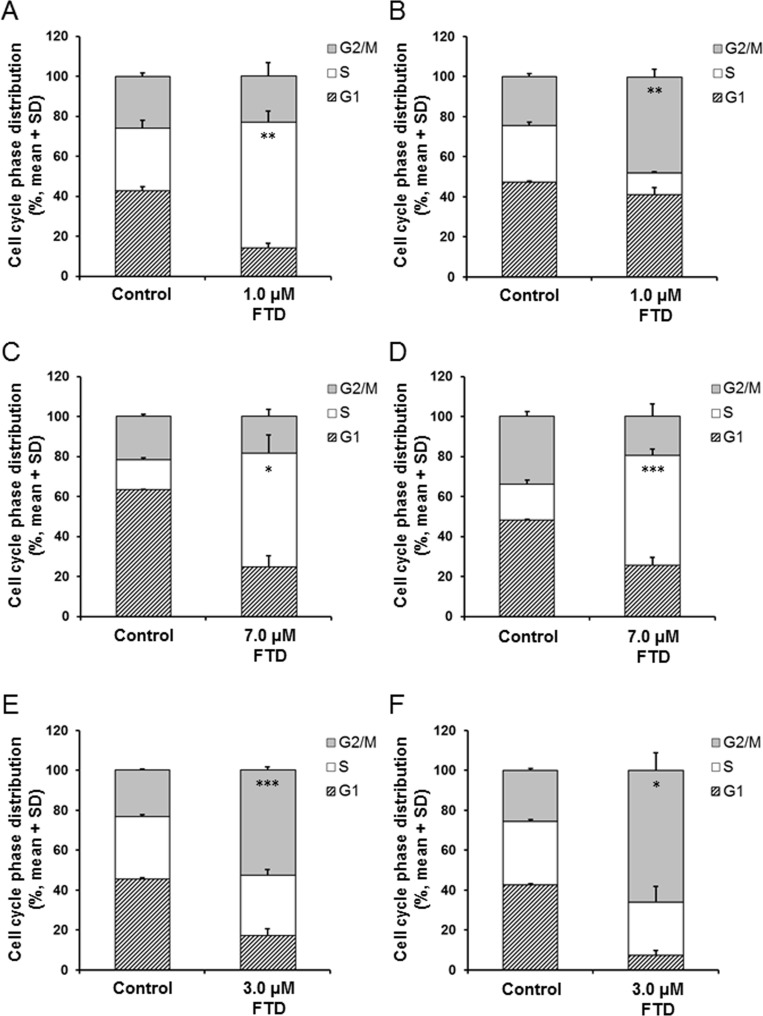
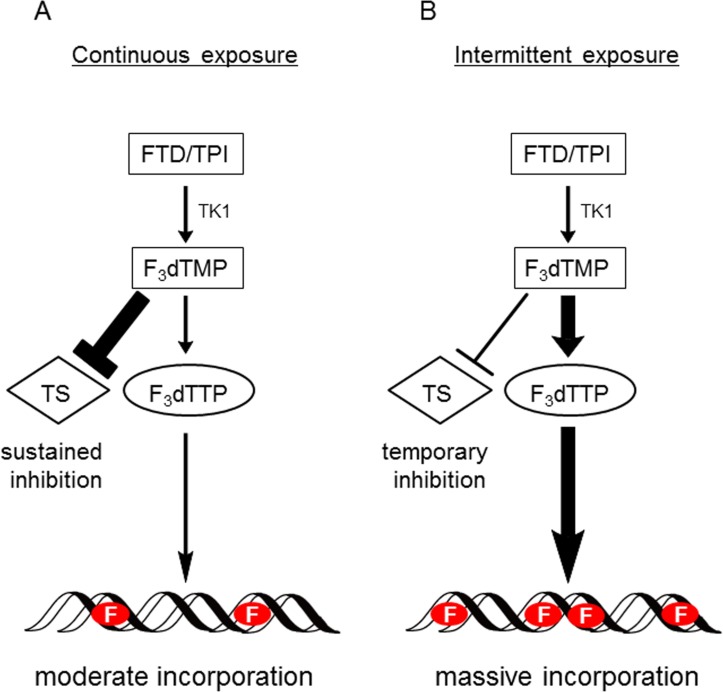
Trifluridine/tipiracil (FTD/TPI or TFTD, also known as TAS-102) is a combination of the antineoplastic thymidine analog, FTD, and thymidine phosphorylase inhibitor, TPI (molar ratio 1:0.5). FTD/TPI was approved in Japan, the United States, and the European Union for the treatment of unresectable advanced or recurrent colorectal cancer. We evaluated the in vitro and in vivo efficacy and mechanisms of action of FTD and FTD/TPI against 5-fluorouracil (5-FU)-resistant MKN45/5FU, MKN74/5FU, and KATOIII/5FU human gastric cancer cells overexpressing thymidylate synthase (TS) and their respective parent cell lines. MKN45/5FU and KATOIII/5FU cells were not cross-resistant to FTD, whereas MKN45/5FU cells were 3.7-fold more resistant than the parental cells in vitro. FTD was also incorporated into genomic DNA in a concentration-dependent manner in 5-FU-resistant and parental cells. Additionally, deoxyuridine monophosphate levels in MKN45/5FU cells after 24-h FTD treatment were 3.0-fold higher than those in parental cells, and FTD treatment for 72 h induced G2/M arrest in MKN45/5FU cells, unlike the S phase arrest in MKN45 cells. Thus, TS-overexpressing MKN45/5FU cells, but not MKN74/5FU and KATOIII/5FU cells, showed partial cross-resistance to FTD. However, FTD/TPI (administered orally twice a day) exhibited antitumor activity to the same extent in MKN45 and MKN45/5FU xenograft mouse models, overcoming in vitro cross-resistance to FTD. DNA incorporation rather than TS inhibition seems to be the main action of FTD under these in vivo conditions. Thus, FTD/TPI is a promising chemotherapeutic agent against gastric cancers recurring following 5-FU therapy.
Keywords: 5-FU resistant cells; TAS-102; gastric cancer; trifluridine/tipiracil.
Conflict of interest statement
CONFLICTS OF INTEREST All authors are paid employees of Taiho Pharmaceutical Co., Ltd.
Figures
References
-
- Jemal A, Bray F, Center MM, Ferlay J, Ward E, Forman D. Global cancer statistics. CA Cancer J Clin. 2011;61:69–90. - PubMed
-
- Temmink OH, Bijnsdorp IV, Prins HJ, Losekoot N, Adema AD, Smid K, Honeywell RJ, Ylstra B, Eijk PP, Fukushima M, Peters GJ. Trifluorothymidine resistance is associated with decreased thymidine kinase and equilibrative nucleoside transporter expression or increased secretory phospholipase A2. Mol Cancer Ther. 2010;9:1047–1057. - PubMed
-
- Murakami Y, Kazuno H, Emura T, Tsujimoto H, Suzuki N, Fukushima M. Different mechanisms of acquired resistance to fluorinated pyrimidines in human colorectal cancer cells. Int J Oncol. 2000;17:277–283. - PubMed
-
- Nakamura A, Nakajima G, Okuyama R, Kuramochi H, Kondoh Y, Kanemura T, Takechi T, Yamamoto M, Hayashi K. Enhancement of 5-fluorouracil-induced cytotoxicity by leucovorin in 5-fluorouracil-resistant gastric cancer cells with upregulated expression of thymidylate synthase. Gastric Cancer. 2014;17:188–195. - PMC - PubMed
LinkOut - more resources
Full Text Sources
Other Literature Sources
Research Materials
Miscellaneous