


Posttranslational modifications of CENP-A: marks of distinction
- PMID: 29569072
- PMCID: PMC6082721
- DOI: 10.1007/s00412-018-0665-x
Posttranslational modifications of CENP-A: marks of distinction
Abstract
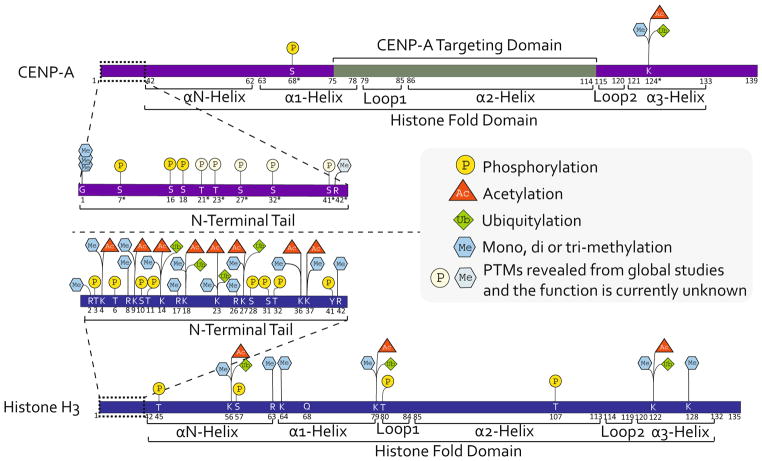
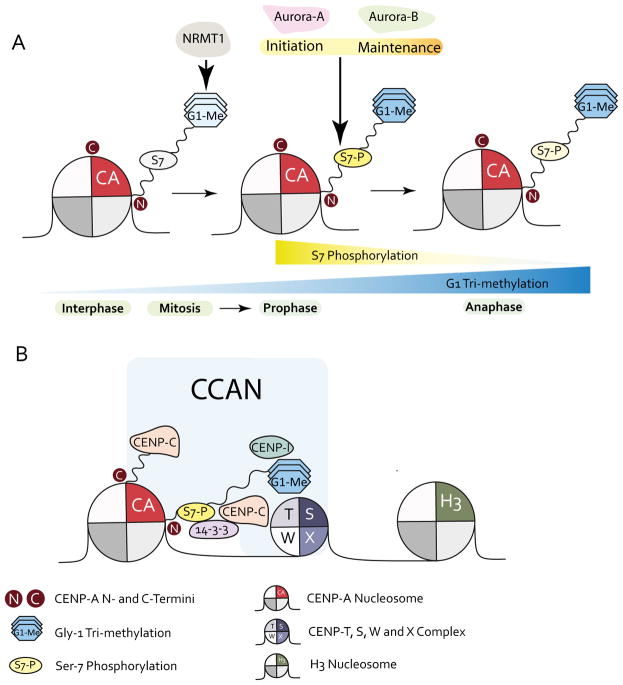
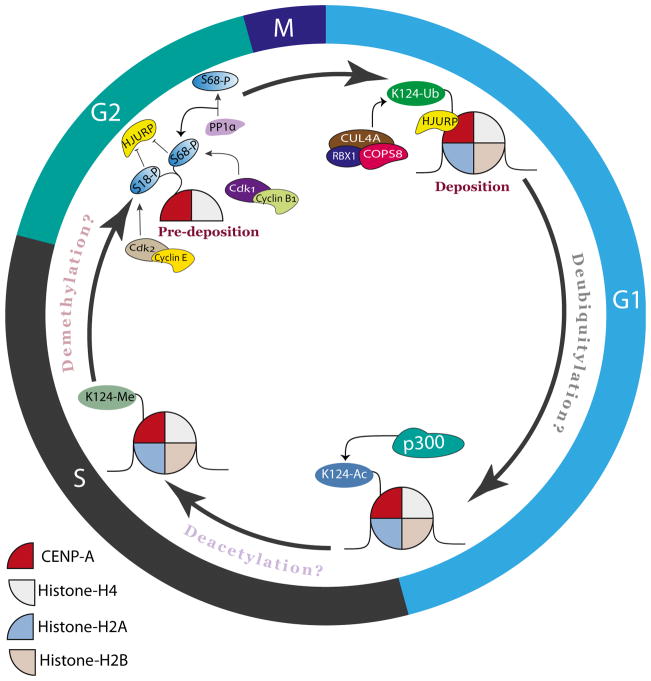
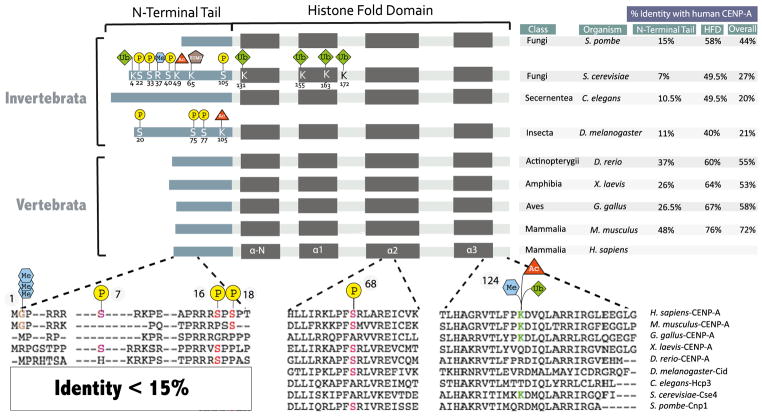
Centromeres are specialized chromosome domain that serve as the site for kinetochore assembly and microtubule attachment during cell division, to ensure proper segregation of chromosomes. In higher eukaryotes, the identity of active centromeres is marked by the presence of CENP-A (centromeric protein-A), a histone H3 variant. CENP-A forms a centromere-specific nucleosome that acts as a foundation for centromere assembly and function. The posttranslational modification (PTM) of histone proteins is a major mechanism regulating the function of chromatin. While a few CENP-A site-specific modifications are shared with histone H3, the majority are specific to CENP-A-containing nucleosomes, indicating that modification of these residues contribute to centromere-specific function. CENP-A undergoes posttranslational modifications including phosphorylation, acetylation, methylation, and ubiquitylation. Work from many laboratories have uncovered the importance of these CENP-A modifications in its deposition at centromeres, protein stability, and recruitment of the CCAN (constitutive centromere-associated network). Here, we discuss the PTMs of CENP-A and their biological relevance.
Keywords: CENP-A; Centromere; Chromatin; Kinetochore; Mitosis; Posttranslational modification.
Figures
References
-
- Bade D, Pauleau AL, Wendler A, Erhardt S. The E3 ligase CUL3/ RDX controls centromere maintenance by ubiquitylating and stabilizing CENP-A in a CAL1-dependent manner. Dev Cell. 2014;28:508–519. - PubMed
Publication types
MeSH terms
Substances
Grants and funding
LinkOut - more resources
Full Text Sources
Other Literature Sources
Miscellaneous
