. 2018 Mar 23;16(1):28.
doi: 10.1186/s12951-018-0351-4.

Paclitaxel and curcumin coadministration in novel cationic PEGylated niosomal formulations exhibit enhanced synergistic antitumor efficacy

Affiliations

Paclitaxel and curcumin coadministration in novel cationic PEGylated niosomal formulations exhibit enhanced synergistic antitumor efficacy

Ashraf Alemi et al. J Nanobiotechnology. .

Abstract

Background: The systemic administration of cytotoxic chemotherapeutic agents for cancer treatment often has toxic side effects, limiting the usage dose. To increase chemotherapeutic efficacy while reducing toxic effects, a rational design for synergy-based drug regimens is essential. This study investigated the augmentation of therapeutic effectiveness with the co-administration of paclitaxel (PTX; an effective chemotherapeutic drug for breast cancer) and curcumin (CUR; a chemosensitizer) in an MCF-7 cell line.

Results: We optimized niosome formulations in terms of surfactant and cholesterol content. Afterward, the novel cationic PEGylated niosomal formulations containing Tween-60: cholesterol:DOTAP:DSPE-mPEG (at 59.5:25.5:10:5) were designed and developed to serve as a model for better transfection efficiency and improved stability. The optimum formulations represented potential advantages, including extremely high entrapment efficiency (~ 100% for both therapeutic drug), spherical shape, smooth-surface morphology, suitable positive charge (zeta potential ~ + 15 mV for both CUR and PTX), sustained release, small diameter (~ 90 nm for both agents), desired stability, and augmented cellular uptake. Furthermore, the CUR and PTX kinetic release could be adequately fitted to the Higuchi model. A threefold and 3.6-fold reduction in CUR and PTX concentration was measured, respectively, when the CUR and PTX was administered in nano-niosome compared to free CUR and free PTX solutions in MCF-7 cells. When administered in nano-niosome formulations, the combination treatment of CUR and PTX was particularly effective in enhancing the cytotoxicity activity against MCF-7 cells.

Conclusions: Most importantly, CUR and PTX, in both free form and niosomal forms, were determined to be less toxic on MCF-10A human normal cells in comparison to MCF-7 cells. The findings indicate that the combination therapy of PTX with CUR using the novel cationic PEGylated niosome delivery is a promising strategy for more effective breast cancer treatment.

Keywords: Chemotherapy; Combination therapy; Curcumin; Niosome; Paclitaxel.


Figures
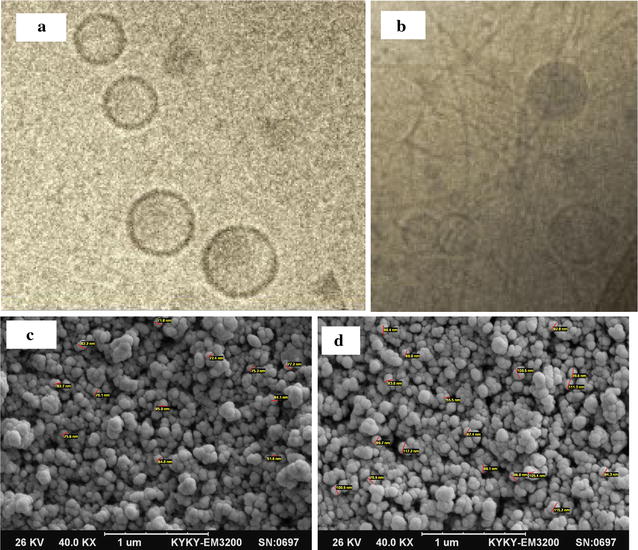
Fig. 1
Fig. 1
Morphological assessment: a niosomal paclitaxel; b niosomal curcumin by cryogenic transmission electron microscopy (Cryo-TEM). Scanning electron microscopy (SEM) of c curcumin niosome; and d paclitaxel niosome
Fig. 2
Fig. 2
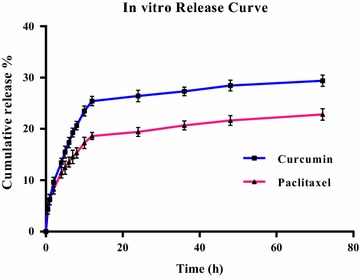
The in vitro release profile of curcumin and paclitaxel from niosomal optimum formula
Fig. 3
Fig. 3
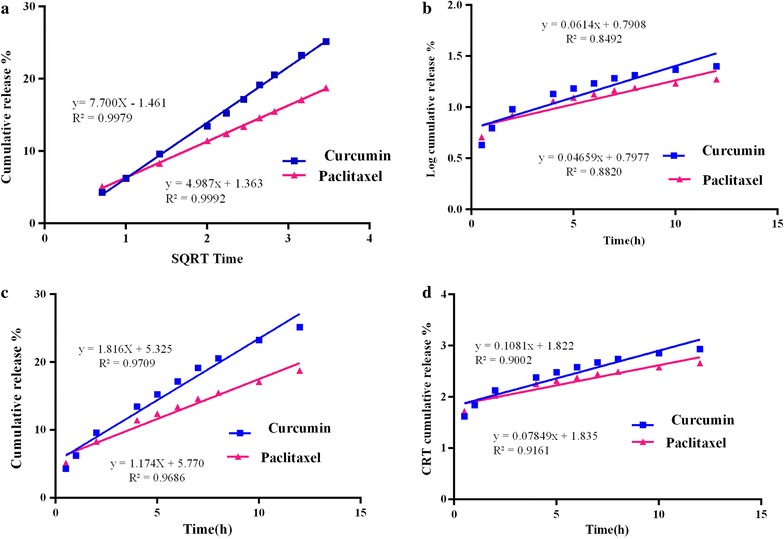
Curcumin and paclitaxel comparative plots. a Zero order release kinetics; b first order release kinetics; c Higuchi (SQRT) release kinetics and d Hixson–Crowell model
Fig. 4
Fig. 4
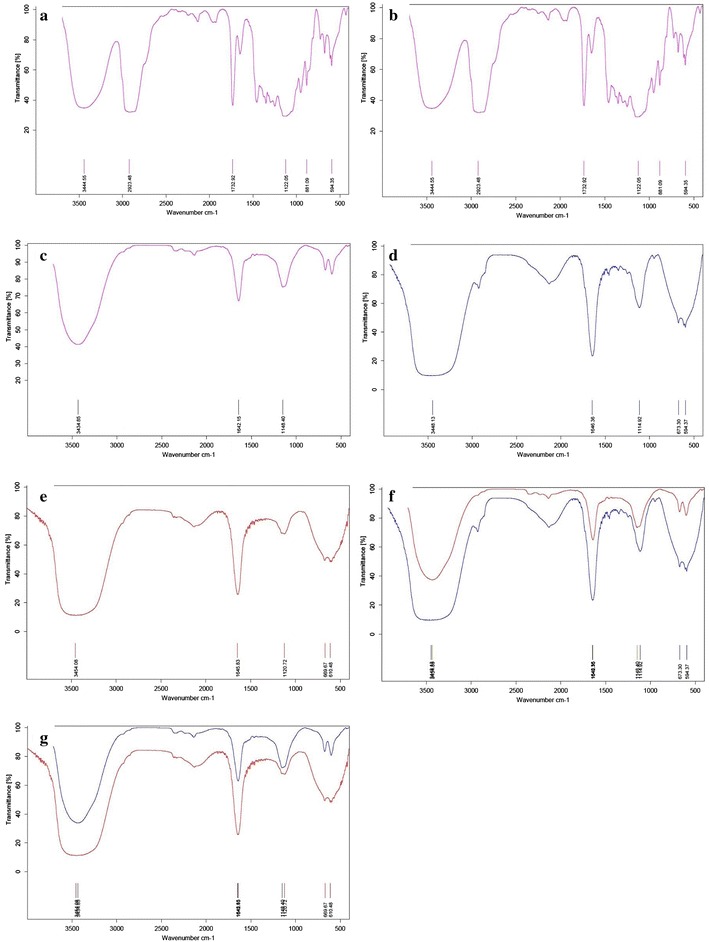
FTIR spectra. a Free paclitaxel; b free curcumin; c blank noisome; d niosomal paclitaxel; e niosomal; curcumin; f comparison blank noisome and niosomal paclitaxel; g comparison blank noisome and niosomal curcumin
Fig. 5
Fig. 5
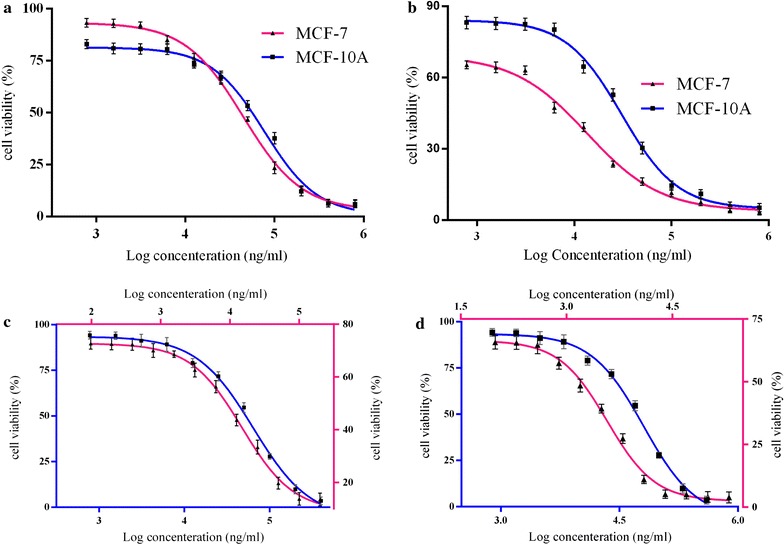
Inhibition of cell growth by curcumin (CUR) and paclitaxel (PTX) individual as a drug free form and drug niosomal form in MCF-7 and MCF-10A cell. a Free CUR; b Free PTX; c Nio CUR; d Nio PTX for MCF-7 (filled square) and MCF-10A (filled triangle) cells
Fig. 6
Fig. 6
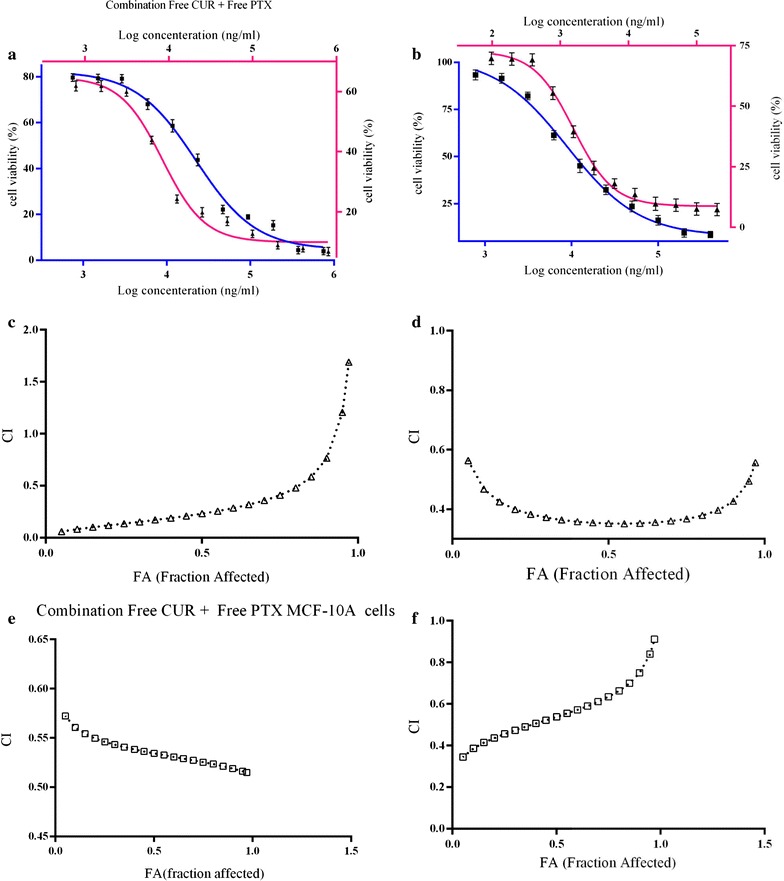
Analysis of synergy between curcumin and paclitaxel for MCF-7 (filled triangle) and MCF-10A (filled square) cells. a Dose–response curve of free CUR + Free PTX; b dose–response curve of Nio CUR + Nio PTX. CI values at different levels of growth inhibition effect (fraction affected, FA; c Free CUR + Free PTX in MCF-7 cells; d Nio CUR + Nio PTX in MCF-7 cells; e Free CUR + Free PTX in MCF-10A cells, f Nio CUR + Nio PTX in MCF-10A cell
Fig. 7
Fig. 7
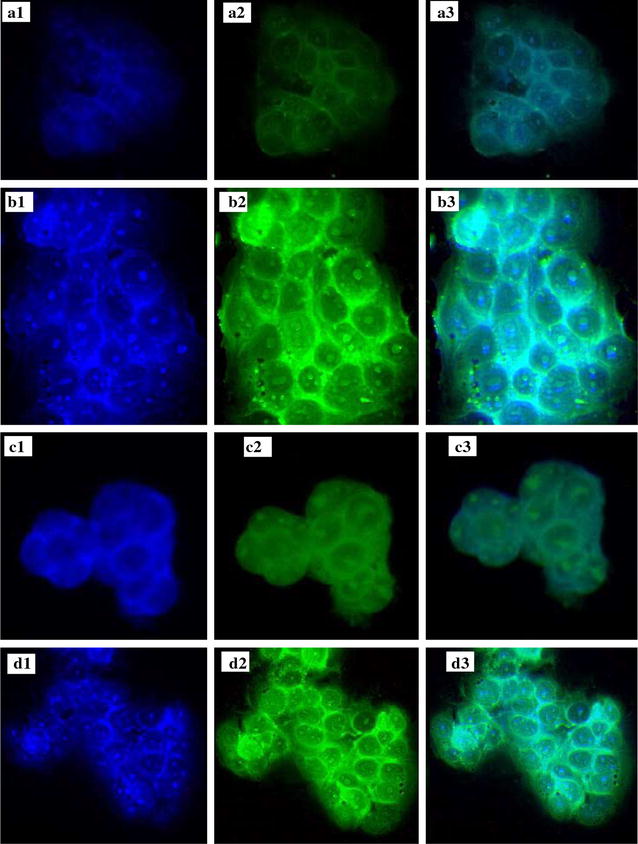
Cellular uptake of F6 and F7 CUR/PTX loaded niosomes formulations on MCF-7cell line. MCF-7cell line [a1 F6 Nio CUR Nucleus, a2 F6 Nio CUR, a3 F6 Nio CUR merged; b1 F7 Nio CUR Nucleus, b2 F7 Nio CUR, b3 F& Nio CUR merged; c1 F6 PTX CUR Nucleus, c2 F6 Nio PTX, c3 F6 Nio CUR PTX; d1 F7 Nio PTX Nucleus, d2 F7 Nio PTX, d3 F& Nio PTX merged]
Fig. 8
Fig. 8
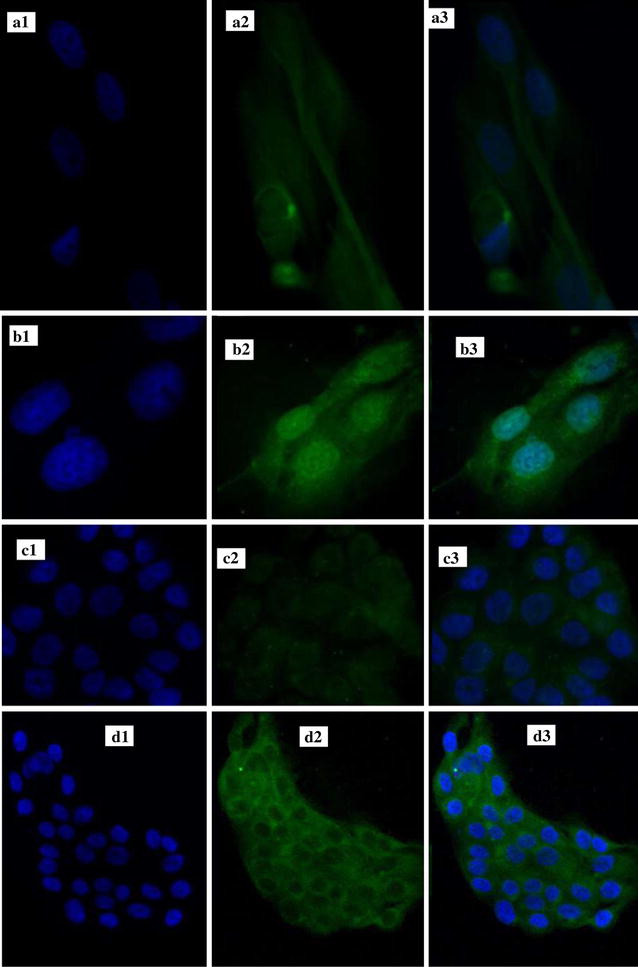
Cellular uptake of F6 and F7 CUR/PTX loaded niosomes formulations on MCF-7cell line. MCF-10A cell line [a1 F6 Nio CUR Nucleus, a2 F6 Nio CUR, a3 F6 Nio CUR merged; b1 F7 Nio CUR Nucleus, b2 F7 Nio CUR, b3 F& Nio CUR merged; c1 F6 PTX CUR Nucleus, c2 F6 Nio PTX, c3 F6 Nio CUR PTX; d1 F7 Nio PTX Nucleus, d2 F7 Nio PTX, d3 F& Nio PTX merged]
Fig. 9
Fig. 9
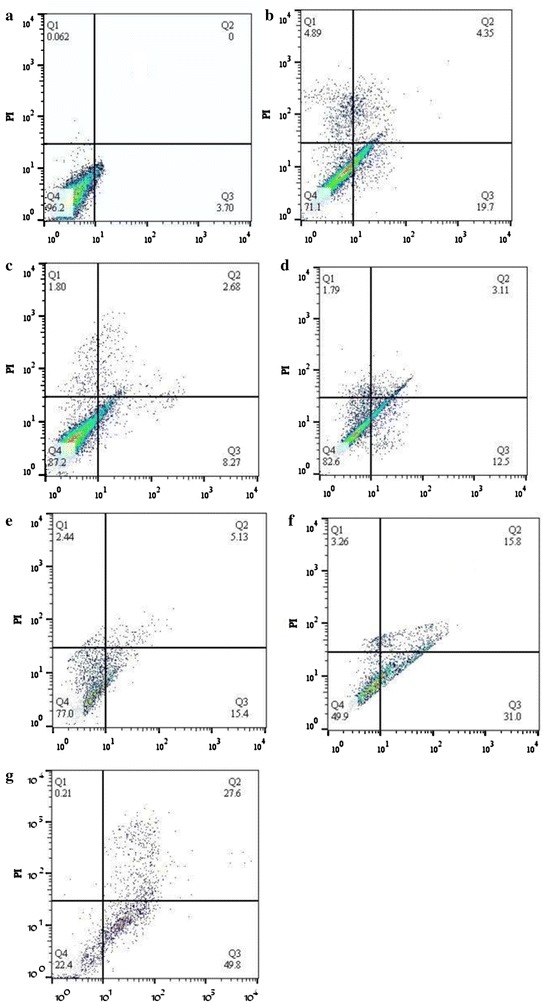
Apoptosis assay using flow cytometry following the treatment of cells for 24 h. a Control; b free curcumin + free paclitaxel; c free curcumin; d free paclitaxel; e niosomal curcumin; f niosomal paclitaxel; g niosomal curcumin + niosomal paclitaxel

References

    1. Ruttala HB, Ko YT. Liposomal co-delivery of curcumin and albumin/paclitaxel nanoparticle for enhanced synergistic antitumor efficacy. Colloids Surf B. 2015;128:419–426. doi: 10.1016/j.colsurfb.2015.02.040. - DOI - PubMed
    1. Jaishree V, Gupta PD. Nanotechnology: a revolution in cancer diagnosis. Indian J Clin Biochem. 2012;27:214–220. doi: 10.1007/s12291-012-0221-z. - DOI - PMC - PubMed
    1. Eldar-Boock A, Polyak D, Scomparin A, Satchi-Fainaro R. Nano-sized polymers and liposomes designed to deliver combination therapy for cancer. Curr Opin Biotechnol. 2013;24:682–689. doi: 10.1016/j.copbio.2013.04.014. - DOI - PubMed
    1. Jain S, Jain V, Mahajan SC. Lipid based vesicular drug delivery systems. Adv Pharm. 2014;2014:12.
    1. Sezgin-Bayindir Z, Yuksel N. Investigation of formulation variables and excipient interaction on the production of niosomes. AAPS PharmSciTech. 2012;13:826–835. doi: 10.1208/s12249-012-9805-4. - DOI - PMC - PubMed

MeSH terms

LinkOut - more resources