Myocarditis secondary to smallpox vaccination
- PMID: 29572367
- PMCID: PMC5878341
- DOI: 10.1136/bcr-2017-223523
Myocarditis secondary to smallpox vaccination
Abstract
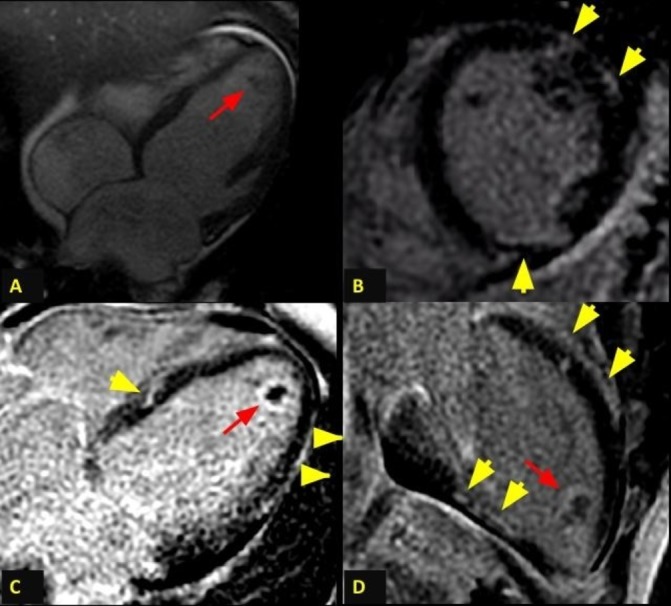
The development of vaccines ushered in the most profound advancement in 20th century medicine, and have widely been regarded as the one of the most important scientific discovery in the history of mankind. However, vaccines are not without risk; reactions can range from injection site reactions to life-threatening anaphylaxis. Among the more serious vaccine-related sequela is myocarditis. Although myocarditis has been reported following many different vaccines, the smallpox vaccine has the strongest association. We report a case of a 36-year-old active duty service member presenting with progressive dyspnoea, substernal chest pain and lower extremity swelling 5 weeks after receiving the vaccinia vaccination. The aetiology of his acute decompensated heart failure was determined to be from myocarditis. Although the majority of cases of myocarditis resolve completely, some patients develop chronic heart failure and even death. Vaccine-associated myocarditis should always be on the differential for patients that exhibit cardiopulmonary symptoms after recent vaccinations.
Keywords: heart failure; pericardial disease; radiology (diagnostics); vaccination/immunisation.
© BMJ Publishing Group Ltd (unless otherwise stated in the text of the article) 2018. All rights reserved. No commercial use is permitted unless otherwise expressly granted.
Conflict of interest statement
Competing interests: None declared.
Figures
References
-
- Centers for Disease Control and Prevention. Achievements in public health, 1900-1999 impact of vaccines universally recommended for children - United States, 1990-1998 [Internet]: Centers for Disease Control and Prevention, 2017. https://www.cdc.gov/mmwr/preview/mmwrhtml/00056803.htm
Publication types
MeSH terms
Substances
LinkOut - more resources
Full Text Sources
Other Literature Sources
Medical