


Usefulness of a pleuroperitoneal shunt for treatment of refractory pleural effusion in a patient receiving maintenance hemodialysis
- PMID: 29572611
- PMCID: PMC6181877
- DOI: 10.1007/s13730-018-0323-4
Usefulness of a pleuroperitoneal shunt for treatment of refractory pleural effusion in a patient receiving maintenance hemodialysis
Abstract
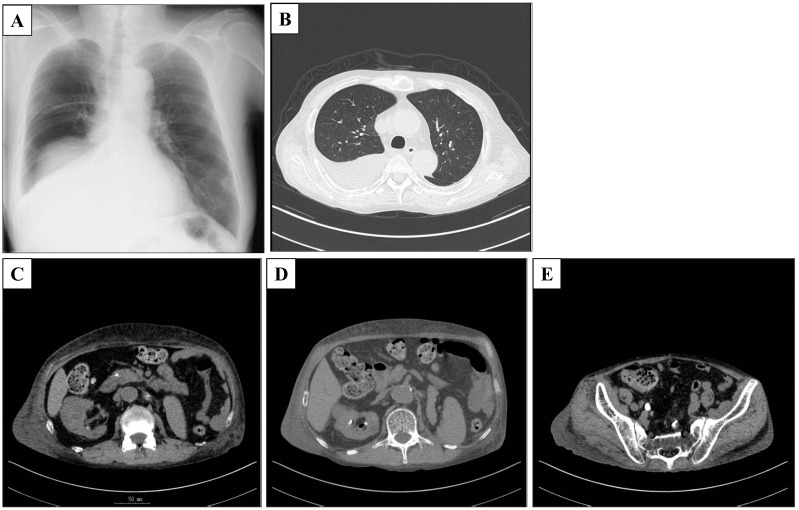
Refractory pleural effusion can be a life-threatening complication in patients receiving maintenance hemodialysis. We report successful treatment of refractory pleural effusion using a Denver® pleuroperitoneal shunt in one such patient. A 54-year-old Japanese man, who had previously undergone left nephrectomy, was admitted urgently to our department because of a high C-reactive protein (CRP) level, right pleural effusion, and right renal abscess. Because antibiotics proved ineffective and his general state was deteriorating, he underwent emergency insertion of a thoracic drainage tube and nephrectomy, and hemodialysis was started. Although his general state improved slowly thereafter, the pleural effusion, which was unilateral and transudative, remained refractory and therefore he needed to be on oxygenation. To control the massive pleural effusion, a pleuroperitoneal shunt was inserted. Thereafter, his respiratory condition became stable without oxygenation and he was discharged. His general condition has since been well. Although pleural effusion is a common complication of maintenance hemodialysis, few reports have documented the use of pleuroperitoneal shunt to control refractory pleural effusion. Pleuroperitoneal shunt has been advocated as an effective and low-morbidity treatment for refractory pleural effusion, and its use for some patients with recurrent pleural effusion has also been reported, without any severe complications. In the present case, pleuroperitoneal shunt improved the patient's quality of life sufficiently to allow him to be discharged home without oxygenation. Pleuroperitoneal shunt should be considered a useful treatment option for hemodialysis patients with refractory pleural effusion.
Keywords: Hemodialysis; Pleuroperitoneal shunt; Refractory pleural effusion.
Conflict of interest statement
Conflict of interest
The authors declare that they have no competing interests.
Ethical approval and consent
Not applicable.
Consent for publication
Written informed consent was obtained from the patient for publication of this case report and any accompanying images.
Availability of data and material
The dataset supporting the conclusions of this article was included within the article and its additional file.
Figures

References
-
- © 2011 CareFusion Corporation or one of its subsidiaries. All rights reserved. Denver and Silique are trademarks or registered trademarks of CareFusion Corporation or one of its subsidiaries. LIT12007en-ED01. https://www.bd.com/Documents/international/brochures/interventionalspeci...
Publication types
MeSH terms
Substances
LinkOut - more resources
Full Text Sources
Other Literature Sources
Medical
Research Materials
Miscellaneous
