Review
. 2018 Jun;23(2):78-87.
doi: 10.1111/jns.12262. Epub 2018 Apr 19.

Individualized immunoglobulin therapy in chronic immune-mediated peripheral neuropathies

Affiliations
Review

Individualized immunoglobulin therapy in chronic immune-mediated peripheral neuropathies

Jeffrey A Allen et al. J Peripher Nerv Syst. 2018 Jun.

Abstract

Despite the well-recognized importance of immunoglobulin therapy individualization during the treatment of chronic inflammatory demyelinating polyneuropathy (CIDP), the pathway to best achieve optimization is unknown. There are many pharmacokinetic and immunobiologic variables that can potentially influence the appropriateness of any individual therapy. Although identification of specific autoantibodies and their targets has only been accomplished in a minority of patients with CIDP, already the diagnostic and treatment implications of specific autoantibody detection are being realized. Individual variability in IgG pharmacokinetic properties including IgG catabolic rates and distribution, as well as the IgG level necessary for disease control also require consideration during the optimization process. For optimization to be successful there must be a measure of treatment response that has a clinically meaningful interpretation. There are currently available well-defined and validated clinical assessment tools and outcome measures that are well suited for this purpose. While there remains much to learn on how best to manipulate immunopathology and immunoglobulin pharmacokinetics in the most favorable way, there currently exists an understanding of these principles to a degree sufficient to begin to develop rational and evidence-based treatment optimization strategies.

Keywords: autoimmune neuromuscular diseases; chronic inflammatory demyelinating polyneuropathy; immune-mediated neuropathies; intravenous immunoglobulin; pharmacokinetics.


Figures

Figure 1
Figure 1
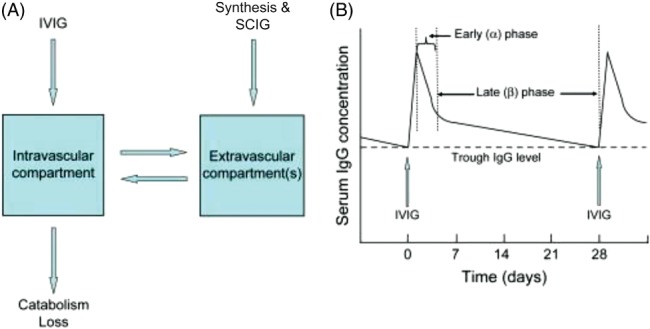
(A) Schematic model for distribution and metabolism of IgG illustrating a “two compartment model.” Note that newly synthesized IgG as well as subcutaneously administered IgG (SCIG) are initially in the extravascular compartment and then move into the intravascular compartment by diffusion and lymphatic circulation. (B) Pharmacokinetics of serum IgG after a dose of IVIG. IVIG, intravenous immunoglobulin; SCIG, subcutaneous immunoglobulin (Bonilla, 2008 ). Copyright 2008. Reprinted with permission from Elsevier.
Figure 2
Figure 2
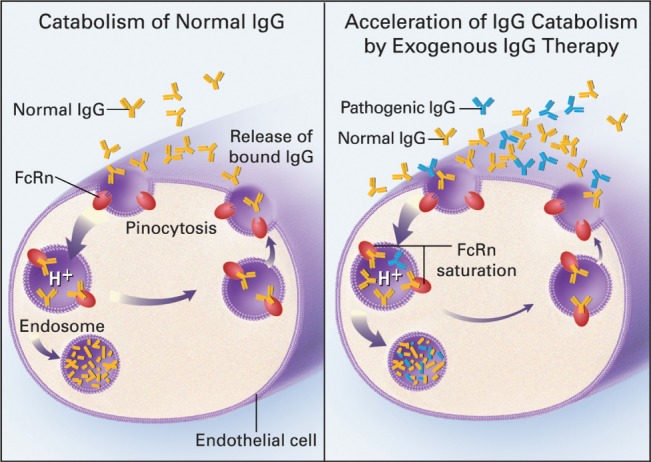
Role of FcRn in determining survival of IgG in the circulation. Left panel: under normal conditions, IgG from the serum binds to FcRn and goes through an endosomal pathway which avoids lysosomal catabolism. The IgG is thus returned intact to the circulation. Right panel: If the serum IgG level is raised by exogenous IgG, FcRn becomes saturated and much of the IgG goes through the default endosomal pathway which results in lysosomal catabolism. Because of the high proportion of exogenous normal IgG, endogenous pathogenic IgG is preferentially degraded (Yu and Lennon, 1999 ). Copyright 1999 Massachusetts Medical Society. Reprinted with permission from Massachusetts Medical Society.
Figure 3
Figure 3
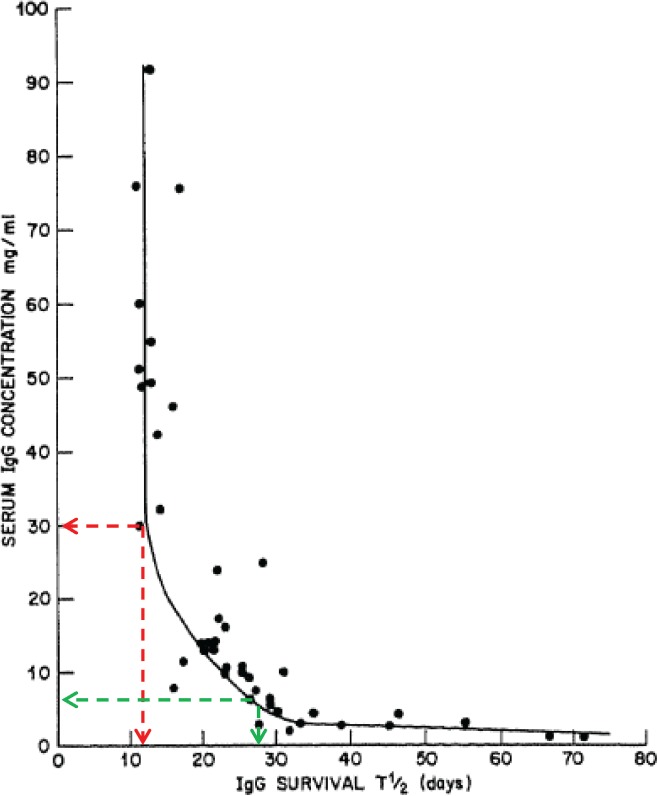
High concentrations of IgG (ie, greater than 20 g/l) lead to rapid catabolism and shorter survival in the circulation (half‐life). At an IgG concentration of 30 g/l (30 mg/ml as shown here) for example, shortly after an IVIG infusion the half‐life would be 11 days (red dashed line). In contrast, at a normal serum IgG concentration (8 g/l) the half‐life is 28 days (Waldmann and Strober, 1969 ). Copyright 2016 Karger Publishers, Basel, Switzerland. Reprinted with permission.
Figure 4
Figure 4
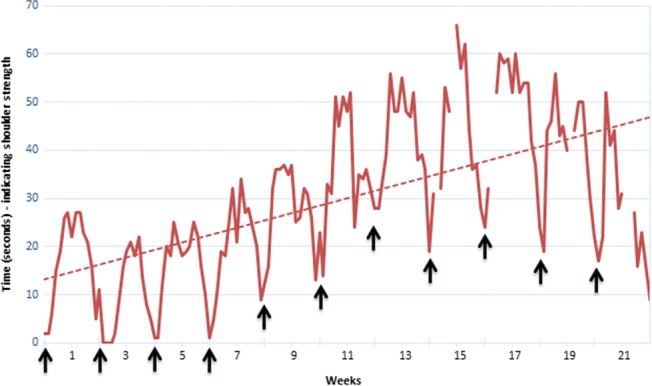
Wear‐off in one patient with CIDP. Self‐recorded daily measurement of maximum time that left upper limb can be held outstretched (patient seated with shoulder 90° flexed and elbow extended). This non‐standard outcome measure was chosen by the patient as the most practical measure of disability in his left upper limb. IVIG was given at 1.86 g/kg every two weeks (↑). The troughs (minimum time outstretched) around the day of each IVIG treatment show that his shoulder strength weakened as IVIG wore off. The rising baseline shows gradually increasing strength over several months indicating cumulative benefit following increased treatment frequency from 1.86 g/kg/2.5 weeks to 1.86 g/kg/2 weeks at the start of the measurement period (Hadden, personal communication, 2017).
Figure 5
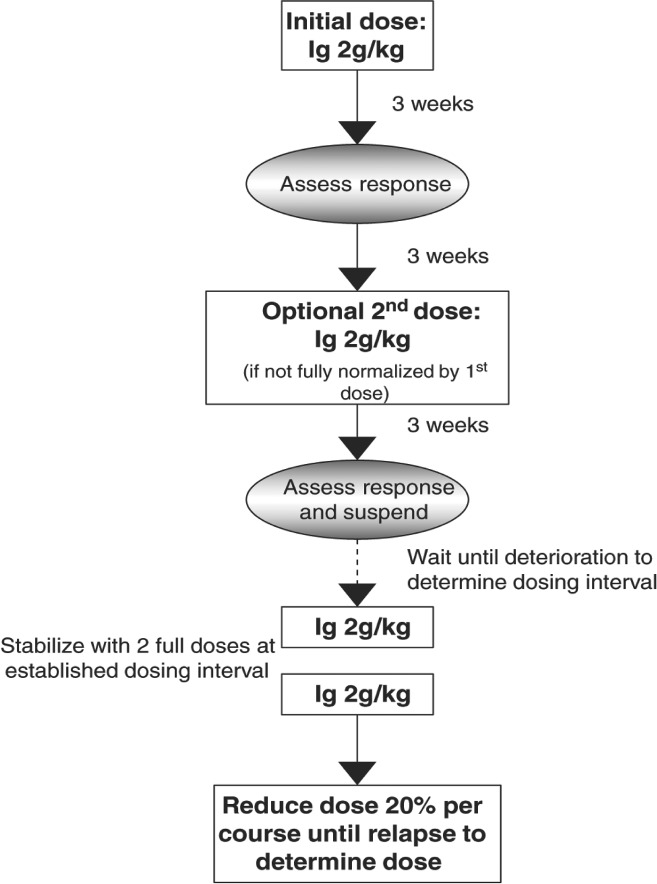
Figure 5
One possible treatment algorithm to optimize dose and dosing interval of immunoglobulin. (Ig = IVIG) (Lunn et al., 2016 ). Reprinted with permission.

References

    1. Allen JA, Lewis RA (2015). CIDP diagnostic pitfalls and perception of treatment benefit. Neurology 85:498–504. - PubMed
    1. Allen JA, Ney J, Lewis RA (2018). Electrodiagnostic errors contribute to chronic inflammatory demyelinating polyneuropathy misdiagnosis. Muscle Nerve 57:542–549. - PubMed
    1. Attarian S, Verschueren A, Franques J, Salort‐Campana E, Jouve E, Pouget J (2011). Response to treatment in patients with Lewis‐Sumner syndrome. Muscle Nerve 44:179–184. - PubMed
    1. Berger M (2004). Subcutaneous immunoglobulin replacement in primary immunodeficiencies. Clin Immunol 112:1–7. - PubMed
    1. Berger M, Allen JA (2015). Optimizing IgG therapy in chronic autoimmune neuropathies: a hypothesis driven approach. Muscle Nerve 51:315–326. - PMC - PubMed

MeSH terms

Substances