


Orbito-frontal cortex mechanism of inhibition of return in current and remitted depression
- PMID: 29575563
- PMCID: PMC6866481
- DOI: 10.1002/hbm.24051
Orbito-frontal cortex mechanism of inhibition of return in current and remitted depression
Abstract
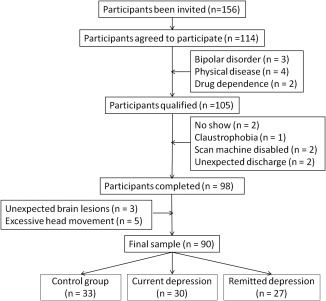
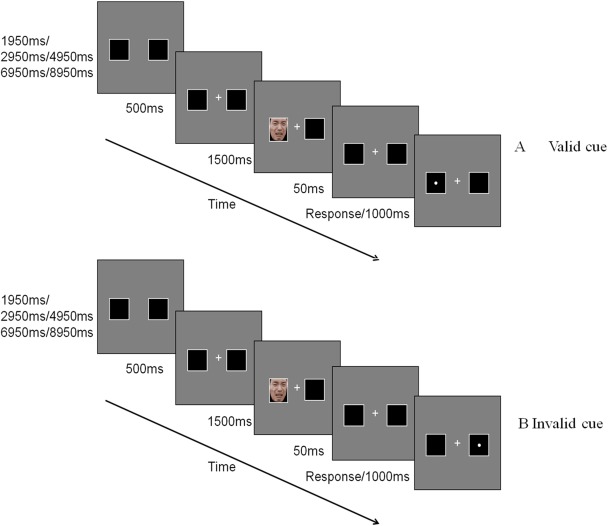
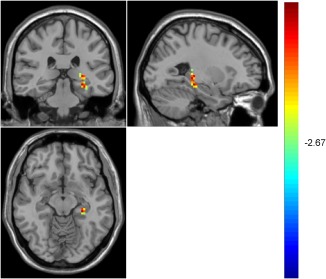
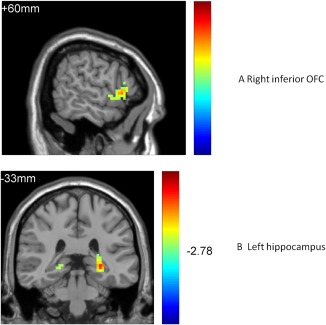
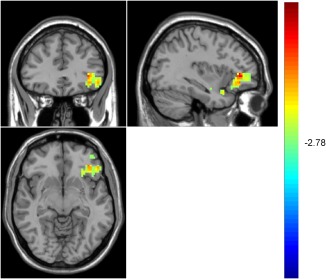
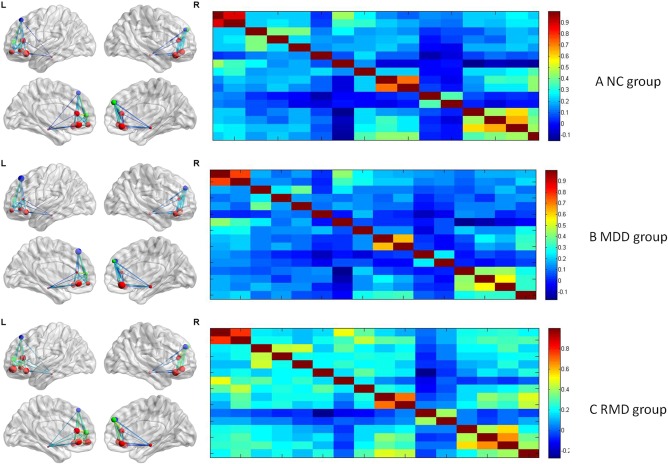
Deficient inhibition of return (IOR) for emotional materials is an important cognitive biomarker of depression. However, its neural mechanism and role in depression remission remain largely unknown. Using functional magnetic resonance imaging (fMRI), this study observed the neural foundation of inhibition of return in individuals with current (n = 30) and remitted (n = 27) depression and in healthy controls (n = 33), by using a cue-target task. The results showed that individuals with remitted depression (RMD) possessed a nonavoidant attention model for sad faces, which indicated a cue validity and was correlated with enhanced task- and resting-state activation and function connectivity in orbitofrontal cortex (OFC). The patients with major depressive disorder (MDD), in contrast, displayed an IOR effect for all faces, which indicated a strategy of attention avoidance due to the high cognitive burden in the cue-target task, and was correlated with decreased resting-state activation and function connectivity in OFC. Moreover, the hippocampus, a less-known cortex in IOR, showed a contrary model, that is, lower activation in depression remission and higher task- and resting-state activation in depressive episodes. The results suggest the OFC mechanism of the IOR effect in remitted depression and the hippocampus mechanism of the IOR effect in depressive episodes, which offer potential biomarkers for the clinical treatment of depression.
Keywords: depression; fMRI; inhibition of return; orbitofrontal cortex; remission.
© 2018 Wiley Periodicals, Inc.
Figures
References
-
- Ahdab, R. , Ayache, S. S. , Brugières, P. , Goujon, C. , & Lefaucheur, J. P. (2010). Comparison of “standard” and “navigated” procedures of TMS coil positioning over motor, premotor and prefrontal targets in patients with chronic pain and depression. Clinical Neurophysiology, 40(1), 27–36. - PubMed
-
- APA. (2013). Diagnostic and statistical manual of mental disorders (5th ed.). Arlington, VA: American Psychiatric Publishing.
-
- Baert, S. , De Raedt, R. , Schacht, R. , & Koster, E. H. W. (2010). Attentional bias training in depression, therapeutic effects depend on depression severity. Journal of Behavior Therapy and Experimental Psychiatry, 41, 265–274. - PubMed
-
- Barbas, H. , & Zikopoulos, B. , & Timbie, C. (2011). Sensory pathways and emotional context for action in primate prefrontal cortex. Biological Psychiatry, 69(12), 1133–1139. - PubMed
-
- Beck, A. T. , Epstein, N. , Brown, G. , & Steer, R. A. (1988). An inventory for measuring clinical anxiety: Psychometric properties. Journal of Consultant and Clinical Psychology, 56, 893–897. - PubMed
Publication types
MeSH terms
LinkOut - more resources
Full Text Sources
Other Literature Sources
