


The Accumulating Data to Optimally Predict Obesity Treatment (ADOPT) Core Measures Project: Rationale and Approach
- PMID: 29575780
- PMCID: PMC5973529
- DOI: 10.1002/oby.22154
The Accumulating Data to Optimally Predict Obesity Treatment (ADOPT) Core Measures Project: Rationale and Approach
Abstract
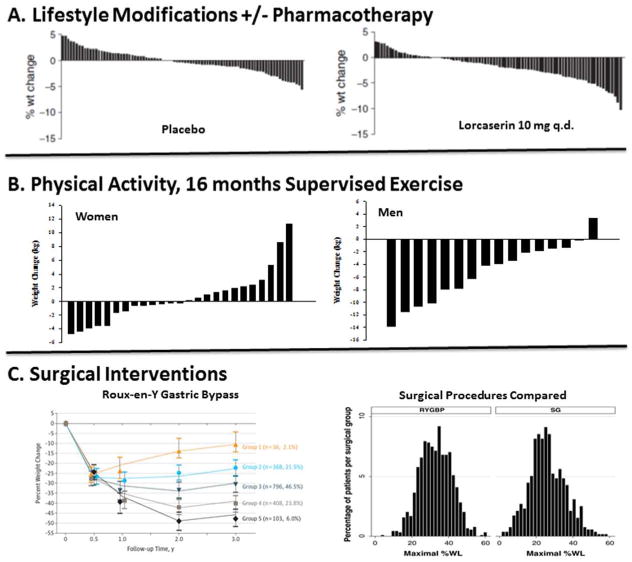
Background: Individual variability in response to multiple modalities of obesity treatment is well documented, yet our understanding of why some individuals respond while others do not is limited. The etiology of this variability is multifactorial; however, at present, we lack a comprehensive evidence base to identify which factors or combination of factors influence treatment response.
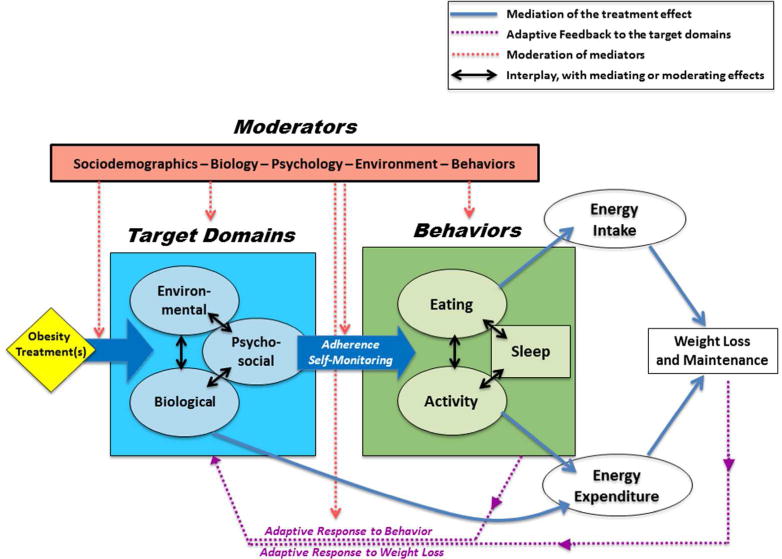
Objectives: This paper provides an overview and rationale of the Accumulating Data to Optimally Predict obesity Treatment (ADOPT) Core Measures Project, which aims to advance the understanding of individual variability in response to adult obesity treatment. This project provides an integrated model for how factors in the behavioral, biological, environmental, and psychosocial domains may influence obesity treatment responses and identify a core set of measures to be used consistently across adult weight-loss trials. This paper provides the foundation for four companion papers that describe the core measures in detail.
Significance: The accumulation of data on factors across the four ADOPT domains can inform the design and delivery of effective, tailored obesity treatments. ADOPT provides a framework for how obesity researchers can collectively generate this evidence base and is a first step in an ongoing process that can be refined as the science advances.
© 2018 The Obesity Society.
Conflict of interest statement
Figures
References
-
- Ogden CL, Carroll MD, Fryar CD, Flegal KM. Prevalence of Obesity Among Adults and Youth: United States, 2011–2014. NCHS Data Brief. 2015:1–8. - PubMed
-
- Whitt-Glover MC, Kumanyika SK, Haire-Joshu D. Introduction to the special issue on achieving healthy weight in black American communities. Obes Rev. 2014;15(Suppl 4):1–4. - PubMed
-
- Heymsfield SB, Wadden TA. Mechanisms, Pathophysiology, and Management of Obesity. N Engl J Med. 2017;376:254–266. - PubMed
-
- Cawley J, Meyerhoefer C. The medical care costs of obesity: an instrumental variables approach. J Health Econ. 2012;31:219–230. - PubMed
Publication types
MeSH terms
Grants and funding
LinkOut - more resources
Full Text Sources
Other Literature Sources
Medical
