Traditional Chinese Medicine and Herb-induced Liver Injury: Comparison with Drug-induced Liver Injury
- PMID: 29577033
- PMCID: PMC5863000
- DOI: 10.14218/JCTH.2017.00033
Traditional Chinese Medicine and Herb-induced Liver Injury: Comparison with Drug-induced Liver Injury
Abstract
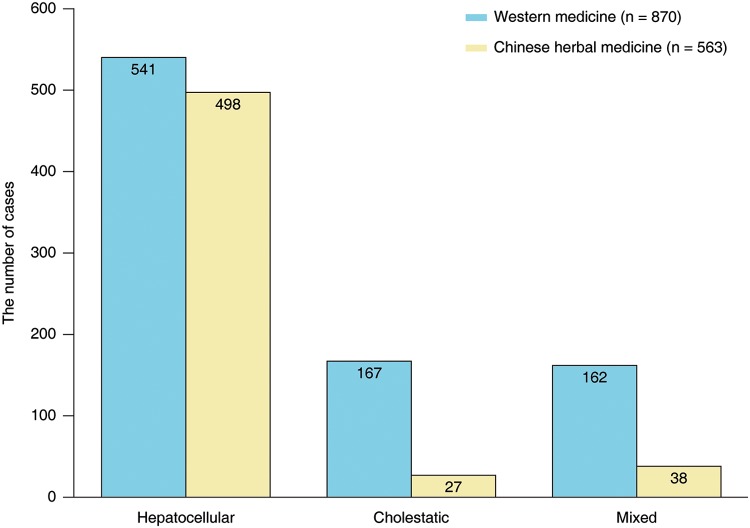
Cases of suspected herb-induced liver injury (HILI) caused by herbal Traditional Chinese Medicines (TCMs) and of drug-induced liver injury (DILI) are commonly published in the scientific literature worldwide. As opposed to the multiplicity of botanical chemicals in herbal TCM products, which are often mixtures of several herbs, conventional Western drugs contain only a single synthetic chemical. It is therefore of interest to study how HILI by TCM and DILI compare with each other, and to what extent results from each liver injury type can be transferred to the other. China is among the few countries with a large population using synthetic Western drugs as well as herbal TCM. Therefore, China is well suited to studies of liver injury comparing drugs with TCM herbs. Despite some concordance, recent analyses of liver injury cases with verified causality, using the Roussel Uclaf Causality Assessment Method, revealed major differences in HILI caused by TCMs as compared to DILI with respect to the following features: HILI cases are less frequently observed as compared to DILI, have a smaller proportion of females and less unintentional rechallenge events, and present a higher rate of hepatocellular injury features. Since many results were obtained among Chinese residents who had access to and had used Western drugs and TCM herbs, such ethnic homogeneity supports the contention that the observed differences of HILI and DILI in the assessed population are well founded.
Keywords: Drug-induced liver injury (DILI); Herb-induced liver injury (HILI); Herbal TCM hepatotoxicity; Roussel Uclaf Causality Assessment Method (RUCAM); Traditional Chinese medicine (TCM).
Conflict of interest statement
The authors have no conflict of interests related to this publication.
Figures
References
-
- Teschke R, Zhang L. Chinese herbs and their molecules: Clinical and pathophysiological implications for the liver. J Mol Pathophysiol. 2015;4:85–93. doi: . - DOI
Publication types
LinkOut - more resources
Full Text Sources
Other Literature Sources
Research Materials