


Docking-based inverse virtual screening: methods, applications, and challenges
- PMID: 29577065
- PMCID: PMC5860130
- DOI: 10.1007/s41048-017-0045-8
Docking-based inverse virtual screening: methods, applications, and challenges
Abstract
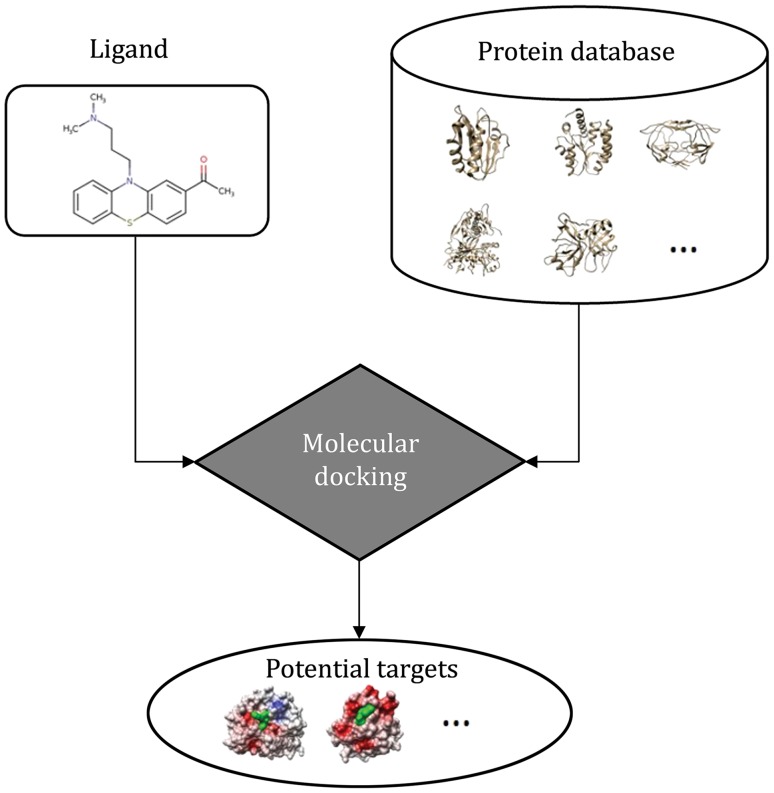
Identifying potential protein targets for a small-compound ligand query is crucial to the process of drug development. However, there are tens of thousands of proteins in human alone, and it is almost impossible to scan all the existing proteins for a query ligand using current experimental methods. Recently, a computational technology called docking-based inverse virtual screening (IVS) has attracted much attention. In docking-based IVS, a panel of proteins is screened by a molecular docking program to identify potential targets for a query ligand. Ever since the first paper describing a docking-based IVS program was published about a decade ago, the approach has been gradually improved and utilized for a variety of purposes in the field of drug discovery. In this article, the methods employed in docking-based IVS are reviewed in detail, including target databases, docking engines, and scoring function methodologies. Several web servers developed for non-expert users are also reviewed. Then, a number of applications are presented according to different research purposes, such as target identification, side effects/toxicity, drug repositioning, drug-target network development, and receptor design. The review concludes by discussing the challenges that docking-based IVS needs to overcome to become a robust tool for pharmaceutical engineering.
Keywords: Drug repositioning; Inverse virtual screening; Molecular docking; Polypharmacology; Side effects; Target fishing.
Conflict of interest statement
Compliance with Ethical StandardsXianjin Xu, Marshal Huang, and Xiaoqin Zou declare that they have no conflict of interest.This article does not contain any studies with human or animal subjects performed by any of the authors.
Figures
References
-
- Abagyan R, Totrov M, Kuznetsov D. ICM-A new method for protein modeling and design: applications to docking and structure prediction from the distorted native conformation. J Comput Chem. 1994;15:488–506.
-
- Ashburn TT, Thor KB. Drug repositioning: identifying and developing new uses for existing drugs. Nat Rev Drug Discov. 2004;3:673–683. - PubMed
-
- Azzaoui K, Hamon J, Faller B, Whitebread S, Jacoby E, Bender A, Jenkins JL, Urban L. Modeling promiscuity based on in vitro safety pharmacology profiling data. ChemMedChem. 2007;2:874–880. - PubMed
Publication types
Grants and funding
LinkOut - more resources
Full Text Sources
Other Literature Sources