


Morphological variation in the genus Chlorocebus: Ecogeographic and anthropogenically mediated variation in body mass, postcranial morphology, and growth
- PMID: 29577231
- PMCID: PMC6039265
- DOI: 10.1002/ajpa.23459
Morphological variation in the genus Chlorocebus: Ecogeographic and anthropogenically mediated variation in body mass, postcranial morphology, and growth
Abstract
Objectives: Direct comparative work in morphology and growth on widely dispersed wild primate taxa is rarely accomplished, yet critical to understanding ecogeographic variation, plastic local variation in response to human impacts, and variation in patterns of growth and sexual dimorphism. We investigated population variation in morphology and growth in response to geographic variables (i.e., latitude, altitude), climatic variables (i.e., temperature and rainfall), and human impacts in the vervet monkey (Chlorocebus spp.).
Methods: We trapped over 1,600 wild vervets from across Sub-Saharan Africa and the Caribbean, and compared measurements of body mass, body length, and relative thigh, leg, and foot length in four well-represented geographic samples: Ethiopia, Kenya, South Africa, and St. Kitts & Nevis.
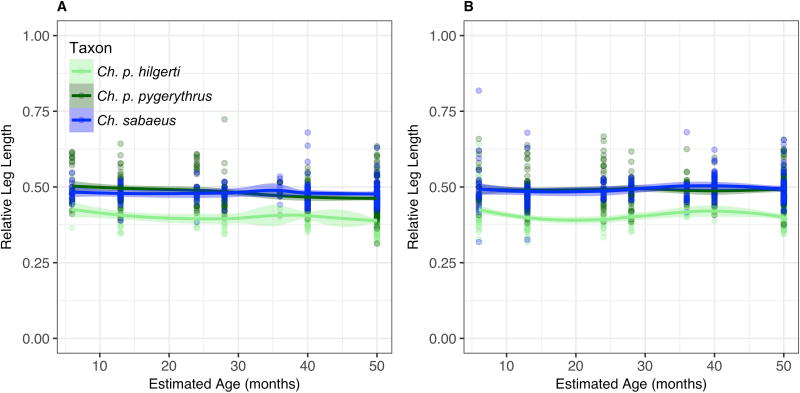
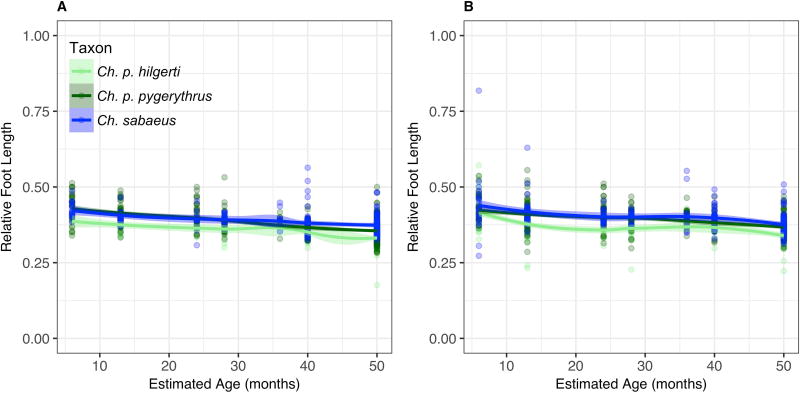
Results: We found significant variation in body mass and length consistent with Bergmann's Rule in adult females, and in adult males when excluding the St. Kitts & Nevis population, which was more sexually dimorphic. Contrary to Rensch's Rule, although the South African population had the largest average body size, it was the least dimorphic. There was significant, although very small, variation in all limb segments in support for Allen's Rule. Females in high human impact areas were heavier than those with moderate exposures, while those in low human impact areas were lighter; human impacts had no effect on males.
Conclusions: Vervet monkeys appear to have adapted to local climate as predicted by Bergmann's and, less consistently, Allen's Rule, while also responding in predicted ways to human impacts. To better understand deviations from predicted patterns will require further comparative work in vervets.
Keywords: Chlorocebus; growth; life history; sexual dimorphism; vervet.
© 2018 Wiley Periodicals, Inc.
Figures
References
-
- Albrecht GH. Latitudinal, taxonomic, sexual, and insular determinants of size variation in pigtail macaques, Macaca nemestrina. Am J Primatol. 1980;1:141–152.
-
- Albrecht GH, Jenkins PD, Godfrey LR. Ecogeographic size variation among the living and subfossil prosimians of Madagascar. Am J Primatol. 1990;22:1–50. - PubMed
-
- Allen JA. The influence of physical conditions in the genesis of species. Radic Rev. 1877;1:108–140.
-
- Altmann J, Alberts SC. Growth rates in a wild primate population: ecological influences and maternal effects. Behav Ecol Sociobiol. 2005;57:490–501.
-
- Altmann J, Altmann S, Hausfater G. Physical maturation and age estimates of yellow baboons, Papio cynocephalus, in Amboseli National Park, Kenya. Am J Primatol. 1981;1:389–399. - PubMed
Publication types
MeSH terms
Grants and funding
LinkOut - more resources
Full Text Sources
Other Literature Sources
Miscellaneous
