


Metabolic Syndrome and cognitive decline in the elderly: A systematic review
- PMID: 29579115
- PMCID: PMC5868841
- DOI: 10.1371/journal.pone.0194990
Metabolic Syndrome and cognitive decline in the elderly: A systematic review
Abstract
Background: Metabolic Syndrome (MetS) refers to a cluster of metabolic disturbances which is associated with increased risk for vascular and degenerative conditions in general population. Although the relationship between vascular risk factors and dementia is undisputable, additional hazard for cognitive decline in older population with concurrent metabolic disorders still waits to be demonstrated. The present review aims to analyze data on MetS and risk for cognitive decline in elderly persons.
Methods: Database searches were performed in Medline, ISI and PsycINFO for articles assessing cognitive performances of older subjects with MetS.
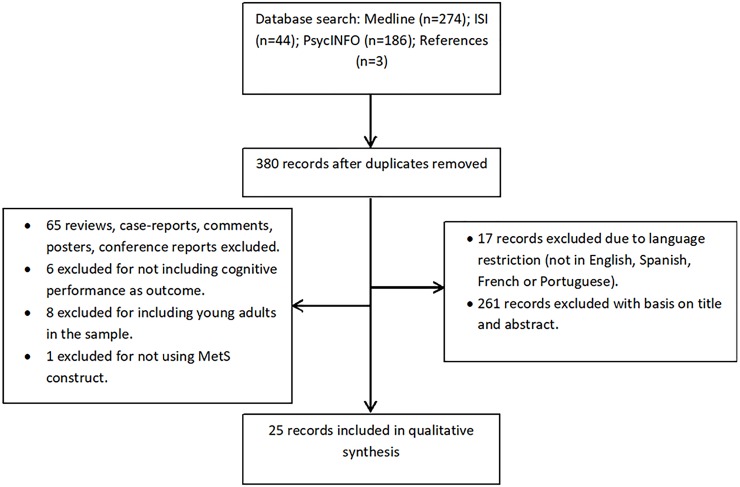
Results: Of a total of 505 studies, 25 were selected for the review. Risk of selection biases was identified in all the studies. Although all articles followed recognized diagnostic recommendations for MetS, minor criteria modifications were detected in most of them. Hyperglycemia was consistently associated with impaired cognitive performances in older individuals, but the role of MetS for cognitive decline and for the onset of dementia showed heterogeneous results.
Discussion: Current available data in the literature concerning the impact of MetS on the cognition of older population is inconclusive and based on inconsistent evidence. Differential effects of individual MetS components and factors associated with the age of the sample may have accounted for divergent findings among articles, but larger and higher quality studies in this field are still needed.
Conflict of interest statement
References
-
- Mazza A, Pessina AC, Zamboni S, Casiglia E. Prognostic role of metabolic syndrome in the elderly is not greater than the sum of its components. Aging health. 2010;6(2): 217–228. doi: 10.2217/AHE.10.9 - DOI
-
- Reaven GM. Banting lecture. Role of insulin resistance in human disease. Diabetes, 1998;37: 1595–1607. doi: 10.2337/diab.37.12.1595 - DOI - PubMed
-
- Balkau B, Charles MA, Drivsholm T, Borch-Johnsen K, Wareham N, Yudkin JS et al. Frequency of the WHO metabolic syndrome in European cohorts, and an alternative definition of an insulin resistance syndrome. Diabetes Metab. 2002; 28(5):364–76. DM-11-2002-28-5-1262-3636-101019-ART3. - PubMed
-
- Ravaglia G, Forti P, Maioli F, Bastagli L, Chiappelli M, Montesi F et al. Metabolic Syndrome: prevalence and prediction of mortality in elderly individuals. Diabetes Care. 2006; 29(11):2471–6. doi: 10.2337/dc06-0282 - DOI - PubMed
-
- Kjeldsen S, Feldman RD, Lisheng L, Mourad JJ, Chiang CE, Zhang W et al. Updated National and International Hypertension Guidelines: A Review of Current Recommendations. Drugs. 2014;74(17), 2033–2051. doi: 10.1007/s40265-014-0306-5 - DOI - PMC - PubMed
Publication types
MeSH terms
Substances
LinkOut - more resources
Full Text Sources
Other Literature Sources
Medical
