


Implementation of surgical debriefing programs in large health systems: an exploratory qualitative analysis
- PMID: 29580254
- PMCID: PMC5870386
- DOI: 10.1186/s12913-018-3003-3
Implementation of surgical debriefing programs in large health systems: an exploratory qualitative analysis
Abstract
Background: The role of the "debrief" to address issues related to patient safety and systematic flaws in care is frequently overlooked. In our study, we interview surgical leaders who have developed successful strategies of debriefing within a comprehensive program of quality improvement.
Methods: Semi-structured interviews of four implementation leaders were performed. The observations, beliefs and strategies of surgical leaders are compared and contrasted. Common themes are identified related to program success and failure. Quality and safety researchers performed, coded and categorized the interviews and coordinated the analysis and interpretation of the results. The authors from the four institutions aided in interpretation and framing of the results.
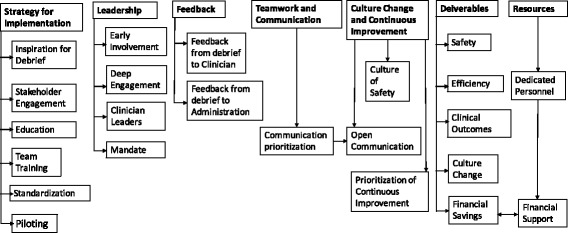
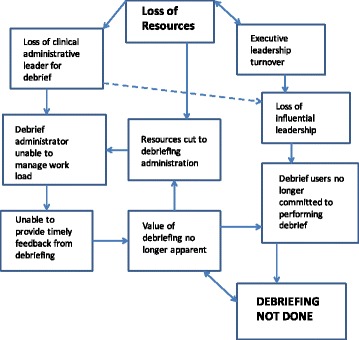
Results: The debriefing programs evaluated were part of comprehensive quality improvement projects. Seven high-level themes and 24 subthemes were identified from the interviews. Themes related to leadership included early engagement, visible ongoing commitment and enforcement. Success appeared to depend upon meaningful and early debriefing feedback. The culture of safety that promoted success included a commitment to open and fair communication and continuous improvement. There were many challenges to the success of debriefing programs. The loss of institutional commitment of resources and personnel was the instigating factor behind the collapse of the program at Michigan. Other areas of potential failure included communication issues and loss of early and meaningful feedback.
Conclusions: Leaders of four surgical systems with strong debriefing programs report success using debriefing to improve system performance. These findings are consistent with previously published studies. Success requires commitment of resources, and leadership engagement. The greatest gains may be best achieved by programs that provide meaningful debriefing feedback in an atmosphere dedicated to open communication.
Keywords: Checklist; Crew resource management; Debriefing; Implementation; Quality improvement; Surgery; Team training.
Conflict of interest statement
Ethics approval and consent to participate
This study was reviewed by the Harvard Ethics Board and judged to be exempt from ethics review as it was judged to be “minimal risk” for participating subjects. Each participant was offered the opportunity for anonymity within the study but each participant asked that they be identified. Informed consent was obtained from all participants prior to being interviewed.
Consent for publication
Written informed consent including consent for publication of identifying information was obtained from all participants.
Competing interests
The authors declare that they have no competing interests.
Publisher’s Note
Springer Nature remains neutral with regard to jurisdictional claims in published maps and institutional affiliations.
Figures
References
-
- Kohn LT, Corrigan JM, Donaldson MS. To Err is Human: Building a Safer Health System. In: Kohn LT, Corrigan JM, Donaldson MS, editors. To Err is Human. Washington (DC): Building a Safer Health System; 2000.
MeSH terms
LinkOut - more resources
Full Text Sources
Other Literature Sources
Medical
