


Review
doi: 10.3727/105221618X15216414278706.
Epub 2018 Mar 26.
Liver and Pancreas: Do Similar Embryonic Development and Tissue Organization Lead to Similar Mechanisms of Tumorigenesis?
Affiliations
- PMID: 29580319
- PMCID: PMC6190115
- DOI: 10.3727/105221618X15216414278706
Item in Clipboard
Review
Liver and Pancreas: Do Similar Embryonic Development and Tissue Organization Lead to Similar Mechanisms of Tumorigenesis?
Gene Expr.
.
Abstract
The liver and pancreas are closely associated organs that share a common embryological origin. They display amphicrine properties and have similar exocrine organization with parenchymal cells, namely, hepatocytes and acinar cells, secreting bile and pancreatic juice into the duodenum via a converging network of bile ducts and pancreatic ducts. Here we compare and highlight the similarities of molecular mechanisms leading to liver and pancreatic cancer development. We suggest that unraveling tumor development in an organ may provide insight into our understanding of carcinogenesis in the other organ.
Conflict of interest statement
The authors declare no conflicts of interests.
Figures
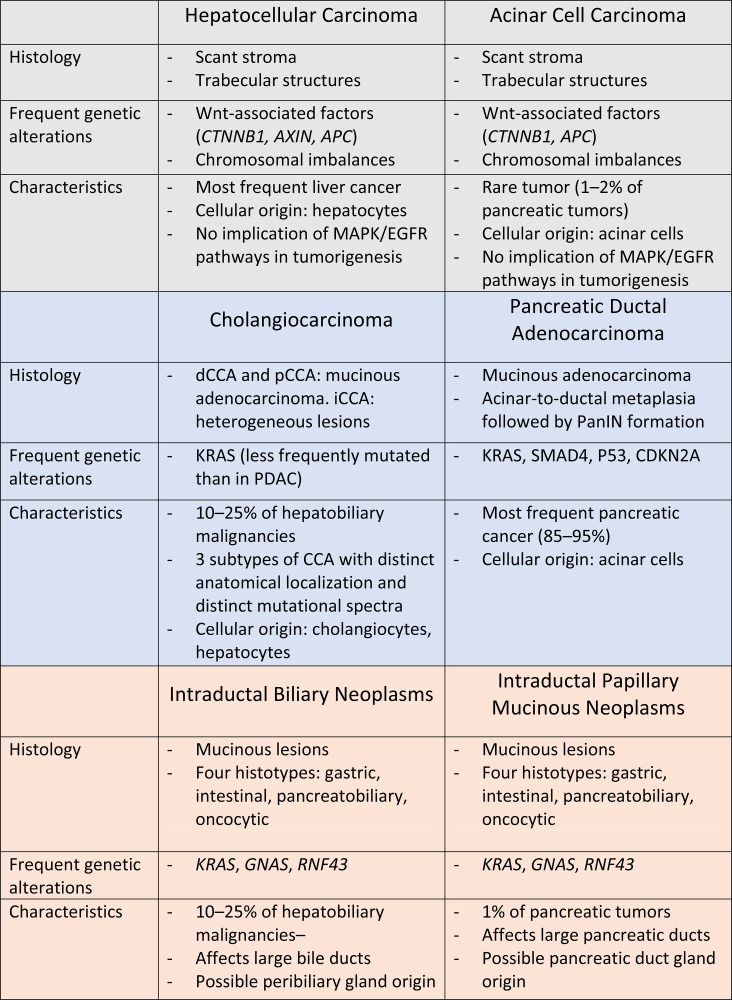
Summary of similarities and differences between liver and pancreatic cancers reported in this article.
References
-
- Si-Tayeb K, Lemaigre FP, Duncan SA. Organogenesis and development of the liver. Dev Cell 2010;18(2):175–89. - PubMed
-
- Shih HP, Wang A, Sander M. Pancreas organogenesis: From lineage determination to morphogenesis. Annu Rev Cell Dev Biol. 2013;29:81–105. - PubMed
-
- Lemaigre FP. Mechanisms of liver development: Concepts for understanding liver disorders and design of novel therapies. Gastroenterology 2009;137(1):62–79. - PubMed
-
- Goessling W, Stainier DY. Endoderm specification and liver development. Methods Cell Biol. 2016;134:463–83. - PubMed
Publication types
MeSH terms
LinkOut - more resources
Full Text Sources
Other Literature Sources
Medical