


Development and Characterisation of a Human Chronic Skin Wound Cell Line-Towards an Alternative for Animal Experimentation
- PMID: 29584680
- PMCID: PMC5979489
- DOI: 10.3390/ijms19041001
Development and Characterisation of a Human Chronic Skin Wound Cell Line-Towards an Alternative for Animal Experimentation
Abstract
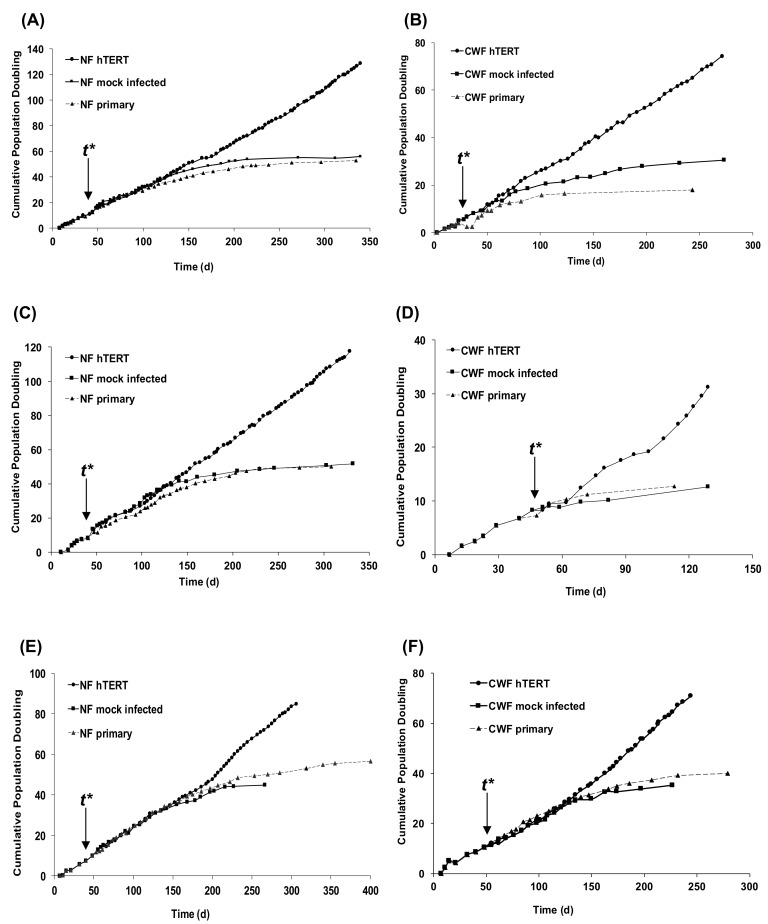
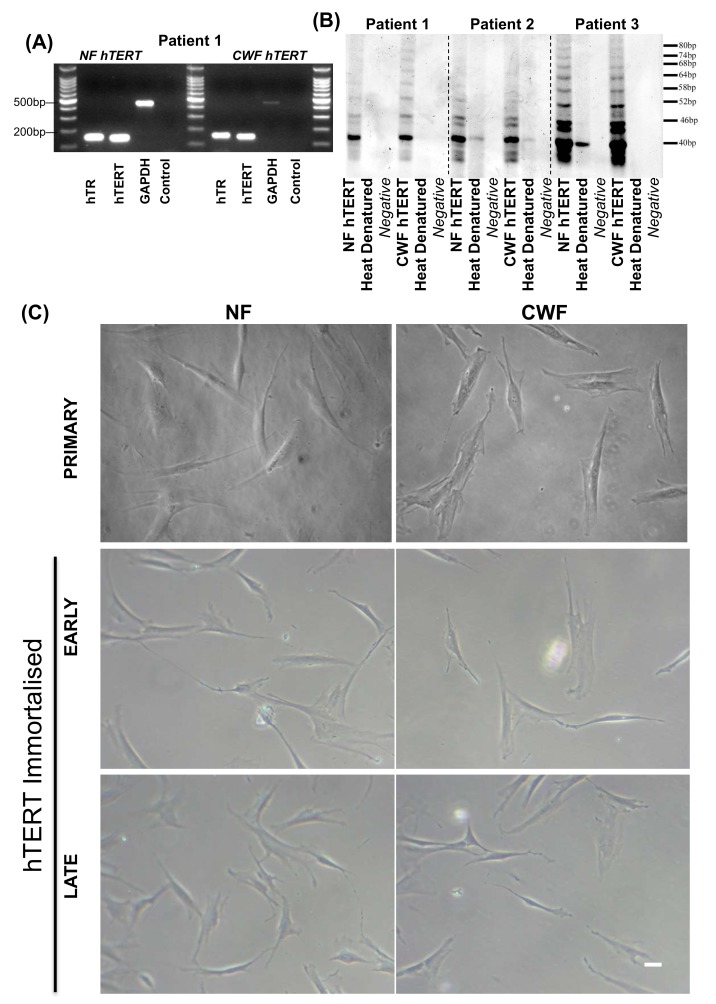
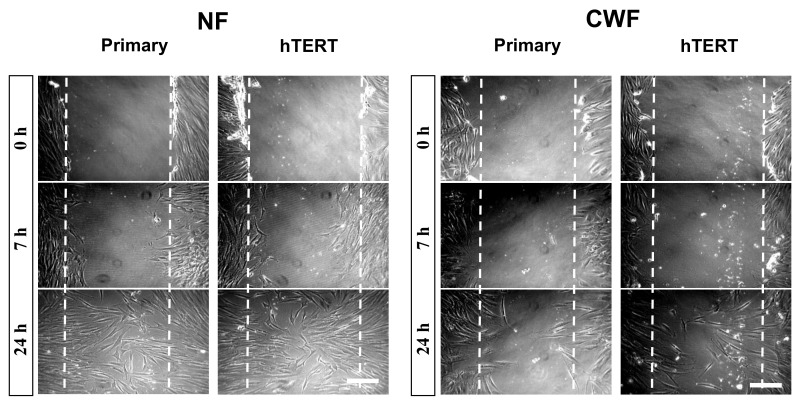
Background: Chronic skin wounds are a growing financial burden for healthcare providers, causing discomfort/immobility to patients. Whilst animal chronic wound models have been developed to allow for mechanistic studies and to develop/test potential therapies, such systems are not good representations of the human chronic wound state. As an alternative, human chronic wound fibroblasts (CWFs) have permitted an insight into the dysfunctional cellular mechanisms that are associated with these wounds. However, such cells strains have a limited replicative lifespan and therefore a limited reproducibility/usefulness. Objectives: To develop/characterise immortalised cell lines of CWF and patient-matched normal fibroblasts (NFs). Methods and Results: Immortalisation with human telomerase resulted in both CWF and NF proliferating well beyond their replicative senescence end-point (respective cell strains senesced as normal). Gene expression analysis demonstrated that, whilst proliferation-associated genes were up-regulated in the cell lines (as would be expected), the immortalisation process did not significantly affect the disease-specific genotype. Immortalised CWF (as compared to NF) also retained a distinct impairment in their wound repopulation potential (in line with CWF cell strains). Conclusions: These novel CWF cell lines are a credible animal alternative and could be a valuable research tool for understanding both the aetiology of chronic skin wounds and for therapeutic pre-screening.
Keywords: animal alternative; chronic wound; fibroblasts; microarray; wound healing.
Conflict of interest statement
The authors declare no conflict of interest.
Figures
References
-
- Kuehn B.M. Chronic wound care guidelines issued. JAMA. 2007;297:938–939. - PubMed
-
- Budgen V. Evaluating the impact on patients of living with a leg ulcer. Nurs. Times. 2004;100:30–31. - PubMed
-
- Iglesias C.P., Birks Y., Nelson E.A., Scanlon E., Cullum N.A. Quality of life of people with venous leg ulcers: A comparison of the discriminative and responsive characteristics of two generic and a disease specific instruments. Qual. Life Res. 2005;14:1705–1718. doi: 10.1007/s11136-005-2751-9. - DOI - PubMed
MeSH terms
Substances
Grants and funding
LinkOut - more resources
Full Text Sources
Other Literature Sources
Medical
Research Materials
