Review
. 2018 Mar 24;10(4):403.
doi: 10.3390/nu10040403.

Nutraceuticals for Skin Care: A Comprehensive Review of Human Clinical Studies

Affiliations
Review

Nutraceuticals for Skin Care: A Comprehensive Review of Human Clinical Studies

Almudena Pérez-Sánchez et al. Nutrients. .

Abstract

The skin is the body's largest organ, it participates in sensitivity and offers protection against microorganisms, chemicals and ultraviolet (UV) radiation. Consequently, the skin may suffer alterations such as photo-ageing, immune dysfunction and inflammation which may significantly affect human health. Nutraceuticals represent a promising strategy for preventing, delaying, or minimising premature ageing of the skin and also to alleviate certain skin disorders. Among them, bioactive peptides and oligosaccharides, plant polyphenols, carotenoids, vitamins and polyunsaturated fatty acids are the most widely used ingredients. Supplementation with these products has shown evidence of having an effect on the signs of ageing and protection against UV radiation ageing in several human trials. In this review, the most relevant human studies on skin nutraceuticals are evaluated and the statistical resolution, biological relevance of their results, and, the trial protocols are discussed. In conclusion, quality and rigorousness of the trials must be improved to build credible scientific evidence for skin nutraceuticals and to establish a cause-effect relationship between the ingredients the beneficial effects for the skin.

Keywords: natural compound; nutraceutical; polyphenols; skin.


Conflict of interest statement

The authors declare no conflict of interest.

Figures
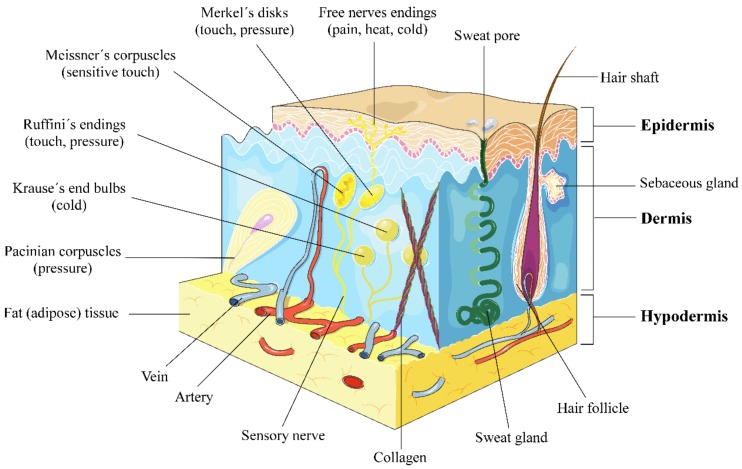
Figure 1
Figure 1
Human skin anatomy. There are three mechanoreceptor categories: tactile, proprioceptors and baroreceptors. The four major types of tactile mechanoreceptors are Merkel’s disks, Meissner’s corpuscles, Ruffini’s endings, and Pacinian corpuscles. The fifth type of mechanoreceptor, Krause’s end bulbs, is found only in specialised regions to detect cold. Free nerve endings are sensitive to painful stimuli, to hot and cold, and to light touch. This figure was created using Servier Medical Art [19], licensed under the Creative Commons Attribution 3.0 Unported License (www.creativecommons.org/licenses/by/3.0/).
Figure 2
Figure 2
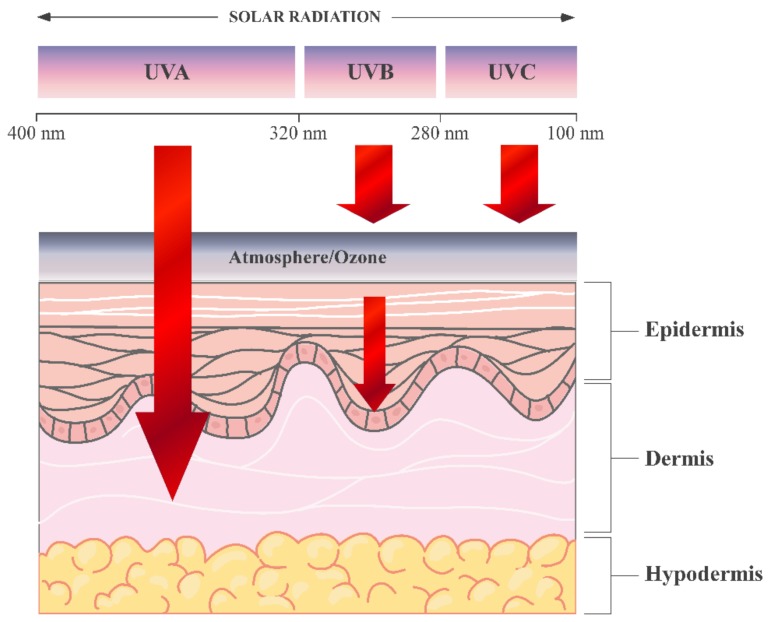
UV penetration into the layers of the skin. The figure was created using Servier Medical Art [19], licensed under the Creative Commons Attribution 3.0 Unported License (www.creativecommons.org/licenses/by/3.0/).
Figure 3
Figure 3
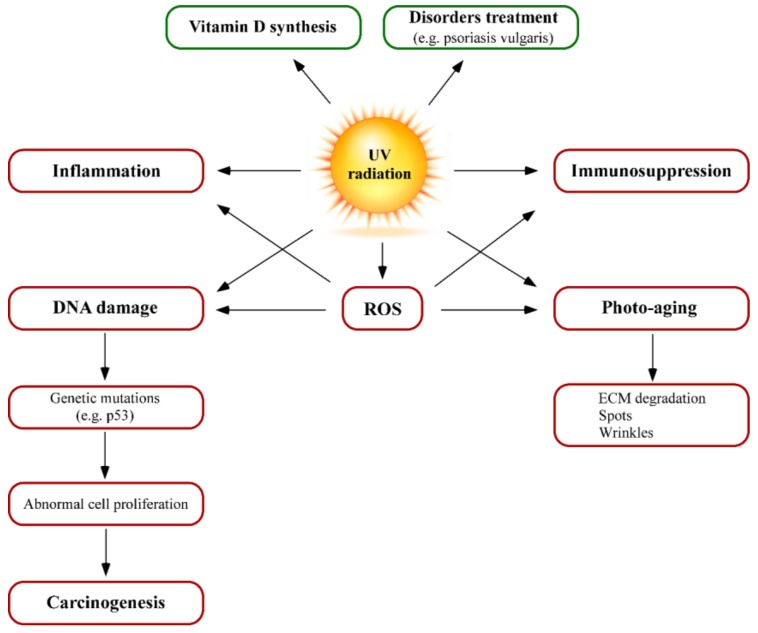
Summary of UV irradiation effects on the skin: positive (green) and adverse effects (red).
Figure 4
Figure 4
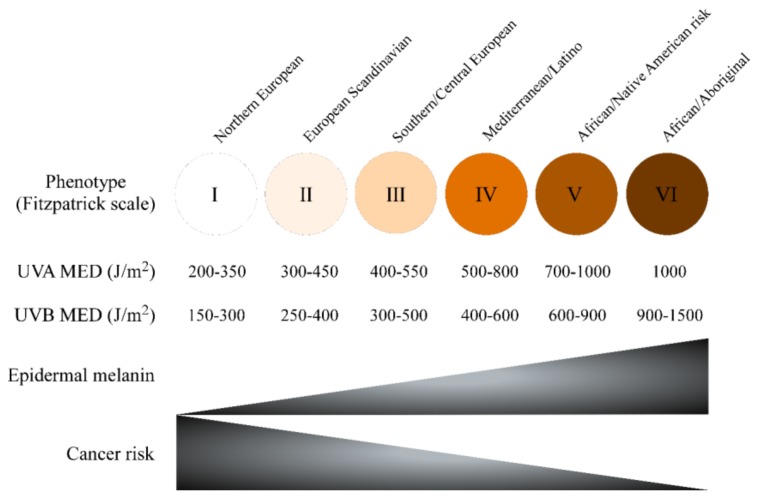
Influence of pigmentation and phototype on skin cancer risk.
Figure 5
Figure 5
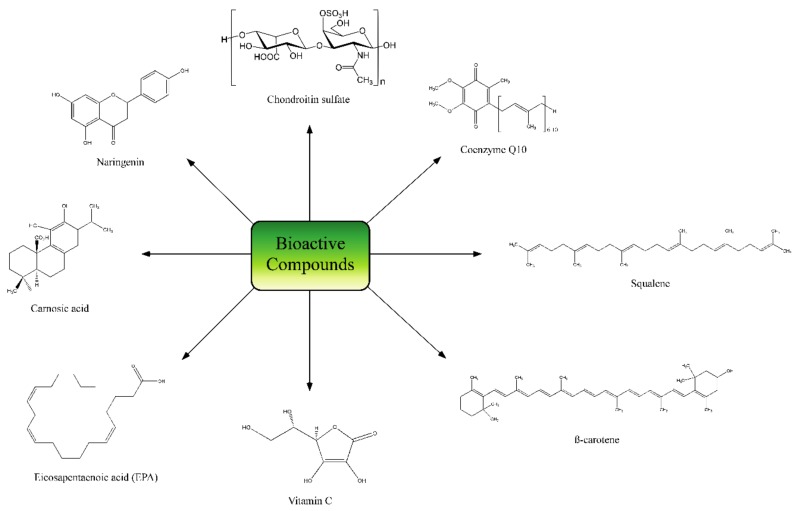
Representative structure compounds of different supplementation products.
Figure 6
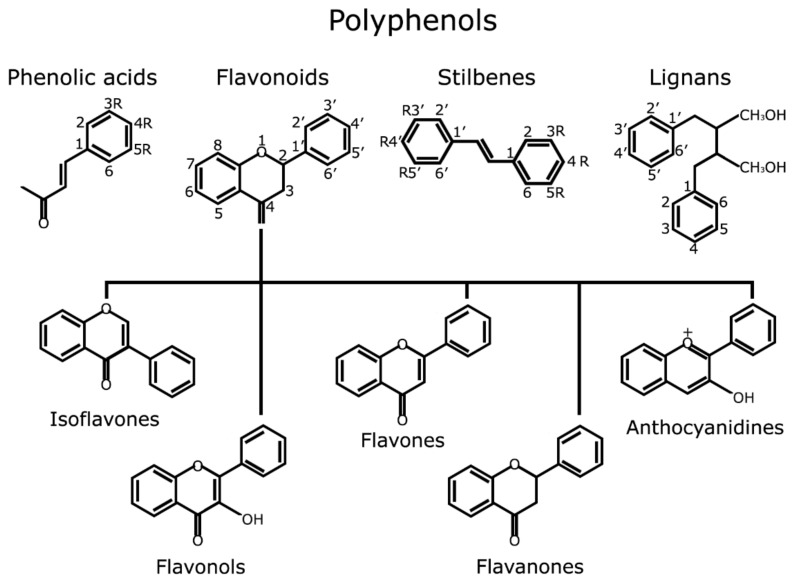
Figure 6
Main classes of polyphenols by structural classification. This image has been created and previously used by author in [91] and is under Creative Commons by Attribution (CC-BY) license (http://creativecommons.org/licenses/by/4.0/).

References

    1. Pullar J.M., Carr A.C., Vissers M.C.M. The roles of vitamin C in skin health. Nutrients. 2017;9 doi: 10.3390/nu9080866. - DOI - PMC - PubMed
    1. Madison K.C. Barrier function of the skin: “La raison d’etre” of the epidermis. J. Investig. Dermatol. 2003;121:231–241. doi: 10.1046/j.1523-1747.2003.12359.x. - DOI - PubMed
    1. Shindo Y., Witt E., Han D., Epstein W., Packer L. Enzymic and non-enzymic antioxidants in epidermis and dermis of human skin. J. Investig. Dermatol. 1994;102:122–124. doi: 10.1111/1523-1747.ep12371744. - DOI - PubMed
    1. Katiyar S., Elmets C.A., Katiyar S.K. Green tea and skin cancer: Photoimmunology, angiogenesis and DNA repair. J. Nutr. Biochem. 2007;18:287–296. doi: 10.1016/j.jnutbio.2006.08.004. - DOI - PubMed
    1. Menon G.K. New insights into skin structure: Scratching the surface. Adv. Drug Deliv. Rev. 2002;54(Suppl. 1):S3–S17. doi: 10.1016/S0169-409X(02)00121-7. - DOI - PubMed