


Genotype-specific and cross-reactive neutralizing antibodies induced by dengue virus infection: detection of antibodies with different levels of neutralizing activities against homologous and heterologous genotypes of dengue virus type 2 in common marmosets (Callithrix jacchus)
- PMID: 29587780
- PMCID: PMC5870686
- DOI: 10.1186/s12985-018-0967-x
Genotype-specific and cross-reactive neutralizing antibodies induced by dengue virus infection: detection of antibodies with different levels of neutralizing activities against homologous and heterologous genotypes of dengue virus type 2 in common marmosets (Callithrix jacchus)
Abstract
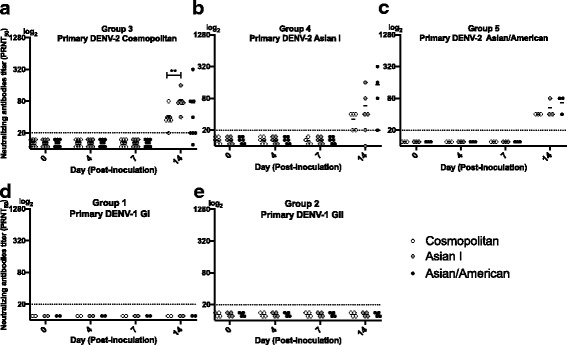
Background: A vaccine against all four dengue virus (DENV) serotypes includes the formulation of one genotype of each serotype. Although genetic similarities among genotypes within a serotype are higher as compared to those among serotypes, differences in the immunogenicity of the included genotypes would be a critical issue in maximizing successful dengue vaccine development. Thus, we determined the neutralizing antibody responses against three genotypes of dengue virus serotype 2 (DENV-2), namely Cosmopolitan, Asian I, and Asian/American, after primary and secondary inoculation with DENV-2 in a dengue animal model, the common marmoset (Callithrix jacchus).
Methods: A total of fifty-four plasma samples were obtained from thirty-four marmosets that were inoculated with clinically-isolated DENV strains or DENV candidate vaccines, were used in this study. Plasma samples were obtained from marmosets after primary inoculation with DENV-2 infection, secondary inoculation with homologous or heterologous genotypes, and tertiary inoculation with heterologous DENV. Neutralizing antibody titers against DENV-2 (Cosmopolitan, Asian I, and Asian/American genotypes) and DENV-1 were determined using a conventional plaque reduction neutralization assay.
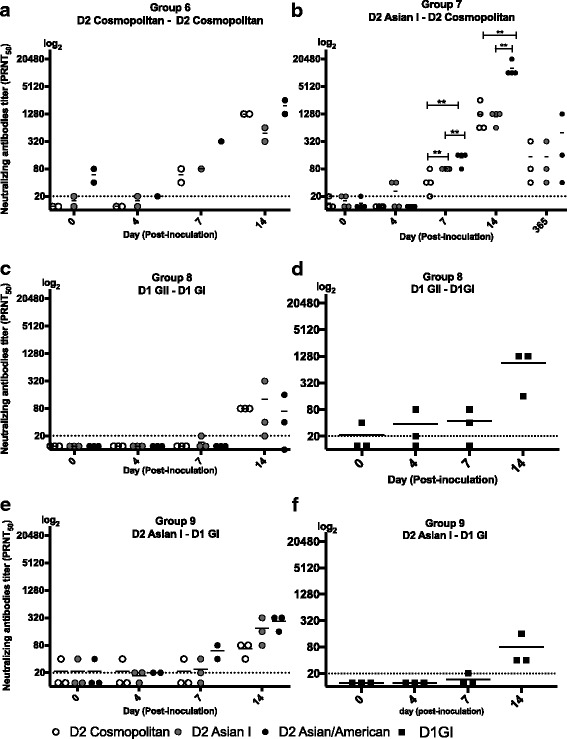
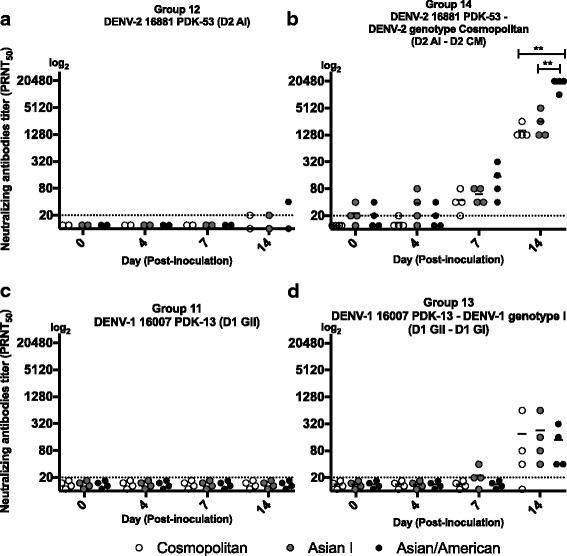
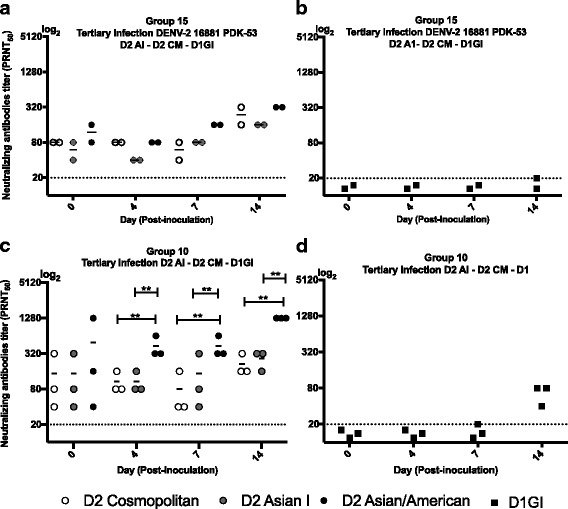
Results: In marmosets that were inoculated with the Cosmopolitan genotype in primary infection, neutralizing antibody neutralized 3 genotypes, and the titers to Asian I genotype were significantly higher than those to homologous Cosmopolitan genotype. After secondary DENV-2 infection with heterologous genotype (Asian I in primary and Asian/American in secondary), neutralizing antibody titers to Asian/American genotype was significantly higher than those against Cosmopolitan and Asian I genotypes. Following tertiary infection with DENV-1 following DENV-2 Asian I and Cosmopolitan genotypes, neutralizing antibody titers to Asian/American were also significantly higher than those against Cosmopolitan and Asian I genotypes.
Conclusion: The present study demonstrated that different levels of neutralizing antibodies were induced against variable DENV-2 genotypes after primary, secondary and tertiary infections, and that neutralizing antibody titers to some heterologous genotypes were higher than those to homologous genotypes within a serotype. The results indicate that heterogeneity and homogeneity of infecting genotypes influence the levels and cross-reactivity of neutralizing antibodies induced in following infections. The results also suggest that certain genotypes may possess advantage in terms of breakthrough infections against vaccination.
Keywords: Animal model; Antibody response; Dengue; Genotype.
Conflict of interest statement
Ethics approval and consent to participate
The animal studies were conducted in accordance with the guidelines of the Institutional Animal Care and Use Committee of the National Institute of Infectious Diseases (NIID), Tokyo, Japan. The study was approved by the Institutional Animal Care and Use Committee of NIID (approval no. 613006 and 516,010). All animal and infection experiments were performed according to the NIID Institutional Guidelines, in additions to the guidelines of the Science Council, and local rules and regulations.
Consent for publication
Not applicable
Competing interests
The authors declare that they have no competing interests.
Figures
References
-
- Halstead S. Dengue. 2008.
-
- WHO . Dengue guidelines for diagnosis, treatment, prevention and control: new edition. Geneva: World Health organization; 2009. - PubMed
Publication types
MeSH terms
Substances
LinkOut - more resources
Full Text Sources
Other Literature Sources
Medical
