CUP Syndrome-Metastatic Malignancy with Unknown Primary Tumor
- PMID: 29587959
- PMCID: PMC5881077
- DOI: 10.3238/arztebl.2018.0157
CUP Syndrome-Metastatic Malignancy with Unknown Primary Tumor
Abstract
Background: 2-4% of newly diagnosed cases of malignant disease involve cancer of unknown primary (CUP). This mixed entity is one of the 6 most common types of malignant disease in Germany. Highly refined treatment strategies can now be offered to patients with CUP.
Methods: This review is based on pertinent publications retrieved by a selective search in PubMed with an emphasis on articles from the past decade. The current guidelines and recommendations of specialty societies were also considered in the evaluation.
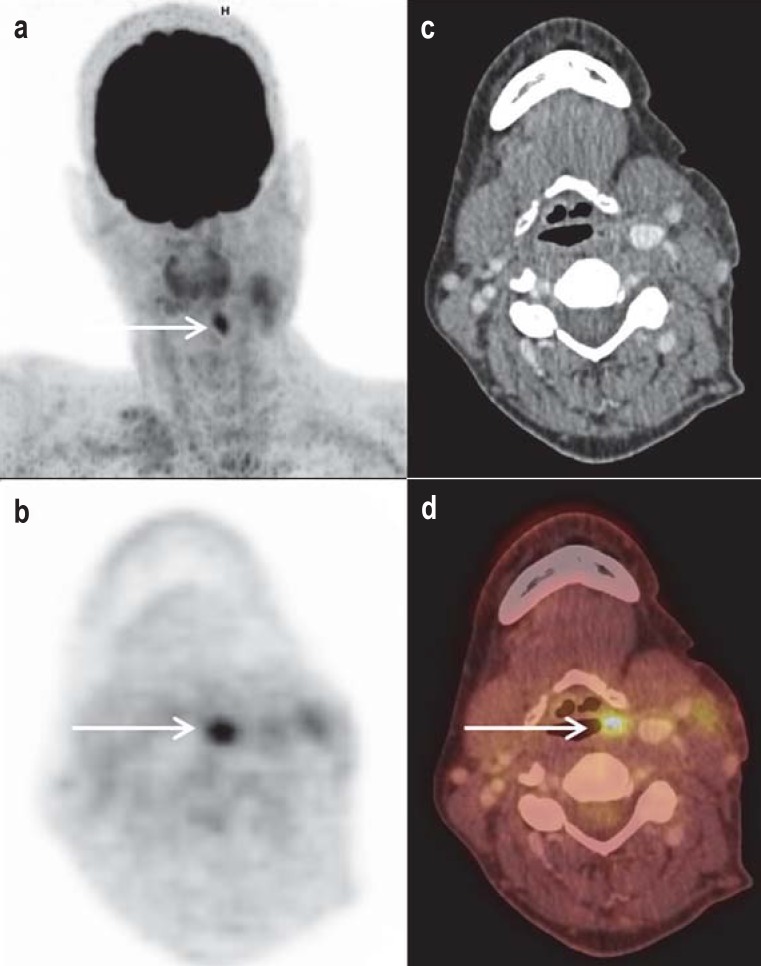
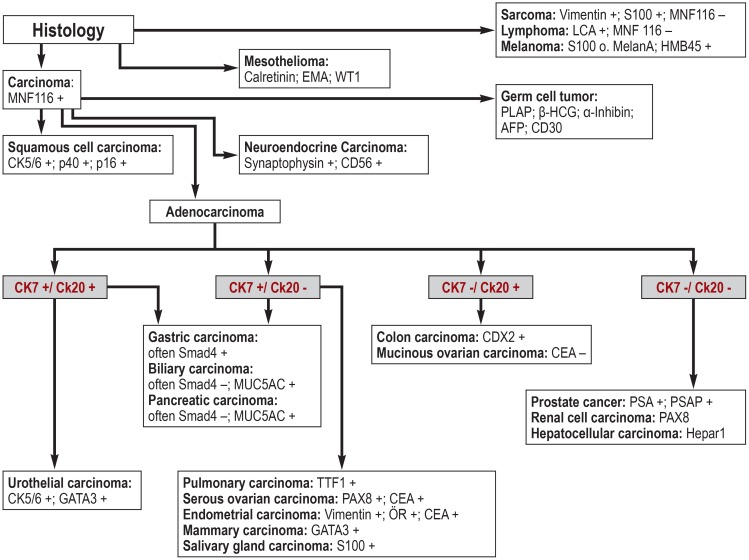
Results: CUP most commonly manifests itself as metastases to the lymph nodes, lungs, liver, or bones. With the aid of imaging studies, including functional hybrid imaging and further medical examination, a primary tumor can be discovered in up to 40% of patients initially diagnosed with CUP. Immunohistochemistry guided by histomorphology often enables precise characterization of the lesion and can be supplemented, in selected cases, by molecular-genetic diagnostic evaluation. The most commonly detected types of primary tumor are cancers of the lung, pancreas, liver, and biliary system. For patients with local metastases, surgical resection or radiotherapy with curative intent is usually indicated, sometimes in the framework of a multimodal treatment concept. The median 2-year survival of patients with disseminated CUP is only 20%. For such patients, specific types of systemic therapy are recommended on the basis of the diagnostic characterization of the disease. Immune-modulatory antibodies can be effective, particularly in the treatment of CUP that has been characterized with biomarkers, but should still be considered experimental at present.
Conclusion: A combination of conventional and innovative diagnostic methods enables the provision of highly refined therapeutic strategies to patients with CUP who are undergoing treatment in interdisciplinary cancer centers.
Figures
Comment in
-
p16 Examination Is not Sufficient.Dtsch Arztebl Int. 2018 May 21;115(20-21):354. doi: 10.3238/arztebl.2018.0354a. Dtsch Arztebl Int. 2018. PMID: 29914615 Free PMC article. No abstract available.
-
Palliative Care Was not Considered.Dtsch Arztebl Int. 2018 May 21;115(20-21):354. doi: 10.3238/arztebl.2018.0354b. Dtsch Arztebl Int. 2018. PMID: 29914616 Free PMC article. No abstract available.
References
-
- Deutsche Gesellschaft für Hämatologie und Medizinische Onkologie (DGHO) (eds.) CUP Syndrom - Krebserkrankungen mit unbekanntem Primärtumor. Leitlinie: Stand 2014. www.onkopedia.com/de/onkopedia/guidelines/cup-syndrom-krebserkrankungen-... (last accessed on 26 January 2018)
-
- Pavlidis N, Pentheroudakis G. Cancer of unknown primary site. Lancet. 2012;379:1428–1435. - PubMed
-
- National Comprehensive Cancer Network (NCCN) NCCN Guidelines for occult primary. www.nccn.org/professionals/physician_gls/f_guidelines. asp#occult(last accessed on 30 June 2017)
-
- European Society for Medical Oncology (ESMO) Cancers of unknown primary site: ESMO clinical practice guidelines. www.esmo.org/Guidelines/Cancers-of-Unknown-Primary-Site/Cancers-of-Unkno... (last accessed on 26 January 2018
Publication types
MeSH terms
LinkOut - more resources
Full Text Sources
Other Literature Sources
Miscellaneous