. 2018 Apr 5;556(7699):103-107.
doi: 10.1038/nature26157. Epub 2018 Mar 28.

A new class of synthetic retinoid antibiotics effective against bacterial persisters

Affiliations

A new class of synthetic retinoid antibiotics effective against bacterial persisters

Wooseong Kim et al. Nature. .

Abstract

A challenge in the treatment of Staphylococcus aureus infections is the high prevalence of methicillin-resistant S. aureus (MRSA) strains and the formation of non-growing, dormant 'persister' subpopulations that exhibit high levels of tolerance to antibiotics and have a role in chronic or recurrent infections. As conventional antibiotics are not effective in the treatment of infections caused by such bacteria, novel antibacterial therapeutics are urgently required. Here we used a Caenorhabditis elegans-MRSA infection screen to identify two synthetic retinoids, CD437 and CD1530, which kill both growing and persister MRSA cells by disrupting lipid bilayers. CD437 and CD1530 exhibit high killing rates, synergism with gentamicin, and a low probability of resistance selection. All-atom molecular dynamics simulations demonstrated that the ability of retinoids to penetrate and embed in lipid bilayers correlates with their bactericidal ability. An analogue of CD437 was found to retain anti-persister activity and show an improved cytotoxicity profile. Both CD437 and this analogue, alone or in combination with gentamicin, exhibit considerable efficacy in a mouse model of chronic MRSA infection. With further development and optimization, synthetic retinoids have the potential to become a new class of antimicrobials for the treatment of Gram-positive bacterial infections that are currently difficult to cure.


Conflict of interest statement

The authors declare competing interests: details are available in the online version of the paper.

Figures
Extended Data Figure 1 |
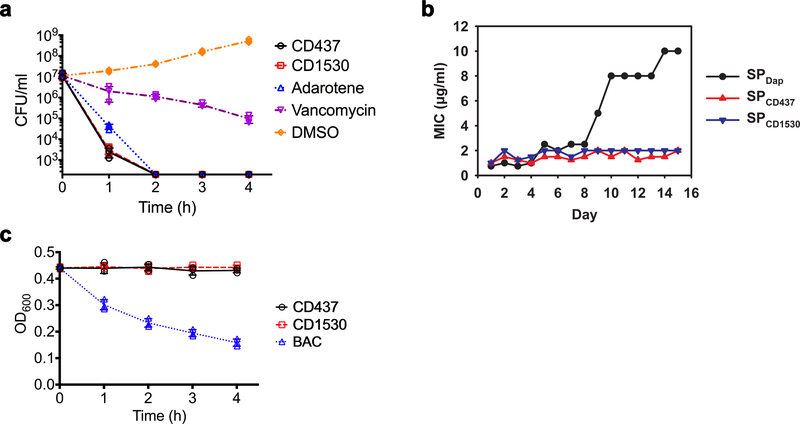
Extended Data Figure 1 |. CD437 and CD1530 show fast-killing kinetics and low probability of resistance development, and do not cause detectable cell lysis.
a, Exponential-phase MRSA cells (strain MW2) were treated with 10× MIC CD437, CD1530, adarotene, vancomycin or 0.1% DMSO (negative control). CFU counts of cells were measured by serial dilution and plating on agar plates. The data points on the x axis are below the level of detection (2 × 10² CFU ml−1). Individual data points (n = 3 biologically independent samples) and mean ± s.d. are shown. b, Development of S. aureus MW2 mutants resistant to CD437 (SPCD437), CD1530 (SPCD153o) or daptomycin (SPDap) was attempted by daily serial passage for 15 days. c, Exponential-phase S. aureus MW2 bacteria were treated with 10× MIC CD437, CD1530 or benzalkonium chloride (BAC) for 4 h. The anti-infective detergent BAC was used as a positive control for cell lysis. OD600 was measured in a spectrophotometer every hour. Individual data points (n = 3 biologically independent samples) and mean ± s.d. are shown.
Extended Data Figure 2 |
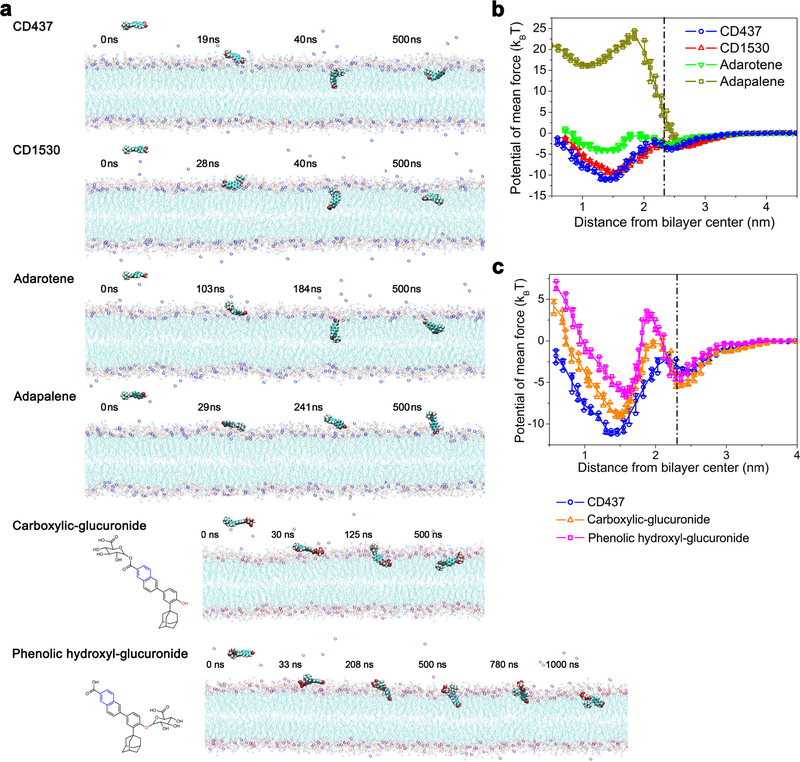
Extended Data Figure 2 |. All-atom molecular dynamics simulations showing the interactions between selected retinoids or retinoid metabolites and a DOPC:DOPG (7:3) lipid bilayer.
a, Representative configurations of synthetic retinoids or retinoid metabolites at, left to right, the onset of simulation, membrane attachment, membrane penetration and equilibrium state (see Supplementary Methods for atomic rendering). Simulations were repeated five times with similar results. b, c, Free energy profiles of the four retinoids (b) or CD437-metabolites (c) penetrating the membrane as a function of the distance between the COM of the retinoids or the retinoid metabolites and the lipid bilayer. The dot-dashed line marks the membrane surface, averaged from the COM location of phosphate groups in the outer leaflet. Individual data points (n = 3 independent simulations) and mean ± s.d. are shown. The membrane penetration of CD437, CD1530, adarotene, adapalene, the carboxylic-glucuronide metabolite and the phenolic hydroxyl-glucuronide metabolite are associated with transfer energies of −8.92 kBT, −7.14 kBT, −1.45 kBT, 18.76 kBT, −3.73 kBT, −2.02 kBTand energy barriers of 1.42 kBT, 1.12 kBT, 2.03 kBT, 26.13 kBT, 5.01 kBT, 7.40 kBT, respectively.
Extended Data Figure 3 |
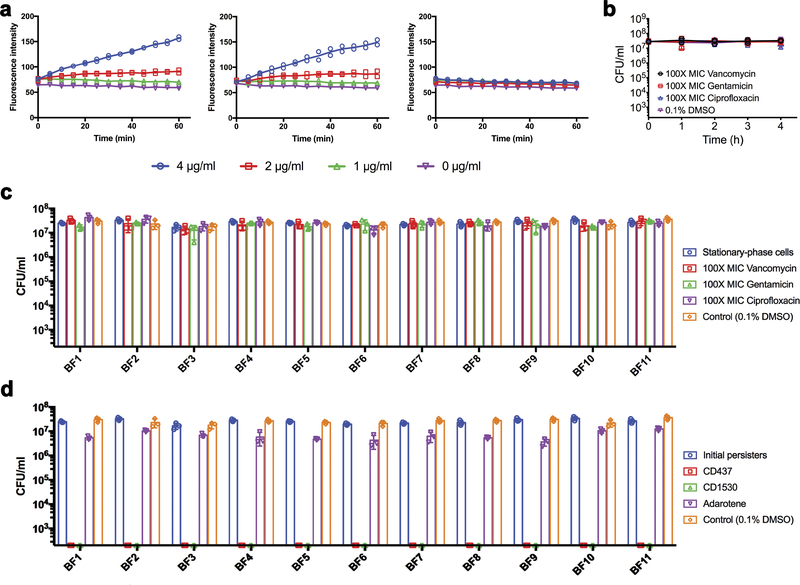
Extended Data Figure 3 |. CD437 and CD1530 kill MRSA persisters by inducing membrane permeabilization.
a, S. aureus MW2 persisters were treated with the indicated concentrations of the retinoids. Membrane permeability was measured spectrophotometrically by monitoring the uptake of SYTOX Green (λex = 485 nm, λem = 525 nm) over time. Individual data points (n = 2 biologically independent samples) and means are shown; error bars are not shown for clarity. b-d, Stationary-phase S. aureus MW2 (b) or stationary-phase cells of 11 clinical S. aureus isolates were treated with 100× MIC conventional antibiotics (c) or 10× MIC retinoids (d) for 4 h. Viability was measured by serial dilution and plating on agar plates. The data points on the x axis are below the level of detection (2 × 10² CFU ml−1). b-d, Individual data points (n = 3 biologically independent samples) and mean ± s.d. are shown.
Extended Data Figure 4 |
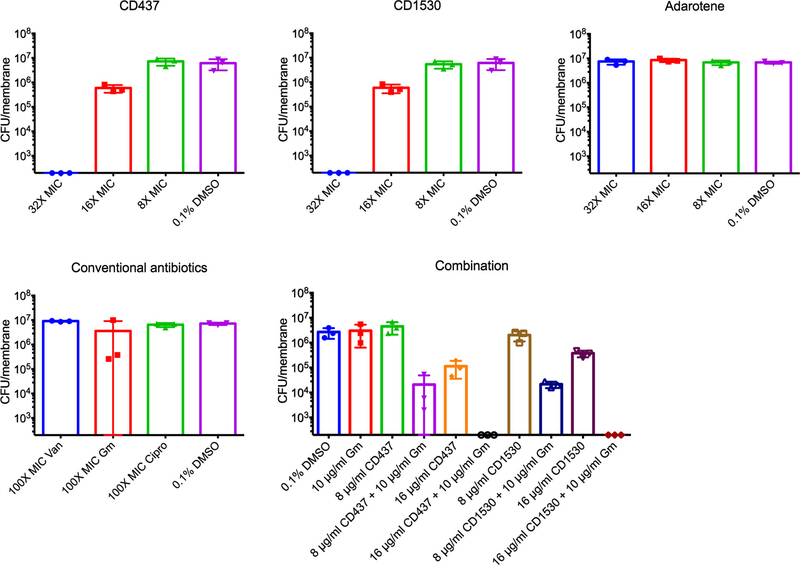
Extended Data Figure 4 |. CD437 or CD1530 alone or in combination with gentamicin eliminate persisters formed in MRSA biofilms.
MRSA MW2 biofilms formed on 13 mm cellulose ester membranes were treated with the indicated concentrations of retinoids alone or in combination with gentamicin. The number of viable cells in biofilms was measured by CFU counting. The data points on the x axis are below the level of detection (2 × 10² CFU ml−1). Individual data points (n = 3 biologically independent samples) and mean ± s.d. are shown.
Extended Data Figure 5 |
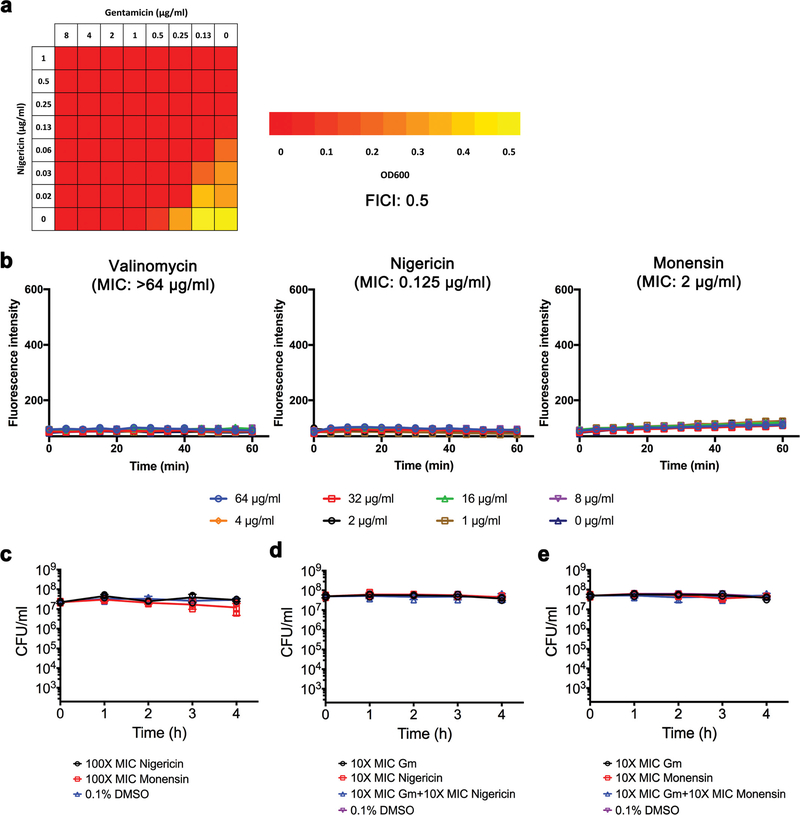
Extended Data Figure 5 |. Ionophores do not induce SYTOX Green membrane permeabilization or kill MRSA MW2 persisters.
a, Synergism between nigericin and gentamicin was evaluated against S. aureus MW2 by the fractional inhibitory concentration index (FICI) microdilution checkerboard method. Optical densities at 600 nm were measured after 18 h incubation at 37 °C. Experiments were independently repeated twice with similar results. Synergy, FICI < 0.5; no interaction, 0.5 < FICI ≤ 4; antagonism, FICI > 4. b, Exponential-phase MW2 cells were treated with the indicated concentrations of valinomycin, nigericin or monensin. Membrane permeability was measured spectrophotometrically by monitoring the uptake of SYTOX Green (λex = 485 nm, λem = 525 nm) over time. Individual data points (n = 2 biologically independent samples) are shown; error bars are not shown for clarity. c-e, Stationary-phase S. aureus MW2 was treated with the indicated concentrations of ionophores, alone or combined with 10× MIC gentamicin (Gm), or 0.1% DMSO (control) for 4 h. Viability was measured by serial dilution and plating on agar plates. Individual data points (n = 3 biologically independent samples) and mean ± s.d. are shown.
Extended Data Figure 6 |
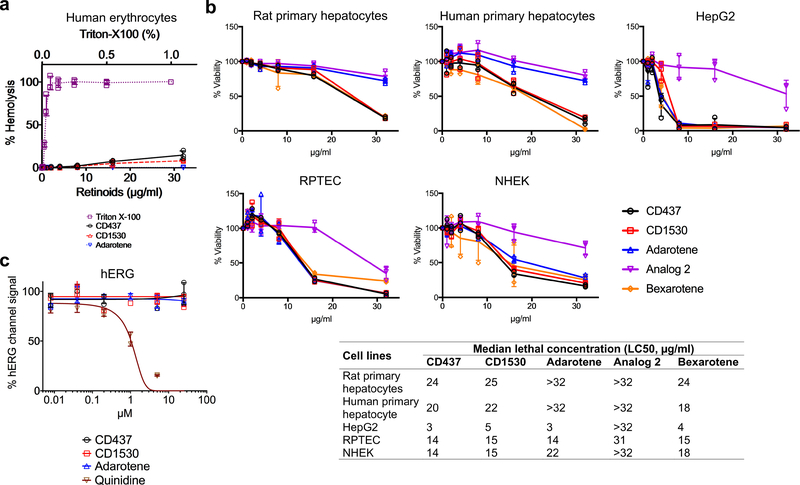
Extended Data Figure 6 |. Evaluation of cytotoxic potentials of retinoids in various cell lines.
a, Measurement of haemolytic activity. 2% human erythrocytes were treated with twofold serially diluted concentrations of the retinoids for 1 h at 37 °C. A sample treated with 1% Triton X-100 was used as the control for 100% haemolysis. b, Normal rat, human primary hepatocytes, human hepatoma (HepG2) cells, normal human primary renal proximal tubule epithelial cells (RPTEC) or adult normal human epidermal keratinocytes (NHEK) were treated with a range of concentrations of the synthetic retinoids in chemically defined, serum-free medium for 24 h. The FDA-approved antineoplastic retinoid bexarotene was used as a control. Cell viability was calculated on the basis of absorbance readings at 450 nm at 4 h after adding WST-1. a, b, Individual data points (n = 3 biologically independent samples) and mean ± s.d. are shown. c, Three synthetic retinoids and the positive control quinidine were tested for inhibition of the hERG potassium channel. Individual data points (n = 4 biologically independent samples) and mean ± s.d. are shown. Data are fitted to a standard inhibition curve.
Extended Data Figure 7 |
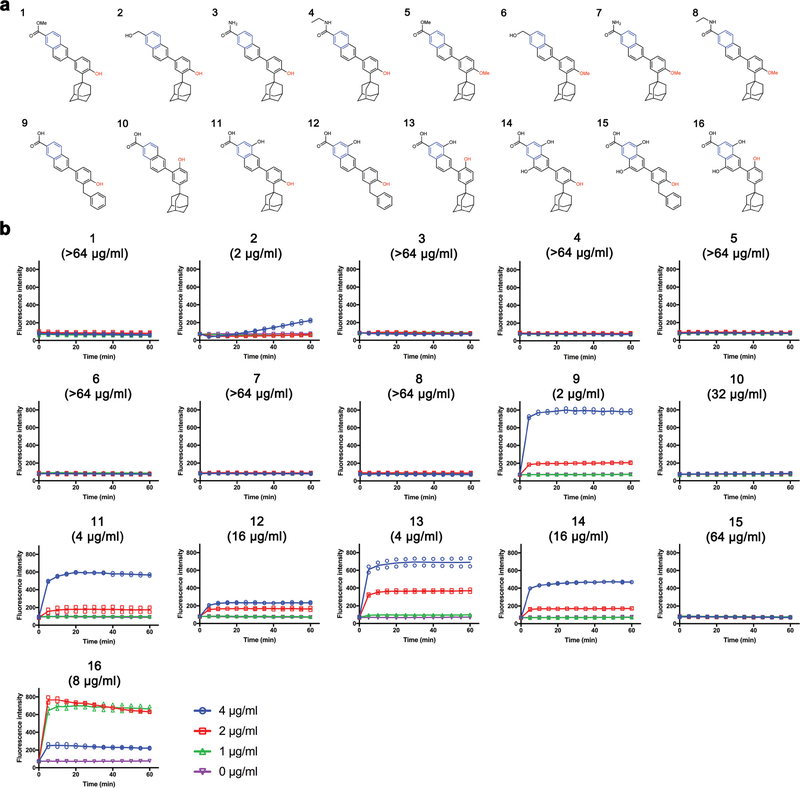
Extended Data Figure 7 |. Structure-activity relationships.
a, The chemical structures of newly synthesized CD437 analogues. b, MICs and membrane permeability were measured for S. aureus strain MW2. Membrane permeability was evaluated spectrophotometrically by monitoring the uptake of SYTOX Green (λex = 485 nm, λem = 525 nm) over time. Individual data points (n = 2 biologically independent samples) and means are shown; error bars are not shown for clarity.
Extended Data Figure 8 |
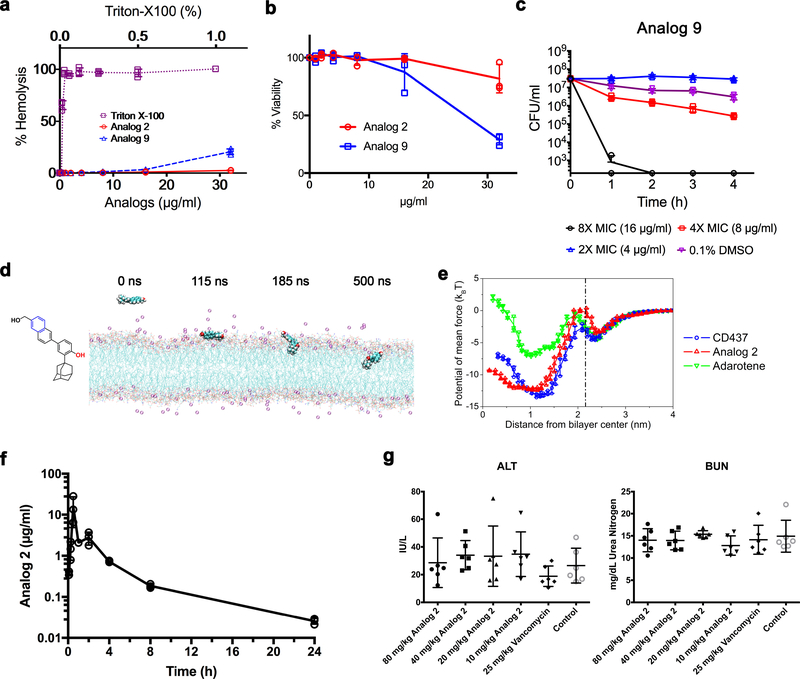
Extended Data Figure 8 |. Determination of the biological properties of analogues 2 and 9.
a, b, Human erythrocytes were treated for 1 h (a) and rat primary hepatocytes were treated for 24 h (b) with analogues 2 and 9. c, MRSA MW2 persisters were treated with analogue 9. The data points on the X axis are below the level of detection (2 × 10² CFU ml−1). a-c, Individual data points (n = 3 biologically independent samples) and mean ± s.d. are shown. d, Representative configurations of molecular dynamics simulations of analogue 2 interacting with lipid bilayers (108 phosphatidylglycerol lipids, 72 Lys-PG lipids and 10 DPG lipids; see Supplementary Methods for atomic rendering). Simulations were repeated five times with similar results. e, Free energy profiles of analogue 2, CD437 and adarotene penetrating the membrane as a function of the distance between the COM of the retinoids and the lipid bilayer. The dot-dashed line marks the membrane surface, averaged from the COM location of phosphate groups in outer leaflet. Individual data points (n = 3 independent simulations) and mean ± s.d. are shown. f, The plasma concentrations of analogue 2 after a single injection of analogue 2 (20 mg kg−1, i.p., 3 mice per time point) were measured using LC-MS/MS. Pharmacokinetic analysis was conducted using Phoenix WinNonlin software version 6.3. Individual data points (n = 3 biologically independent animals) and mean ± s.d. are shown. The determined pharmacokinetic parameters are Tmax (the time taken to reach the maximum concentration) 0.5 h, Cmax (maximum concentration observed) 16.14 μg ml−1, AUClast (area under the curve to last time point) 16.38 h·μg ml−1, AUCinf (area under the curve to infinite) 16.54 h·μg ml−1, t1/2 (half-life) 4.49 h, clearance 20.16 ml min−1 kg−1. g, Six mice per group (n = 6 biologically independent animals) were treated with control (5% Kolliphor + 5% ethanol, i.p.), vancomycin (25 mg kg−1, i.p.) or analogue 2 (10–80 mg kg−1, i.p.) every 12 h for 3 days. At 12 h after the last treatment, alanine aminotransferase (ALT) and blood urea nitrogen (BUN) were analysed. The concentrations of ALT (in international units per litre, IU l) and BUN (mg dl−1) in each mouse serum sample analysed are plotted as individual points and the mean ± s.d. is shown. Control and antibiotic treatments were analysed by one-way ANOVA and post hoc Tukey test, which demonstrated a lack of significant differences (P > 0.7 for all ALT and BUN samples).
Extended Data Figure 9 |
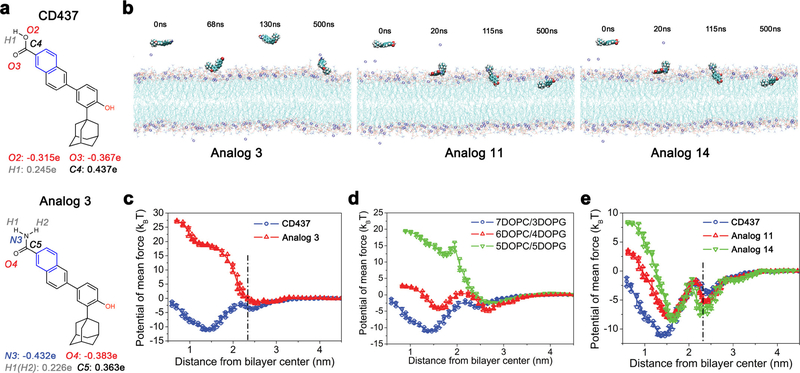
Extended Data Figure 9 |. The charges and the number of branch groups affects membrane activity of CD437-like retinoids.
a, Comparison of partial atomic charges between CD437 and analogue 3. b, Representative configurations of molecular dynamics simulations of analogues 3, 11, and 14 interacting with lipid bilayers (DOPC:DOPG, 7:3). The amide group in analogue 3 is repelled away from the membrane despite the attachment of the hydroxyl group. Atomic rendering is described in Supplementary Methods. Simulations were repeated five times with similar results. c, d, Free energy profiles of analogue 3 penetrating DOPC:DOPG (7:3) lipid bilayers (c) and CD437 penetrating differently charged lipid bilayers (d). e, Analogues 11 and 14 penetrating DOPC:DOPG (7:3) lipid bilayers as a function of the distance between the COM of the retinoids and the lipid bilayer. The dot-dashed line marks the membrane surface, averaged from the COM location of phosphate groups in the outer leaflet. c-e, Individual data points (n = 3 independent simulations) and mean ± s.d. are shown.
Extended Data Figure 10 |
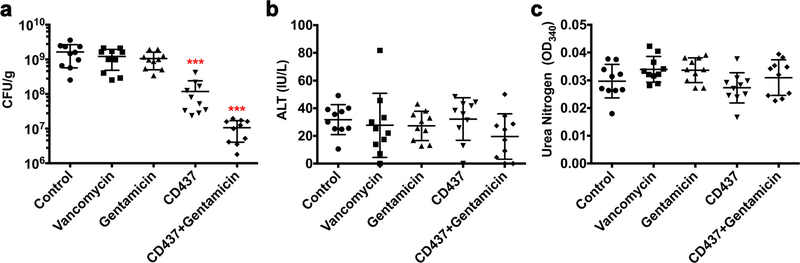
Extended Data Figure 10 |. In vivo efficacy of CD437 alone or in combination with gentamicin in a deep-seated mouse thigh infection model.
We chose a dose of 20 mg kg−1 CD437 to test its in vivo efficacy in the MRSA mouse deep-seated thigh infection model, because a dose of 20 mg kg−1 has shown in vivo efficacy in mouse xenograft cancer models. Ten MRSA MW2-infected mice per group (n = 10 biologically independent animals, see Supplementary Methods) were treated with control (5% Kolliphor + 5% ethanol, i.p.), vancomycin (25 mg kg−1, i.p.), gentamicin (30 mg kg−1, s.c.), CD437 (20 mg kg−1, i.p.), or a combination of CD437 (20 mg kg−1, i.p.) and gentamicin (30 mg kg−1, s.c.) every 12 h for 3 days beginning 24 h after infection. At 12 h after the last treatment, mice were euthanized and their thighs were excised and homogenized, and blood was collected and analysed for ALT and BUN. a, CFUs from each mouse thigh are plotted as individual points and the mean ± s.d. for each experimental group is shown. b, c, Concentration of ALT for each mouse serum sample (b) and absorbance of BUN at 340 nm (c) are plotted as individual points. The mean ± s.d. for each experimental group is shown. Statistical differences between control and antibiotic treatment groups were analysed by one-way ANOVA and post hoc Tukey test (***P< 0.0001).
Figure 1 |
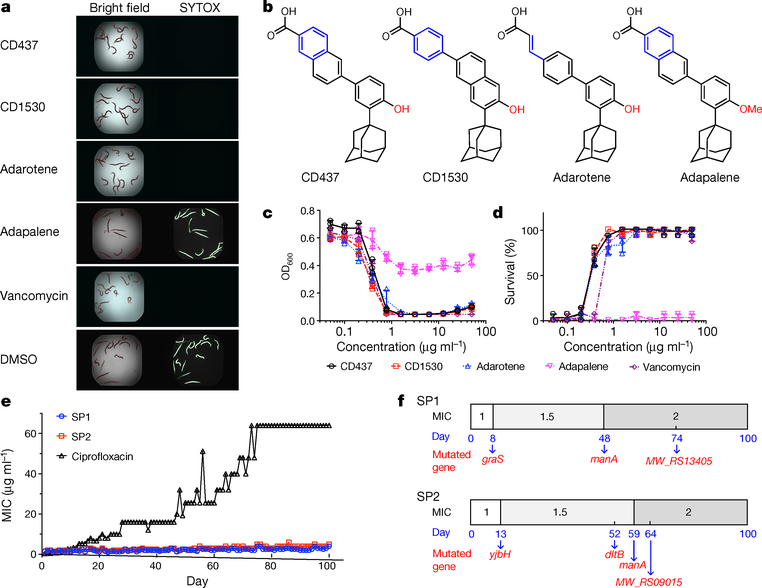
Figure 1 |. Synthetic retinoids protect C. elegans from MRSA infection and inhibit MRSA growth without detectable mutant development.
a, Images of MRSA-MW2-infected C. elegans in the presence of 10 μg ml−1 retinoids, 10 μg ml−1 vancomycin, or 1% DMSO as a control (see Supplementary Methods). Only dead worms stain with SYTOX Orange. Experiments were independently repeated three times with similar results. b, Chemical structures of synthetic retinoids. c, Growth of MW2 exposed to the five indicated compounds at various concentrations after 18 hours in tryptic soy broth. OD600, optical density at 600 nm. d, Survival of C. elegans infected with MW2 in the presence of retinoids, normalized to C. elegans treated with DMSO. c, d, Individual data points (n = 3 biologically independent experiments) and mean ± s.d. are shown. e, Appearance of spontaneous CD437- and ciprofloxacin-resistant MW2 mutants over 100 days of serial passage in duplicate (SP1 and SP2) (see Supplementary Methods). f, Appearance of mutations on specific days in the indicated genes in SP1 and SP2 in e (see Supplementary Methods). The modest increase in the MIC of CD437 against MRSA during serial passage was confirmed by remeasuring MICs using three colonies from aliquots of each passage that had been stored at −80 °C. Mutated genes are indicated on the day at which the mutations were first detected.
Figure 2 |
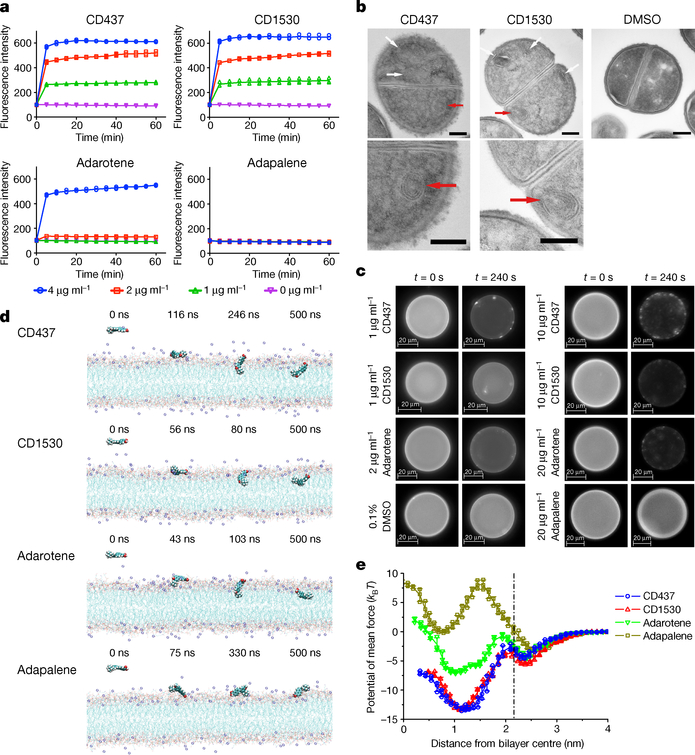
Figure 2 |. CD437, CD1530 and adarotene disrupt membrane lipid bilayers.
a, Uptake of SYTOX Green (λex = 485 nm, λem = 525 nm) by exponential-phase S. aureus MW2 cells treated with retinoids. Individual data points (n = 3 biologically independent samples) and means are shown. Error bars not shown for clarity. b, Transmission electron micrographs showing mesosome-like structures (white and red arrows; enlarged in bottom images) in 10× MIC retinoid-treated cells and DMSO control. Scale bars, 200 nm. c, Changes in giant unilamellar vesicles (DOPC:DOPG. 7:3) labelled with 18:1 Liss Rhod PE (0.05%) treated with retinoids or with 0.1% DMSO, monitored using fluorescence microscopy (40× objective, λex = 460 nm, λem = 483 nm). Liss Rhod PE, 1,2-dioleoyl-sn-glycero-3-phosphoethanolamine-N-(lissamine rhodamine B sulfonyl) (ammonium salt). In b, c, experiments were independently repeated twice with similar results. d, Representative configurations of molecular dynamics simulations of retinoids at, from left to right, onset, membrane attachment, membrane penetration and equilibrium interacting with lipid bilayers (membrane composition: 108 phosphatidylglycerol lipids, 72 Lys-PG lipids, and 10 DPG lipids; see Supplementary Methods for atomic rendering). Simulations were repeated five times with similar results. e, Free-energy profiles of retinoids penetrating the membrane as a function of the distance between the centre-of-mass (COM) of the retinoid and the lipid bilayer. The dot-dashed line marks the membrane surface, averaged from the COM location of phosphate groups in outer leaflet. Individual data points (n = 3 independent simulations) and mean ± s.d. are shown.
Figure 3 |
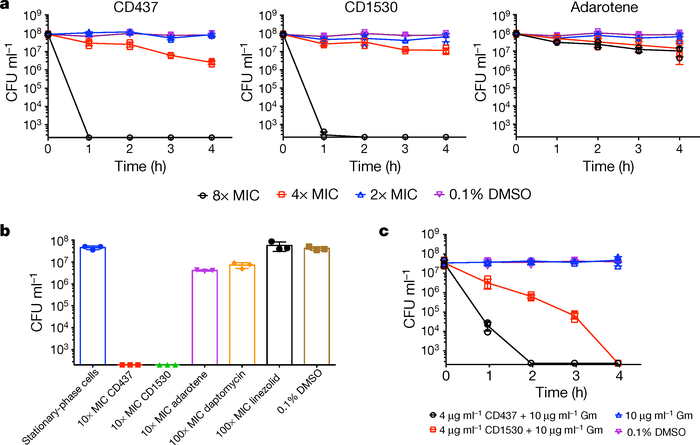
Figure 3 |. CD437 or CD1530 alone or in combination with gentamicin are effective against persisters.
a, b, Viability of stationary-phase S. aureus MW2 (a) or S. aureus VRS1 (b) when treated with the indicated concentrations of each retinoid for 4 hours. c, Viability upon treatment of S. aureus MW2 persisters with the indicated concentrations of retinoids in combination with gentamicin (Gm). In a-c, the data points on the x axis are below the level of detection (2 × 10² CFU ml−1). Individual data points (n = 3 biologically independent samples) and mean ± s.d. are shown.
Figure 4 |
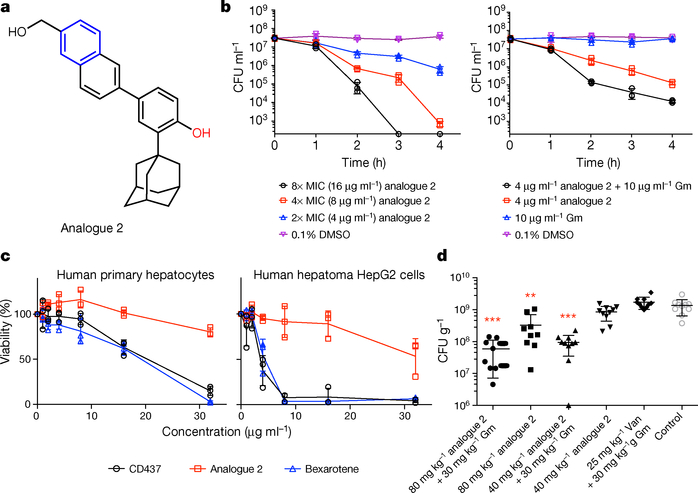
Figure 4 |. Analogue 2 retains antimicrobial activity against MRSA persisters and has improved cytotoxicity compared with CD437.
a, Chemical structure of analogue 2. b, Viability of S. aureus MW2 persisters treated with analogue 2 alone or in combination with gentamicin (Gm). Data points on the x axis were below the level of detection (2 × 10² CFU ml−1). c, Viability of normal human primary hepatocytes and human hepatoma (HepG2) cells treated with retinoids in serum-free medium for 24 hours, based on the absorbance readings at 450 nm taken 4 hours after adding the tetrazolium dye WST-1. The FDA-approved antineoplastic retinoid bexarotene was used as a control. b, c, Individual data points (n = 3 biologically independent samples) and mean ± s.d. are shown. d, Efficacy of analogue 2 alone or in combination with gentamicin in a deep-seated mouse thigh infection model. Each group of MW2-infected neutropenic mice (n = 10 biologically independent animals) was treated with the indicated doses of analogue 2 intraperitoneally (i.p.) alone or in combination with 30 mg kg−1 subcutaneous (s.c.) gentamicin (Gm), a combination of 25 mg kg−1 vancomycin (Van, i.p.) and 30 mg kg−1 gentamicin (s.c.) or control (5% Kolliphor + 5% ethanol, i.p.) every 12 hours for 3 days beginning 24 hours after infection. At 12 hours after the last treatment, mice were euthanized and their thighs were excised and homogenized. CFUs from each mouse thigh are plotted as individual points. The mean ± s.d. is shown. Statistical differences between control and antibiotic treatment groups were analysed by one-way ANOVA and post hoc Tukey test (**P = 0.0002, ***P < 0.0001).

Comment in

References

    1. Allison KR, Brynildsen MP & Collins JJ Metabolite-enabled eradication of bacterial persisters by aminoglycosides. Nature 473, 216–220 (2011). - PMC - PubMed
    1. Conlon BP et al. Activated ClpP kills persisters and eradicates a chronic biofilm infection. Nature 503, 365–370 (2013). - PMC - PubMed
    1. Davies J & Davies D Origins and evolution of antibiotic resistance. Microbiol. Mol. Biol. Rev 74, 417–433 (2010). - PMC - PubMed
    1. Lew DP & Waldvogel FA. Osteomyelitis. Lancet 364, 369–379 (2004). - PubMed
    1. Baddour LM et al. Infective endocarditis in adults: diagnosis, antimicrobial therapy, and management of complications: a scientific statement for healthcare professionals from the American Heart Association. Circulation 132, 1435–1486 (2015). - PubMed

Publication types

MeSH terms