


A new class of synthetic retinoid antibiotics effective against bacterial persisters
- PMID: 29590091
- PMCID: PMC6462414
- DOI: 10.1038/nature26157
A new class of synthetic retinoid antibiotics effective against bacterial persisters
Abstract
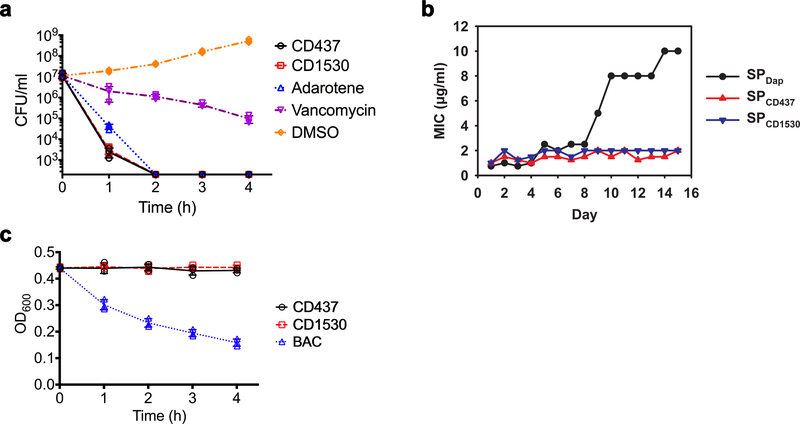
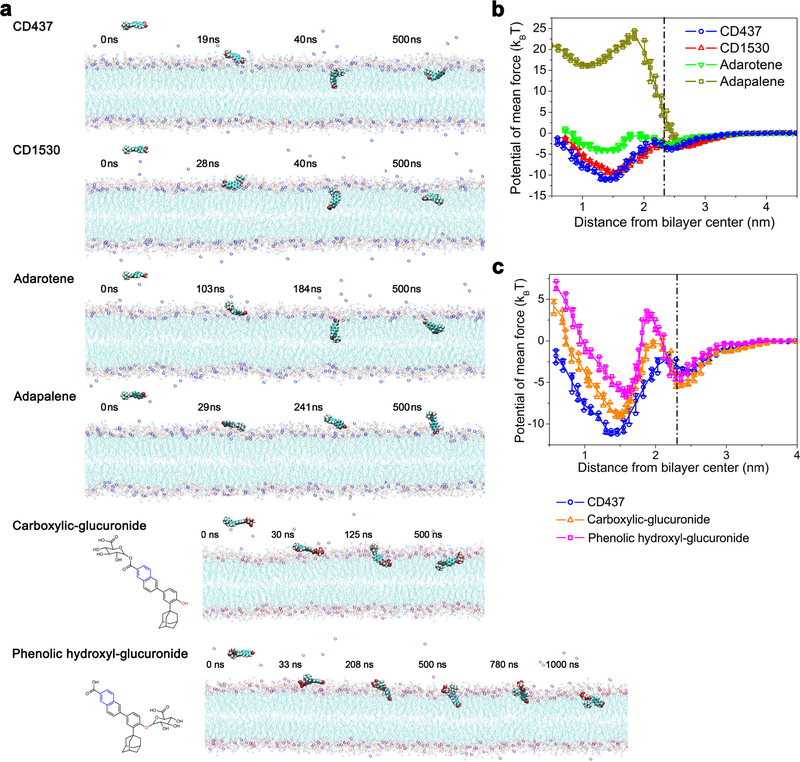
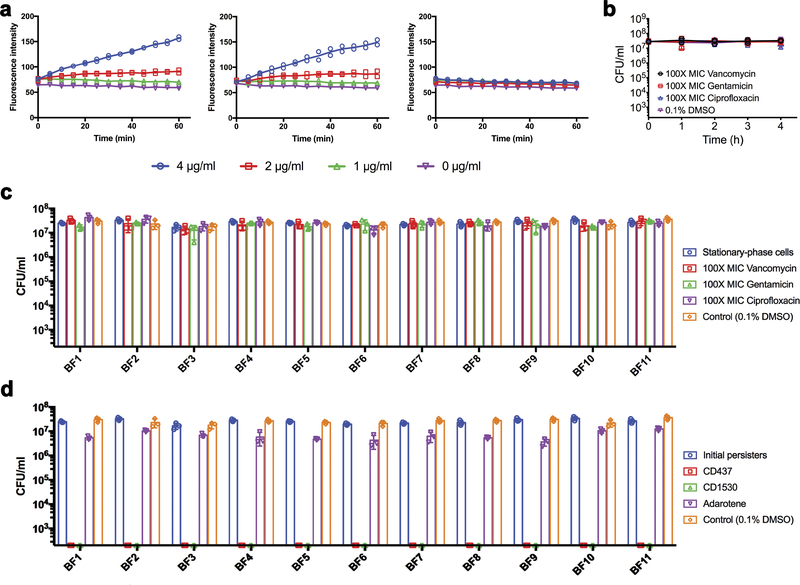
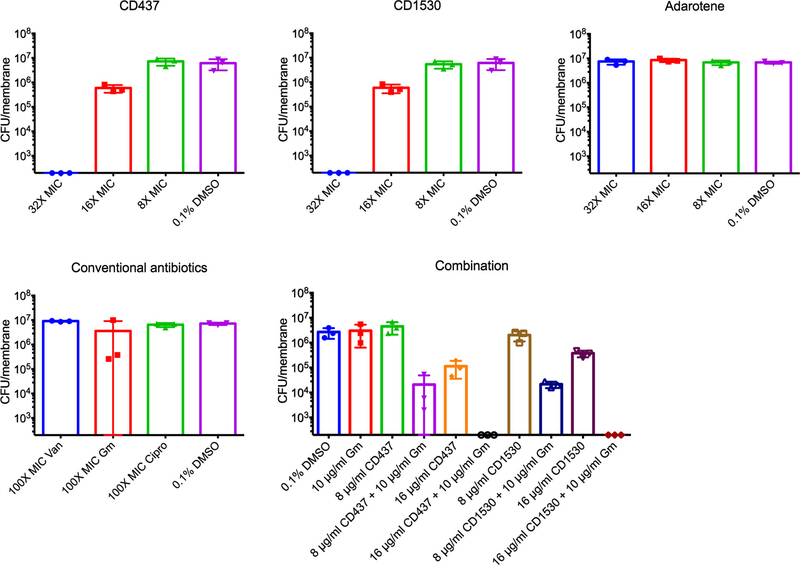
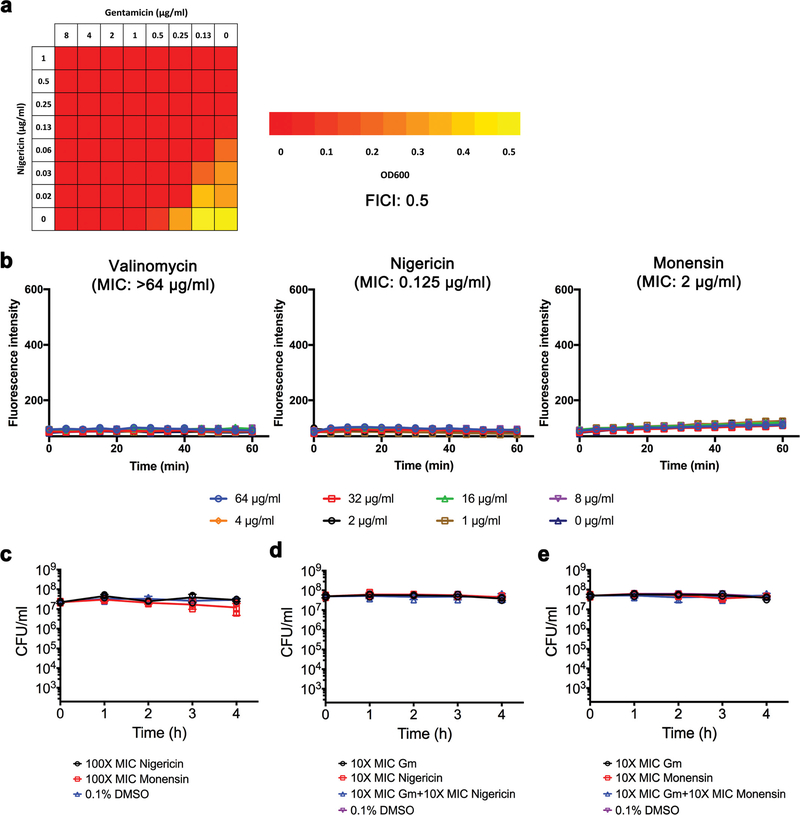
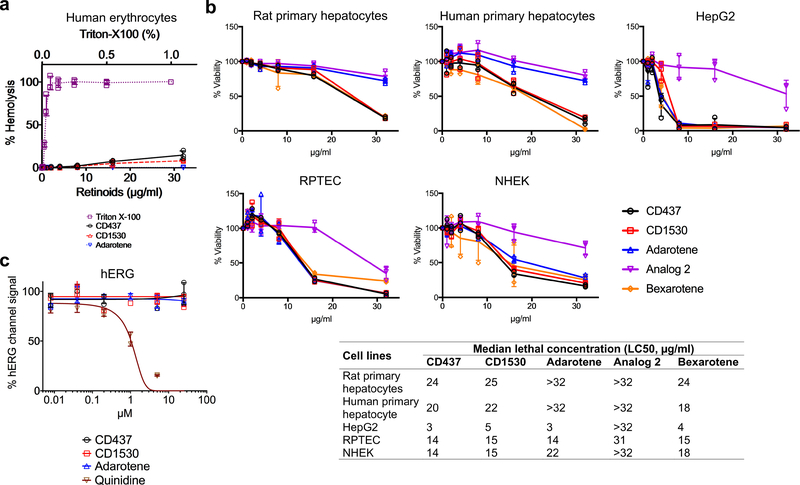
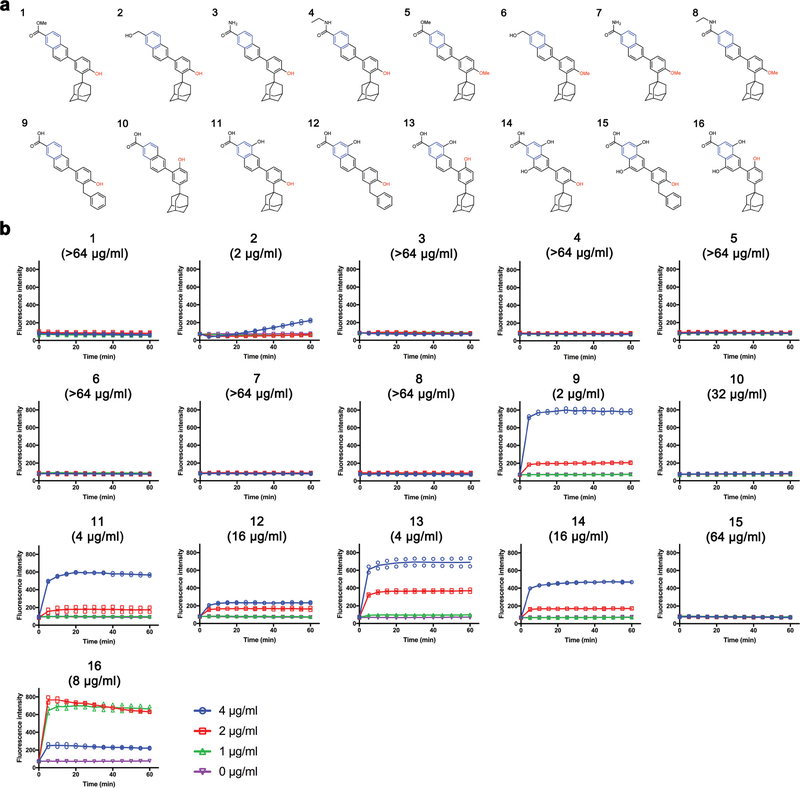
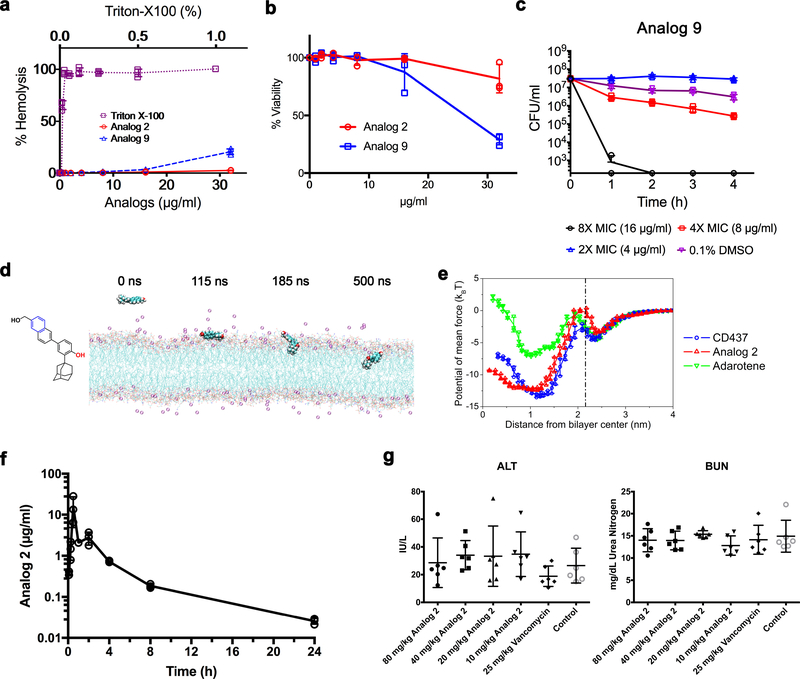
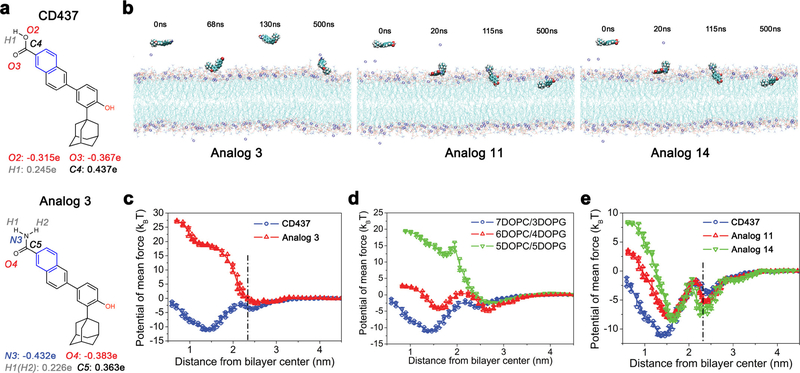
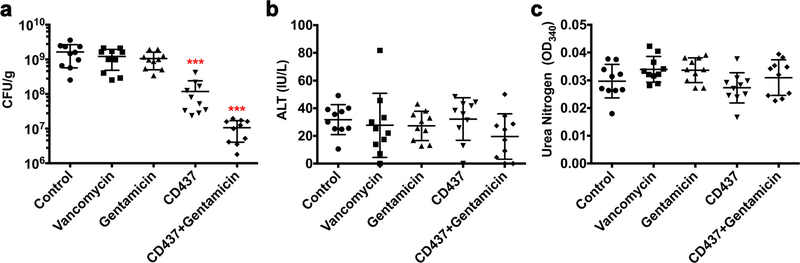
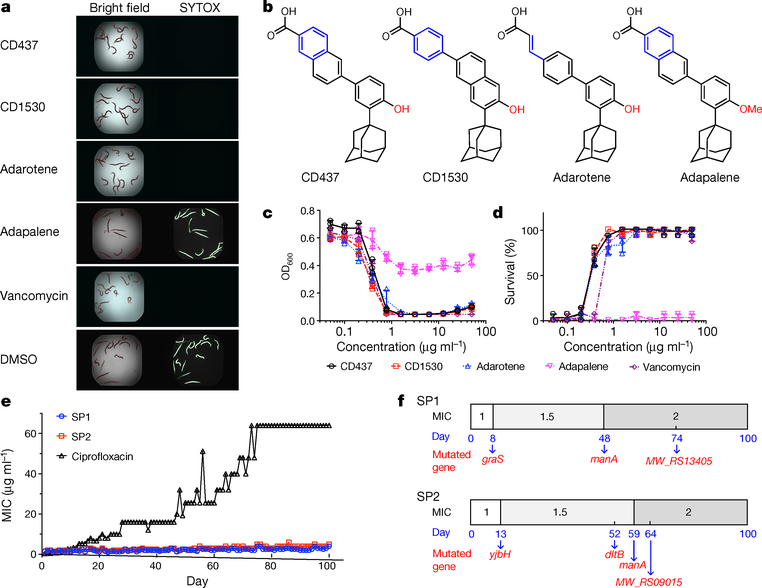
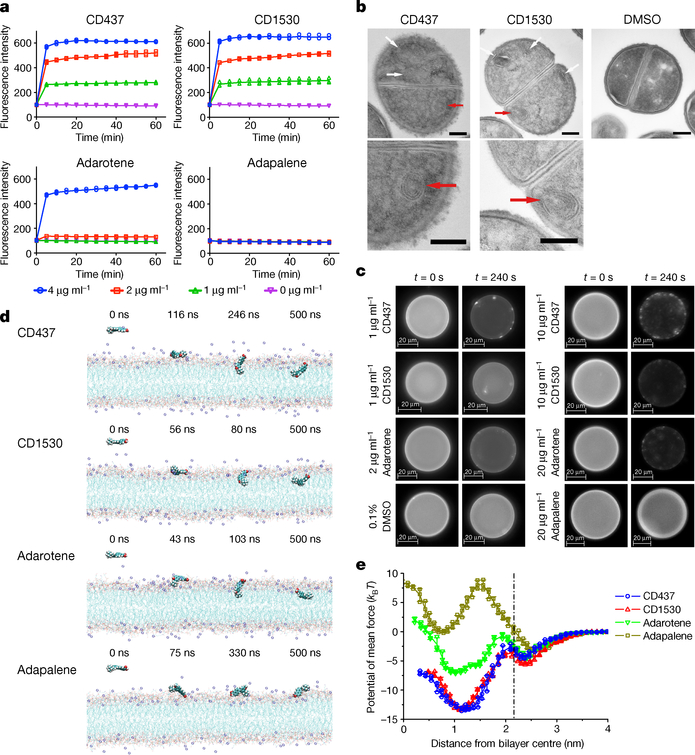
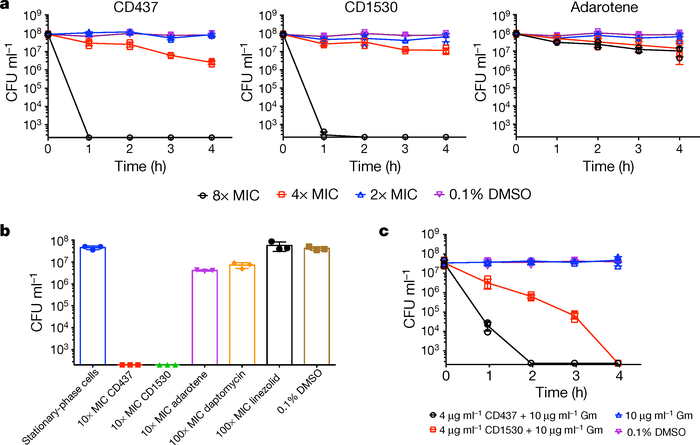
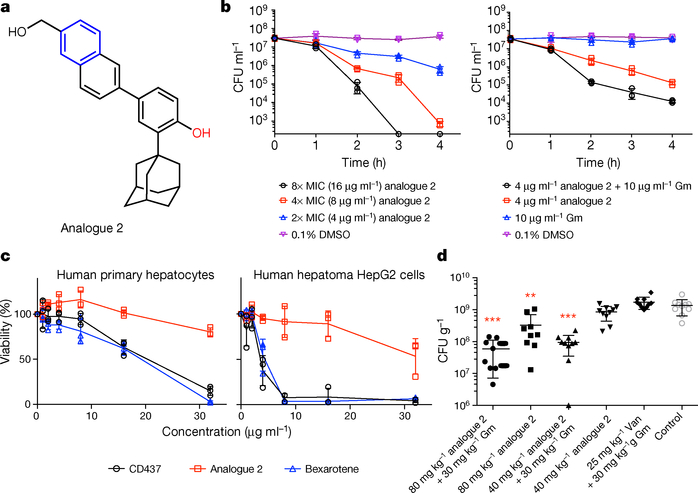
A challenge in the treatment of Staphylococcus aureus infections is the high prevalence of methicillin-resistant S. aureus (MRSA) strains and the formation of non-growing, dormant 'persister' subpopulations that exhibit high levels of tolerance to antibiotics and have a role in chronic or recurrent infections. As conventional antibiotics are not effective in the treatment of infections caused by such bacteria, novel antibacterial therapeutics are urgently required. Here we used a Caenorhabditis elegans-MRSA infection screen to identify two synthetic retinoids, CD437 and CD1530, which kill both growing and persister MRSA cells by disrupting lipid bilayers. CD437 and CD1530 exhibit high killing rates, synergism with gentamicin, and a low probability of resistance selection. All-atom molecular dynamics simulations demonstrated that the ability of retinoids to penetrate and embed in lipid bilayers correlates with their bactericidal ability. An analogue of CD437 was found to retain anti-persister activity and show an improved cytotoxicity profile. Both CD437 and this analogue, alone or in combination with gentamicin, exhibit considerable efficacy in a mouse model of chronic MRSA infection. With further development and optimization, synthetic retinoids have the potential to become a new class of antimicrobials for the treatment of Gram-positive bacterial infections that are currently difficult to cure.
Conflict of interest statement
The authors declare competing interests: details are available in the online version of the paper.
Figures
Comment in
-
Bacterial persister cells tackled.Nature. 2018 Apr 5;556(7699):40-41. doi: 10.1038/d41586-018-03440-w. Nature. 2018. PMID: 29620744 No abstract available.
-
Stabbed while Sleeping: Synthetic Retinoid Antibiotics Kill Bacterial Persister Cells.Mol Cell. 2018 Jun 7;70(5):763-764. doi: 10.1016/j.molcel.2018.05.029. Epub 2018 Jun 7. Mol Cell. 2018. PMID: 29883603
References
-
- Lew DP & Waldvogel FA. Osteomyelitis. Lancet 364, 369–379 (2004). - PubMed
-
- Baddour LM et al. Infective endocarditis in adults: diagnosis, antimicrobial therapy, and management of complications: a scientific statement for healthcare professionals from the American Heart Association. Circulation 132, 1435–1486 (2015). - PubMed
Publication types
MeSH terms
Substances
Grants and funding
LinkOut - more resources
Full Text Sources
Other Literature Sources
Medical
Research Materials
