


Motivations of women in Uganda living with rheumatic heart disease: A mixed methods study of experiences in stigma, childbearing, anticoagulation, and contraception
- PMID: 29590159
- PMCID: PMC5874006
- DOI: 10.1371/journal.pone.0194030
Motivations of women in Uganda living with rheumatic heart disease: A mixed methods study of experiences in stigma, childbearing, anticoagulation, and contraception
Abstract
Background: Rheumatic heart disease (RHD) is a leading cause of premature mortality in low- and middle-income countries (LMICs). Women of reproductive age are a unique and vulnerable group of RHD patients, due to increased risk of cardiovascular complications and death during pregnancy. Yet, less than 5% of women of childbearing age with RHD in LMICs use contraceptives, and one in five pregnant women with RHD take warfarin despite known teratogenicity. It is unclear whether this suboptimal contraception and anticoagulant use during pregnancy is due to lack of health system resources, limited health literacy, or social pressure to bear children.
Methods: We conducted a mixed methods study of 75 women living with RHD in Uganda. Questionnaires were administered to 50 patients. Transcripts from three focus groups with 25 participants were analyzed using qualitative description methodology.
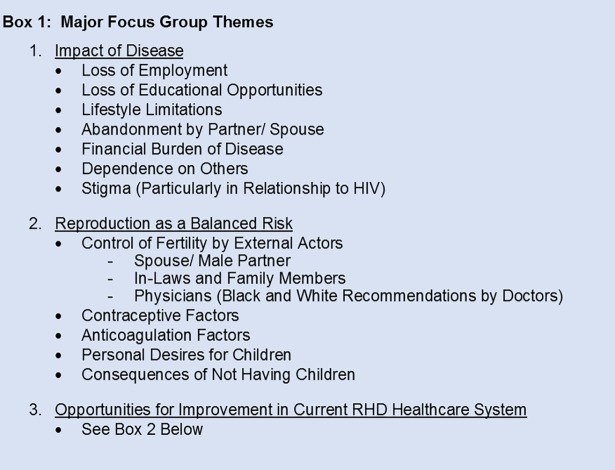
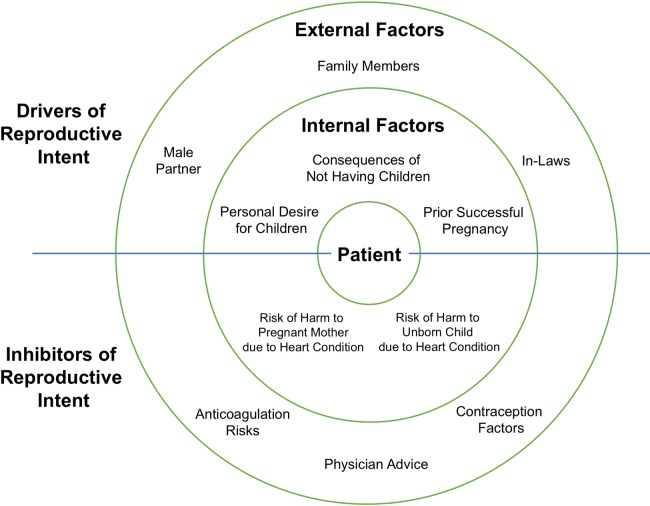
Results: Several themes emerged from the focus groups, including pregnancy as a calculated risk; misconceptions about side-effects of contraceptives and anticoagulation; reproductive decision-making control by male partners, in-laws, or physicians; abandonment of patients by male partners; and considerable stigma against heart disease patients for both their reproductive and financial limitations (often worse than that directed against HIV patients). All questionnaire respondents were told by physicians that their hearts were not strong enough to support a pregnancy. Only 14% used contraception while taking warfarin. All participants felt that society would look poorly on a woman who cannot have children due to a heart condition.
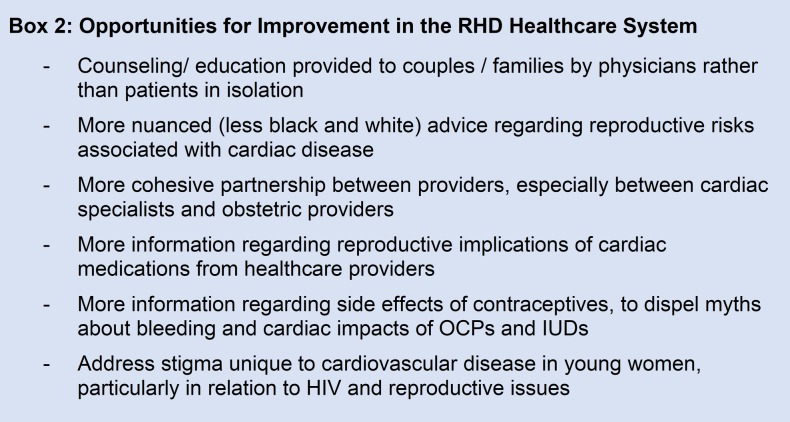
Conclusions: To our knowledge, this is the first qualitative study of female RHD patients and their attitudes toward cardiovascular disorders and reproduction. Our results suggest that health programs targeting heart disease in LMICs must pay special attention to the needs of women of childbearing age. There are opportunities for improved family/societal education programs and community engagement, leading to better outcomes and patient empowerment.
Conflict of interest statement
Figures
References
-
- Paar JA, Berrios NM, Rose JD, Cáceres M, Peña R, Pérez W, et al. Prevalence of Rheumatic Heart Disease in Children and Young Adults in Nicaragua. Am J Cardiol. 2010;105: 1809–1814. doi: 10.1016/j.amjcard.2010.01.364 - DOI - PMC - PubMed
-
- Terreri MT, Ferraz MB, Goldenberg J, Len C, Hilario MO. Resource utilization and cost of rheumatic fever. J Rheumatol. 2001;28: 1394–1397. - PubMed
-
- Alshawabkeh L, Economy KE, Valente AM. Anticoagulation During Pregnancy. J Am Coll Cardiol. 2016;68: 1804–1813. doi: 10.1016/j.jacc.2016.06.076 - DOI - PubMed
-
- Jeng J-S, Tang S-C, Yip P-K. Stroke in women of reproductive age: comparison between stroke related and unrelated to pregnancy. J Neurol Sci. 2004;221: 25–29. doi: 10.1016/j.jns.2004.03.006 - DOI - PubMed
-
- Siu SC, Sermer M, Colman JM, Alvarez AN, Mercier L-A, Morton BC, et al. Prospective multicenter study of pregnancy outcomes in women with heart disease. Circulation. 2001;104: 515–521. - PubMed
Publication types
MeSH terms
Substances
Grants and funding
LinkOut - more resources
Full Text Sources
Other Literature Sources
Medical
